
A simile is a figure of speech that compares two different things using the words “like” or “as” to highlight a shared quality.
Language becomes more powerful when we compare things in creative ways.
That’s where similes come in.
You’ve probably heard phrases like “as busy as a bee” or “runs like the wind.”
But what does a simile actually mean, and how do you use it correctly?
Understanding similes can instantly improve your writing and speaking.
Let’s break it down in a simple, clear, and practical way.
What Does Simile Mean? (Simple Explanation)
At its core, a simile is a comparison.
It connects two different things to make a description more vivid.
Key Idea
- A simile compares one thing to another
- It always uses “like” or “as”
- It helps create clearer mental images
Simple Examples
- “Her smile is as bright as the sun.”
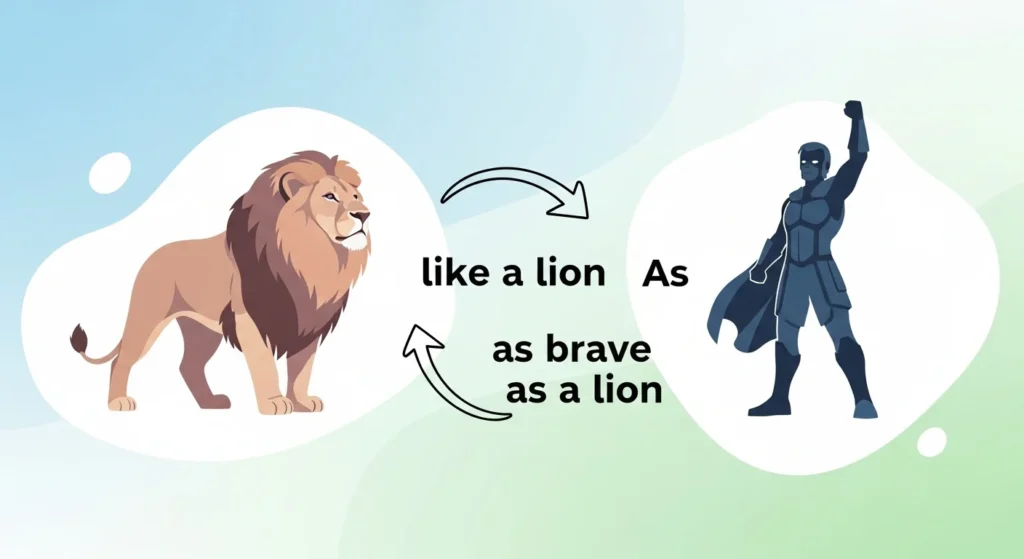
- “He fights like a lion.”
In both examples, one thing is compared to another to highlight a quality.
Origin of the Word “Simile”
The word simile has a long history.
It comes from the Latin word “similis.”
Meaning of “Similis”
- “Similar”
- “Alike”
Over time, the term became a key concept in literature and grammar.
It is now widely taught in schools and used in everyday language.
Why Similes Are Important
Similes make language more engaging.
They help readers and listeners visualize ideas better.
Key Benefits
- Make descriptions more vivid
- Add creativity to writing
- Help explain complex ideas simply
- Improve storytelling and communication
Because of this, similes are common in books, poetry, and conversations.
How Similes Are Used in Real Life
Similes appear everywhere.
You can find them in both formal and informal language.
Common Situations
- Everyday conversations
- School writing and essays
- Songs and poetry
- Movies and storytelling
People often use similes without even realizing it.
Tone and Effect of Similes
Similes can change the tone of a sentence.
They can make language feel emotional, dramatic, or humorous.
1. Descriptive Tone
Used to create strong imagery.
“The sky was as red as fire.”
2. Emotional Tone
Used to express feelings.
“She was as happy as a child.”
3. Dramatic Tone
Used for intensity.
“He stood like a statue.”
4. Humorous Tone
Used to add humor.
“He eats like a machine.”
Labeled Examples of Simile Usage
| Context | Example Sentence | Meaning |
|---|---|---|
| Everyday talk | “I’m as tired as a dog.” | Very tired |
| School writing | “The water was as clear as glass.” | Very clear |
| Storytelling | “He ran like the wind.” | Very fast |
| Emotional | “She cried like a baby.” | Strong emotion |
| Humor | “He snores like a tractor.” | Very loud |
Simile in Different Contexts
1. Literature and Poetry
In literature, similes add depth and imagery.
Writers use them to paint vivid pictures.
- Common in poems and novels
- Helps readers imagine scenes
2. Everyday Language
In daily life, similes are very common.
People use them naturally in conversations.
- “Busy as a bee”
- “Cold as ice”
3. Education and Writing
Students learn similes early in school.
They are a basic part of grammar and writing skills.
- Used in essays
- Helps improve descriptive writing
Comparison: Simile vs Metaphor
Similes are often confused with metaphors.
Both compare things, but they are different.
Simile vs Metaphor
| Simile | Metaphor |
|---|---|
| Uses “like” or “as” | Does not use “like” or “as” |
| Direct comparison | Implied comparison |
| “He is like a lion” | “He is a lion” |
Key Difference
A simile clearly shows the comparison.
A metaphor makes the comparison more direct.
Alternate Meanings of Simile
The word simile has a specific meaning in language.
It does not usually have alternate meanings.
However, people sometimes confuse it with:
- Metaphor
- Analogy
So it’s important to remember its exact definition.
Polite or Professional Alternatives
In formal writing, you don’t replace similes.
Instead, you use them carefully.
Tips for Professional Use
- Keep comparisons clear
- Avoid overusing them
- Use relevant examples
Example
Instead of: “The report was bad”
Say: “The report was as unclear as fog”
Do’s and Don’ts of Using Similes
Do
- Use “like” or “as”
- Make comparisons clear
- Keep them relevant
Don’t
- Overuse similes
- Create confusing comparisons
- Use clichés too often
Frequently Asked Questions (FAQ)
1. What does simile mean in simple words?
A simile is a comparison using “like” or “as.”
2. What is an example of a simile?
“He runs like the wind.”
3. What is the difference between simile and metaphor?
A simile uses “like” or “as,” while a metaphor does not.
4. Why are similes used?
They make language more descriptive and interesting.
5. Can similes be used in everyday speech?
Yes, people use them all the time.
6. Are similes only used in poetry?
No, they are used in everyday language as well.
7. Is “as brave as a lion” a simile?
Yes, because it uses “as” to compare.
8. Can a simile be funny?
Yes, similes can add humor to sentences.
Why Similes Matter in Communication
Good communication is about clarity and creativity.
Similes help achieve both.
They allow you to explain ideas in a simple way.
They also make your language more engaging.
Conclusion: Key Takeaways About Simile Meaning
- A simile compares two things using “like” or “as”
- It makes descriptions more vivid
- Common in speech, writing, and literature
- Different from metaphors
- Easy to use but should not be overused
In simple terms, a simile helps you describe something by comparing it to something else.
Using similes correctly can make your communication more powerful and memorable.