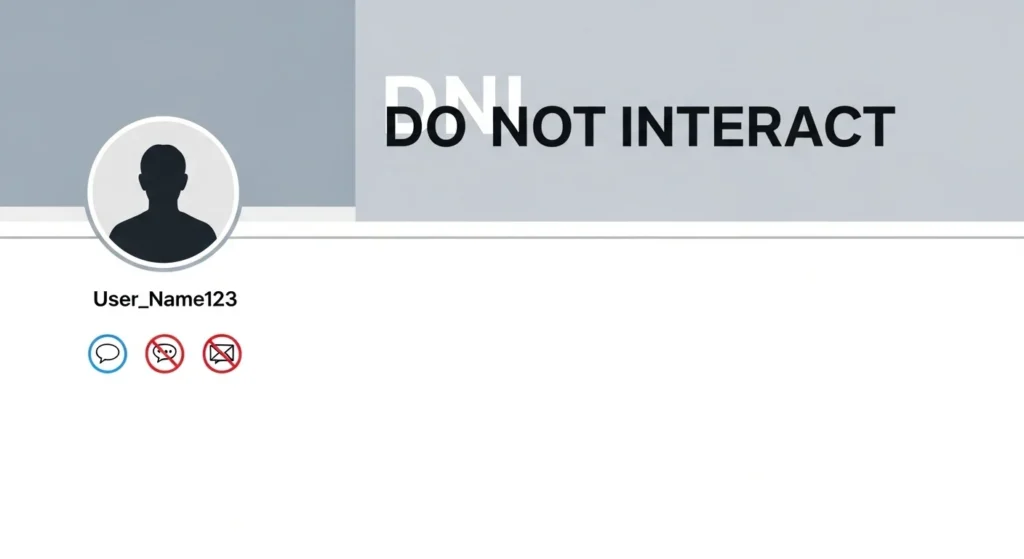

DNI (slang) means “Do Not Interact.” It is used online to tell specific people or groups not to engage, comment, follow, or communicate with someone.
The internet is full of short forms and abbreviations.
One term you might have seen in bios, captions, or profiles is “DNI.”
It often appears with lists like “DNI if…” followed by certain conditions.
So what does it actually mean?
And how do you use it correctly without misunderstanding its tone?
Let’s break down DNI meaning in a simple and practical way.
What Does DNI Mean? (Simple Explanation)
At its core, DNI is a boundary-setting term.
It tells others not to interact with you.
Main Meaning of DNI
- Do Not Interact
- A request to avoid communication
- Often directed at specific groups
- Used to control online engagement
Unlike casual slang, DNI is more direct.
It clearly sets limits in online spaces.
Origin of DNI
The term DNI comes from internet culture.
It became popular on social platforms.
Where It Started
- Tumblr and fandom communities
- Twitter and Instagram bios
- Online spaces focused on identity and boundaries
How It Spread
As online communities grew, people needed ways to set boundaries.
DNI became a quick and clear solution.
It is now widely used across multiple platforms.
Why DNI Is So Popular Online
There are several reasons for its popularity.
It serves a practical purpose.
Key Reasons
- Helps users set personal boundaries
- Filters unwanted interactions
- Common in fandom and identity-based spaces
- Easy to understand and use
Because of this, DNI became a standard term in many online communities.
How DNI Is Used in Real Life (Online & Chat)
You will mostly see DNI in profiles or posts.
It is rarely used in face-to-face conversations.
Common Situations
- Social media bios
- Content warnings
- Community guidelines
- Personal boundaries
Tone and Context: What Does DNI Feel Like?
The tone of DNI is usually firm.
It can sometimes feel strict or defensive.
1. Direct Tone
Used to clearly set limits.
“DNI if you spread hate.”
2. Protective Tone
Used to maintain a safe space.
“DNI if you disrespect others.”
3. Informational Tone
Used to clarify boundaries.
“Minors DNI.”
4. Strict Tone
Used to strongly block interaction.
“DNI if you disagree.”
Labeled Examples of DNI Usage
| Context | Example Sentence | Meaning |
|---|---|---|
| Bio | “DNI if you are rude.” | Setting boundary |
| Social media | “Minors DNI.” | Age restriction |
| Fandom | “DNI if you hate this character.” | Filtering audience |
| Content post | “DNI if sensitive to topics.” | Warning |
| Chat | “Please DNI.” | Request to stop interaction |
DNI in Different Online Communities
1. Fandom Spaces
Used to filter who can interact.
Helps avoid conflicts.
- Character preferences
- Fan discussions
2. Social Media Platforms
Common in bios and captions.
Used to control engagement.
- Instagram profiles
- Twitter bios
3. Online Safety Spaces
Used to create safe environments.
Helps users avoid unwanted attention.
- Support groups
- Identity-based communities
Comparison: DNI vs Similar Internet Terms
Understanding similar terms helps avoid confusion.
DNI vs Block
| DNI | Block |
|---|---|
| Request not to interact | Direct action |
| Preventive | Reactive |
Ignore vs DNI
| DNI | Ignore |
|---|---|
| Clear instruction | Passive behavior |
| Public boundary | Personal choice |
DNI vs Mute
| DNI | Mute |
|---|---|
| Stops interaction request | Hides content |
| Visible message | Private action |
Alternate Meanings of DNI
While DNI usually means “Do Not Interact,” it can have other meanings.
- National identity document (in some countries)
- Department of Naval Intelligence (military use)
In most online contexts, it refers to boundaries.
Always rely on context.
Polite or Professional Alternatives to DNI
DNI can sound strict in some situations.
Formal settings require softer language.
Instead, Use:
- Please avoid contacting
- Not open to discussion
- Limited interaction preferred
- Comments are restricted
- Audience guidelines apply
Example:
Instead of: “DNI if you disagree”
Say: “This space is not open for debate.”
Do’s and Don’ts of Using DNI
Do
- Use it to set clear boundaries
- Be specific if needed
- Keep it respectful
Don’t
- Use it aggressively
- Overuse it unnecessarily
- Expect everyone to follow it
Frequently Asked Questions (FAQ)
1. What does DNI mean?
DNI means “Do Not Interact.”
It is used to stop or limit communication.
2. What does DNI mean in a bio?
It tells certain people not to engage.
It sets personal boundaries.
3. Is DNI rude?
It can feel strict.
However, it is often used for protection.
4. What does “Minors DNI” mean?
It means people under 18 should not interact.
It is used for age restriction.
5. Where is DNI commonly used?
It is popular on social media platforms.
Especially in bios and fandom spaces.
6. Can I use DNI in real life?
It is mainly online slang.
It is rarely used in offline conversations.
7. Is DNI the same as blocking?
No, it is not the same.
Blocking is an action, while DNI is a request.
8. Should I use DNI professionally?
No, it is better to avoid it.
Use polite alternatives instead.
Why DNI Matters in Online Communication
Online spaces can be overwhelming.
DNI helps people control interactions.
It allows users to feel safer.
It also creates clearer boundaries.
Conclusion: Key Takeaways About DNI Meaning
- DNI means Do Not Interact
- Used to set boundaries online
- Common in bios and social media
- Tone is usually firm or direct
- Not suitable for professional settings
In simple terms, DNI tells others not to engage with you.
Using it correctly helps maintain control over your online space.