
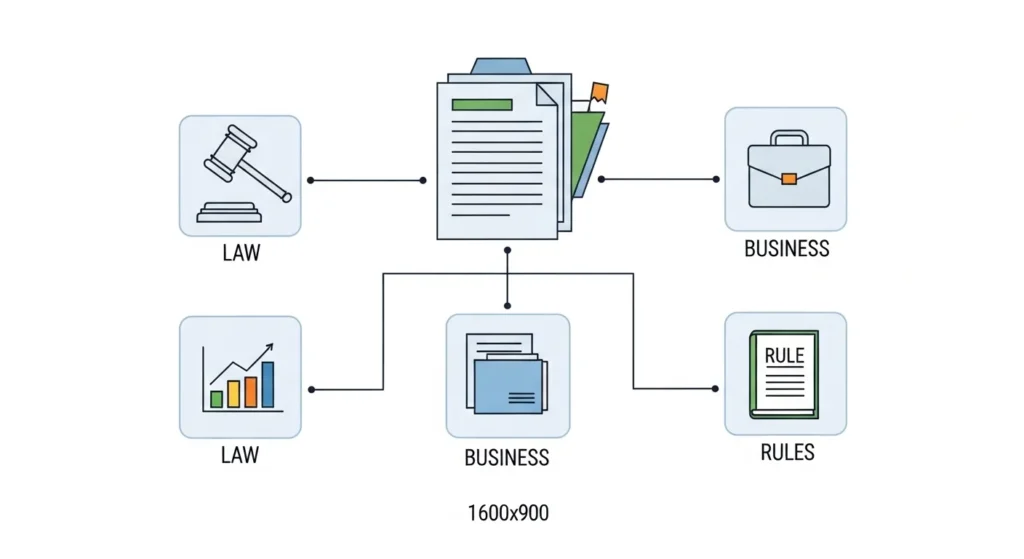

Codify means to arrange laws, rules, or information into a structured system or code. It involves organizing something clearly so it can be easily understood, followed, or applied.
Language is full of words that sound formal but are actually simple once you understand them.
“Codify” is one of those terms you might see in legal writing, business policies, or even everyday discussions.
At first glance, it can feel complex or technical.
So what does codify really mean in plain English?
And how can you use it correctly in real-life situations?
Let’s break it down in a clear, practical, and easy-to-understand way.
What Does Codify Mean? (Simple Explanation)
At its core, codify means organizing something into a system.
It usually involves rules, laws, or ideas.
Simple Meaning
- To arrange information in a clear structure
- To turn rules into an official system
- To make something standardized and easy to follow
For example:
- “The company decided to codify its policies.”
- This means the company organized its rules into a clear system.
Origin of the Word Codify
The word codify has a formal background.
It comes from Latin roots.
Word Breakdown
- “Codex” means a book or set of laws
- “-fy” means to make or turn into
So, codify literally means “to turn into a code.”
Historical Use
- Widely used in legal systems
- Common in government and lawmaking
- Later adopted in business and education
Over time, the word became more common in everyday language.
Why Codify Is Important
Codifying something makes it clearer and more consistent.
It helps avoid confusion.
Key Benefits
- Creates structure and organization
- Makes rules easier to understand
- Ensures consistency
- Helps people follow guidelines correctly
Because of this, codification is common in workplaces and institutions.
How Codify Is Used in Real Life
You will often see codify in formal or semi-formal contexts.
It is especially common in professional environments.
Common Situations
- Legal systems and laws
- Company policies and procedures
- Educational guidelines
- Organizational rules
Tone and Context: What Does Codify Feel Like?
The word codify usually has a formal tone.
It is rarely used in casual conversation.
1. Professional Tone
Used in business or workplace settings.
“The organization codified its internal processes.”
2. Legal Tone
Used in laws and regulations.
“The government codified new regulations.”
3. Informational Tone
Used in educational or explanatory contexts.
“The rules were codified for clarity.”
Labeled Examples of Codify Usage
| Context | Example Sentence | Meaning |
|---|---|---|
| Business | “They codified company policies.” | Organized rules |
| Legal | “The law was codified in 1995.” | Officially structured laws |
| Education | “The guidelines were codified.” | Standardized rules |
| Workplace | “We need to codify procedures.” | Create clear system |
| General | “They codified their ideas.” | Organized concepts |
Codify in Different Contexts
1. Law and Government
In legal systems, codify means organizing laws into a code.
This makes them easier to reference and enforce.
2. Business and Organizations
Companies codify policies to ensure consistency.
It helps employees follow the same rules.
3. Education and Training
Schools and institutions codify guidelines.
This ensures clear expectations for everyone.
Comparison: Codify vs Similar Words
Understanding similar words helps clarify the meaning.
Codify vs Organize
| Codify | Organize |
|---|---|
| Formal and structured | General arrangement |
| Often used for rules | Used for anything |
Standardize vs Codify
| Codify | Standardize |
|---|---|
| Creates a system of rules | Makes things uniform |
| Focus on structure | Focus on consistency |
Codify vs Document
| Codify | Document |
|---|---|
| Organizes into a system | Simply records information |
| More structured | Less formal |
Alternate Meanings of Codify
The meaning of codify stays mostly consistent.
It always relates to organizing into a system.
However, it can apply to different areas:
- Laws and regulations
- Business rules
- Social norms
- Technical processes
So, the context changes, but the core idea remains the same.
Polite or Simpler Alternatives to Codify
If you want simpler or more casual language, you can use alternatives.
Instead, Use:
- Organize
- Structure
- Systemize
- Standardize
- Put into rules
Example:
Instead of: “We need to codify this process.”
Say: “We need to organize this process clearly.”
Do’s and Don’ts of Using Codify
Do
- Use it in formal or professional writing
- Apply it when talking about systems or rules
- Use it for clarity and structure
Don’t
- Use it in very casual conversations
- Confuse it with simple organizing
- Overuse it unnecessarily
Frequently Asked Questions (FAQ)
1. What does codify mean in simple terms?
It means to organize rules or information into a clear system.
2. Is codify a formal word?
Yes, it is mostly used in formal or professional contexts.
3. What does it mean to codify laws?
It means to arrange laws into an official system or code.
4. Can codify be used in business?
Yes, companies often codify policies and procedures.
5. Is codify the same as organize?
Not exactly. Codify is more formal and structured.
6. Can I use codify in everyday conversation?
You can, but simpler words are usually better.
7. What is an example of codify?
“The company codified its workplace rules.”
8. Why is codification important?
It creates clarity, consistency, and structure.
Why Codify Matters in Today’s World
In a world full of information, structure is important.
Codifying rules helps people understand and follow them easily.
It also improves efficiency.
Clear systems reduce confusion and mistakes.
Conclusion: Key Takeaways About Codify
- Codify means to organize into a structured system
- Common in law, business, and education
- Has a formal and professional tone
- Helps create clarity and consistency
- Best used when talking about rules or systems
In simple terms, codify means turning ideas or rules into an organized system.
Using it correctly can make your communication more precise and professional.