

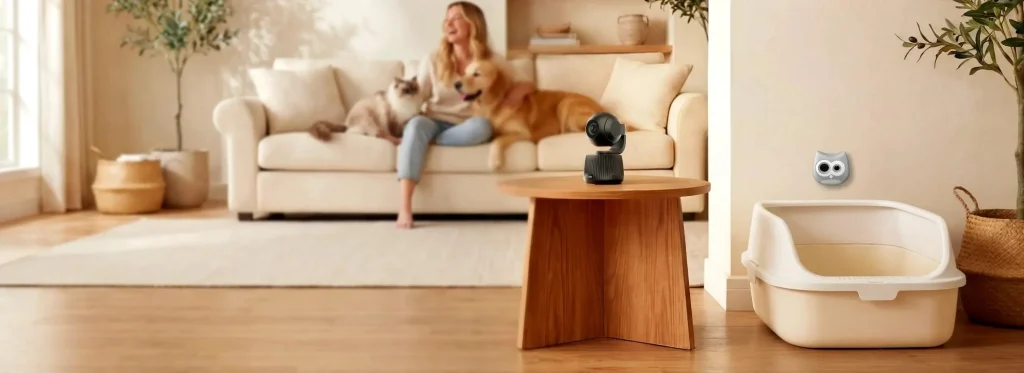
Leaving your dog or cat home alone can feel like walking out the door with a question mark hanging in the air. Are they sleeping peacefully on the couch, chewing your favorite shoes, or pacing anxiously by the window? For years, pet owners had to guess, hope, or come home to surprises they’d rather not find. Today, a small piece of technology has quietly rewritten that story. With just a smartphone and a reliable device on a shelf, you can watch, listen, and even speak to your companion from anywhere. This shift is more than convenience. It changes how we understand our animals, how we care for them, and how we manage the guilt many of us feel when work, errands, or travel pull us out of the house.
Why Curiosity About Our Pets Has Become a Daily Habit
Pets are no longer treated as decoration in the corner of a room. They are family members with routines, moods, and quirks that fascinate the humans who share their space. That emotional bond is what fuels the growing interest in home monitoring for animals. Owners want to know if their senior cat is eating during the afternoon, whether the new puppy has finally settled into the crate, or if the rescue dog barks at every delivery truck that rolls down the street. A simple pet camera answers those questions in real time, replacing worry with clarity. Once you begin watching, you notice patterns you never expected. Your cat has a preferred sunbeam that migrates across the floor. Your dog checks the front door exactly ten minutes before you usually arrive. These small discoveries deepen the relationship in ways that feeding schedules and vet visits never quite could.
There is also a practical layer to this curiosity. Behavior problems, separation anxiety, and health changes often reveal themselves when no human is watching. A dog that seems calm in your presence may whine or destroy furniture the moment the door closes. A cat that appears healthy at dinner may drink water excessively during the day, hinting at a medical issue. Video evidence gives you and your veterinarian something concrete to discuss instead of relying on hunches. That kind of information used to require a friend willing to sit in your living room for hours. Now it fits in your pocket.
What Modern Home Monitoring Actually Looks Like
The category has matured far beyond grainy black-and-white footage from a security cam pointed at the food bowl. Today’s devices are designed with pets in mind, not people. They tend to sit low or wide enough to capture the whole room, use lenses that stay sharp at pet-eye level, and include night vision so your nocturnal cat is not lost in shadow. Two-way audio lets you say hello, calm a nervous dog, or scold the counter surfer in the act. Some models add treat dispensers, laser pointers, or barking alerts that ping your phone the moment things get noisy. Others focus on quiet reliability, streaming clean video for hours without overheating or dropping the signal.
Setup has also become far friendlier for people who do not enjoy fiddling with routers. Most systems walk you through a mobile app, connect to your home wireless network in a few taps, and store recent clips in the cloud or on a memory card. You choose whether motion triggers a notification, whether audio activates recording, and whether the microphone is on at all. That flexibility matters, because every household has different priorities. A single professional in a studio apartment has different needs from a family managing three dogs and a garage full of temptations.
Choosing a Device That Fits Your Home and Your Animal
Before shopping, spend a little time observing your pet. Where do they actually spend their day? A camera aimed at an empty couch is not useful if your terrier prefers the hallway rug. Think about the size of the room, the lighting throughout the day, and whether you need to see one specific spot or a wide open area. Rooms with large windows benefit from cameras that handle backlight well. Dark hallways or basements need strong infrared night vision. Multi-pet households often do better with two smaller devices in different rooms rather than one that tries to cover the whole floor plan.
Consider audio next. If your goal is to check in visually while you eat lunch at your desk, basic sound might be enough. If you want to talk your dog through a thunderstorm or interrupt bad behavior, clear two-way audio becomes essential. Brands such as SiiPet have leaned into this balance between watching and interacting, offering setups that feel calm and natural for both the pet and the human on the other end. The right device fades into the background of your home while giving you a window into a world you normally miss.
Privacy is another quiet but important factor. Any device connected to your wireless network is worth evaluating for how it handles data. Look for clear information about encryption, cloud storage locations, and the ability to disable features you do not use. A camera meant for your living room should not feel like a stranger in the room. Reading the app permissions before installation, changing default passwords, and keeping the firmware updated are simple habits that protect both you and your pet.
Everyday Moments the Camera Changes for the Better
The most surprising thing about live monitoring is how ordinary it becomes. After the first week of excited peeking, most owners settle into short, meaningful check-ins throughout the day. A quick glance during a coffee break confirms that the dog is asleep in a sunbeam. A midafternoon look tells you the cat has finally come out from under the bed. When guests come to feed your pet during a weekend away, the camera lets you confirm they arrived, chatted with your animal, and left the space calm. Small reassurances add up to lower stress for the human at the other end of the leash.
Training also gets easier with a second set of eyes. Separation anxiety is one of the most common issues in dogs, and it is difficult to address without seeing what happens after you leave. Watching the first ten minutes of your absence often reveals the truth. Does your dog settle within a few minutes, or does the pacing continue for an hour? Does the barking start at a specific sound, or is it constant? With that information, you can adjust exit routines, use enrichment toys, or work with a trainer on a real plan rather than a guess. Cats benefit too. Owners often discover that a shy cat is actually confident and playful the moment the house is quiet, which changes how they set up feeding, litter, and hiding spaces.
Elderly pets deserve special mention. As animals age, subtle changes in movement, appetite, and rest can signal health issues that would otherwise go unnoticed. Watching a senior dog attempt the stairs or seeing how long a cat sleeps in one position gives valuable clues you can share with your veterinarian. That kind of early awareness has helped many families catch problems while there is still time to help.
Turning a Camera Into a Genuine Care Tool
The device itself is only half the equation. The other half is the routine you build around it. A few small habits turn casual watching into meaningful care. Place the camera at pet level rather than pointing it down from a shelf, so you see the world the way your animal experiences it. Keep the lens clean and check the angle after vacuuming or rearranging furniture. Set notifications for the events that matter to you and mute the ones that do not, so you are not overwhelmed by pings about a curtain fluttering in the breeze.
Talk to your pet through the speaker sparingly at first. Some dogs love the sound of your voice from a strange direction. Others find it confusing or upsetting when they cannot see you. Watch the reaction and adjust. If the two-way audio stresses your animal, use it only for emergencies rather than daily greetings. The goal is comfort, not novelty. Over weeks and months, the camera becomes part of your household in the same quiet way that a favorite lamp or clock does. You stop thinking about the technology and simply enjoy the connection it makes possible.
A Small Lens That Brings You Closer to Home
Home monitoring for pets is not about surveillance or gadgets for their own sake. It is about closing the distance between the moments you spend together and the hours you cannot. A quick glance at a sleeping cat, a soft word to a restless dog, an early hint that something is off with a senior companion. These are the tiny threads that make daily life with an animal feel more connected and less anxious. If you have ever stood on a sidewalk wondering what is happening behind your front door, a well-chosen camera can turn that question into a calm, quiet answer. The technology is easy. The peace of mind it brings is what really lasts.
