

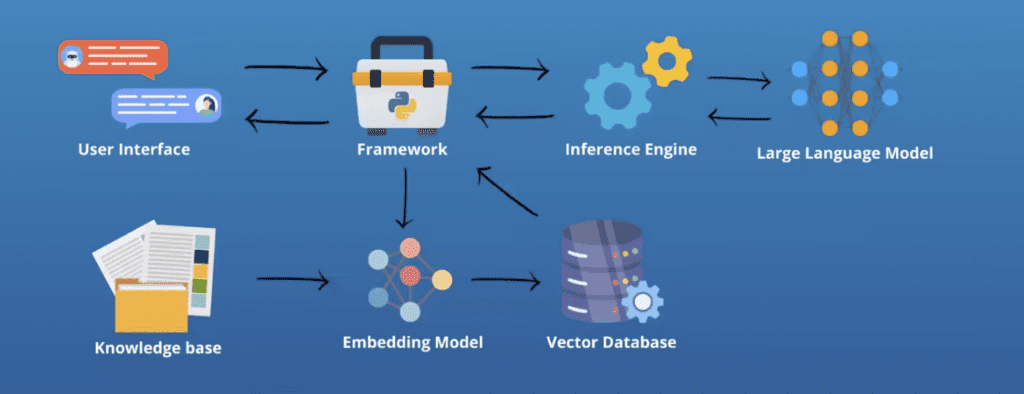
The demand for deploying large language models in production environments has surged dramatically, yet most development teams face the same frustrating bottlenecks. Building and maintaining inference infrastructure from scratch requires specialized DevOps expertise, expensive GPU clusters, and constant attention to scaling, security, and uptime. For many organizations, these barriers delay time-to-market and drain budgets before an application ever reaches users. A multi-model API platform offers a fundamentally different approach—abstracting away infrastructure complexity while providing unified access to diverse LLMs through standardized endpoints. Instead of managing servers, orchestrating containers, and debugging CUDA drivers, developers interact with a clean API layer designed for high-performance inference at scale. This article answers a critical question for AI engineers and developers: how do you effectively leverage a multi-model API platform to deploy LLMs for production inference? We’ll walk through the architectural advantages, essential platform components, a practical deployment workflow, and strategies for optimizing both performance and cost.
Why a Multi-Model API Platform is Essential for Modern AI Deployment
A multi-model API platform is a managed cloud service that provides developers with unified access to multiple large language models through standardized API endpoints. Rather than deploying each model on dedicated infrastructure, the platform aggregates dozens or even hundreds of LLMs—ranging from GPT-class models to open-source alternatives like LLaMA and Mistral—behind a single, consistent interface. Developers select the model they need, send a request, and receive inference results without ever provisioning a server.
This approach stands in sharp contrast to traditional deployment methods. Single-model hosting requires teams to manage GPU allocation, model loading, request queuing, and failover for every individual model they want to serve. In-house LLM deployment compounds these challenges with hardware procurement timelines, driver compatibility issues, and the ongoing burden of keeping inference engines optimized. The operational cost alone can consume engineering bandwidth that should be directed toward building differentiated product features.
The multi-model API platform resolves these pain points through several structural advantages. A unified interface means switching between models—or running A/B tests across them—requires changing a single parameter rather than rebuilding infrastructure. Automatic scaling handles traffic spikes without manual intervention, ensuring consistent latency whether you’re serving ten requests per minute or ten thousand. DevOps overhead drops dramatically because the platform provider manages hardware health, model optimization, and security patching. Cost-efficiency improves because resources are shared across the platform’s user base, eliminating the idle GPU problem that plagues dedicated deployments. For teams pursuing AI model hosting at scale, platforms like SiliconFlow exemplify how an AI cloud platform designed for LLM deployment transforms what was once a months-long infrastructure project into an afternoon’s integration work.
Core Components of an Effective Multi-Model API Platform for LLMs
Not every multi-model API platform delivers the same experience. Understanding the core components that separate production-grade platforms from basic wrappers helps developers make informed decisions and avoid painful migrations later.
Robust Model Repository and Management
A strong platform provides immediate access to a curated library of pre-optimized LLMs spanning both open-source models like LLaMA, Mistral, and Falcon, and proprietary options. Beyond mere availability, look for version control that lets you pin deployments to specific model checkpoints, staging environments where you can validate new model versions before promoting them to production, and seamless update mechanisms that swap underlying weights without endpoint downtime. The ability to import custom fine-tuned models alongside catalog offerings ensures you’re never locked into a one-size-fits-all solution.
High-Performance Model Inference API
The inference API is where developer experience meets production reality. A well-engineered model inference API delivers sub-second latency for typical request sizes, supports throughput measured in thousands of concurrent requests, and handles intelligent request batching to maximize GPU utilization without sacrificing response time. Streaming support is non-negotiable for chat and generative applications—users expect token-by-token output rather than waiting for complete responses. The API should expose clear, RESTful endpoints with comprehensive SDKs in Python, JavaScript, and other popular languages. Consistent response schemas across different models mean your application code doesn’t need model-specific parsing logic. Rate limiting, retry headers, and detailed error codes round out what makes an inference API genuinely production-ready rather than merely functional in a demo environment.
Scalable and Secure Infrastructure
Production workloads are unpredictable. An effective AI cloud platform handles this through automatic horizontal scaling that spins up additional inference replicas during traffic surges and vertical scaling that allocates more powerful accelerators for computationally intensive models. Global availability zones reduce latency for geographically distributed users. Security must be foundational: end-to-end encryption for data in transit and at rest, granular API key management with role-based access controls, and compliance certifications relevant to your industry ensure that deploying LLMs doesn’t introduce unacceptable risk.
A Step-by-Step Guide to Deploying Your First LLM
Step 1: Platform Selection and Account Setup. Begin by evaluating platforms against your specific requirements: model availability, geographic coverage, pricing transparency, and SDK support for your tech stack. Once you’ve selected a platform, create an account, generate your first API key, and configure workspace permissions if you’re operating within a team. Most platforms offer sandbox environments with limited free credits—use these to validate the developer experience before committing to a paid tier.
Step 2: Model Selection and Import. Browse the platform’s model repository to identify the LLM that matches your use case. For general-purpose text generation, a GPT-class or Mistral model might suffice. For domain-specific tasks, you may need to upload a custom fine-tuned model. When selecting from the catalog, consider the model’s context window, parameter count, and benchmark performance on tasks similar to yours. If importing a custom model, verify that the platform supports your model format (such as GGUF, SafeTensors, or ONNX) and follow the upload workflow to register it as a deployable asset.
Step 3: Configuring the Deployment. With your model chosen, configure the deployment parameters. Select the appropriate accelerator tier based on your latency and throughput requirements. Define scaling policies—minimum and maximum replicas, scale-up thresholds based on queue depth or latency targets, and cool-down periods to prevent thrashing. Set concurrency limits per instance and choose the deployment region closest to your user base to minimize network round-trips.
Step 4: Launching and Testing the Endpoint. Trigger the deployment and wait for the platform to provision resources and load model weights. Once the endpoint status shows active, test it immediately. Use cURL to send a simple completion request, verifying that you receive a well-formed response with acceptable latency. Then switch to the platform’s Python SDK to validate streaming behavior, error handling for malformed inputs, and timeout configurations. Document your baseline latency and token throughput at this stage—these numbers become your performance reference.
Step 5: Integration and Monitoring. Integrate the endpoint URL and API key into your application’s backend, wrapping calls with retry logic and circuit breakers for resilience. Configure the platform’s monitoring dashboard to track request volume, p50/p95 latency, error rates, and token consumption. Set up alerts for anomalies—sudden latency spikes, elevated error rates, or unexpected cost increases. This observability layer ensures you catch degradation before users do, and the data feeds directly into future optimization decisions.
Optimizing Performance and Managing Costs on Your AI Cloud Platform
Deploying an LLM is only the beginning—operational excellence requires continuous tuning of both performance and spend. On the performance side, batch size selection directly impacts throughput and latency tradeoffs. Grouping multiple inference requests into a single batch maximizes GPU utilization, but overly large batches introduce queuing delays that frustrate real-time users. Start with small batches for latency-sensitive endpoints and larger batches for offline processing tasks like document summarization or bulk classification. Implement a response caching layer for repeated or near-identical prompts; even a simple semantic cache that matches requests within a cosine similarity threshold can eliminate redundant GPU cycles and shave double-digit percentages off your inference costs. Hardware accelerator selection matters too—lightweight models performing simple classification don’t need top-tier GPUs, while large autoregressive models generating long sequences benefit from high-memory accelerators with fast interconnects.
Cost management on a multi-model API platform demands the same rigor you’d apply to any cloud resource. Start by understanding the pricing model your platform uses: pay-per-token pricing rewards efficiency in prompt engineering, while reserved capacity plans suit predictable, high-volume workloads. Set granular usage alerts at 50%, 75%, and 90% of your monthly budget so you’re never surprised by a billing spike caused by a runaway integration test or an unexpected traffic surge. Configure auto-scaling policies with conservative maximum replica counts and appropriate cool-down periods—aggressive scale-up without matching scale-down logic is one of the fastest ways to burn through budget. Compare your platform costs against the fully loaded expense of in-house hosting, factoring in engineer time, hardware depreciation, electricity, and opportunity cost. In nearly every scenario, the multi-model platform delivers superior cost-efficiency because shared infrastructure amortizes idle capacity across thousands of tenants rather than leaving expensive GPUs underutilized in your private cluster.
Building a Strategic Foundation for Production LLM Deployment
Multi-model API platforms have fundamentally reshaped how teams bring large language models into production. What once demanded months of infrastructure engineering—procuring GPUs, configuring inference servers, building scaling logic, and hardening security—now collapses into a streamlined workflow accessible to any developer with API familiarity. The path to successful deployment follows a clear trajectory: select a platform that matches your model needs and compliance requirements, choose and configure the right LLM, launch your endpoint with appropriate scaling policies, integrate it into your application with proper resilience patterns, and continuously optimize for both performance and cost.
The deeper value proposition extends beyond convenience. By offloading infrastructure management to a specialized platform, engineering teams reclaim their most scarce resource—focused attention—and redirect it toward building the application logic, user experiences, and domain-specific innovations that actually differentiate their products. The economics reinforce this shift: shared infrastructure eliminates idle capacity waste, and pay-per-use models align costs directly with delivered value.
Looking ahead, the AI model hosting landscape will continue evolving toward greater abstraction and intelligence. Expect platforms to offer automated model routing that selects the optimal LLM per request based on task complexity, built-in evaluation pipelines, and tighter integration with fine-tuning workflows. For developers building today, adopting a multi-model API platform isn’t just a tactical shortcut—it’s a strategic foundation that positions your applications to absorb future model improvements without architectural rework.
