

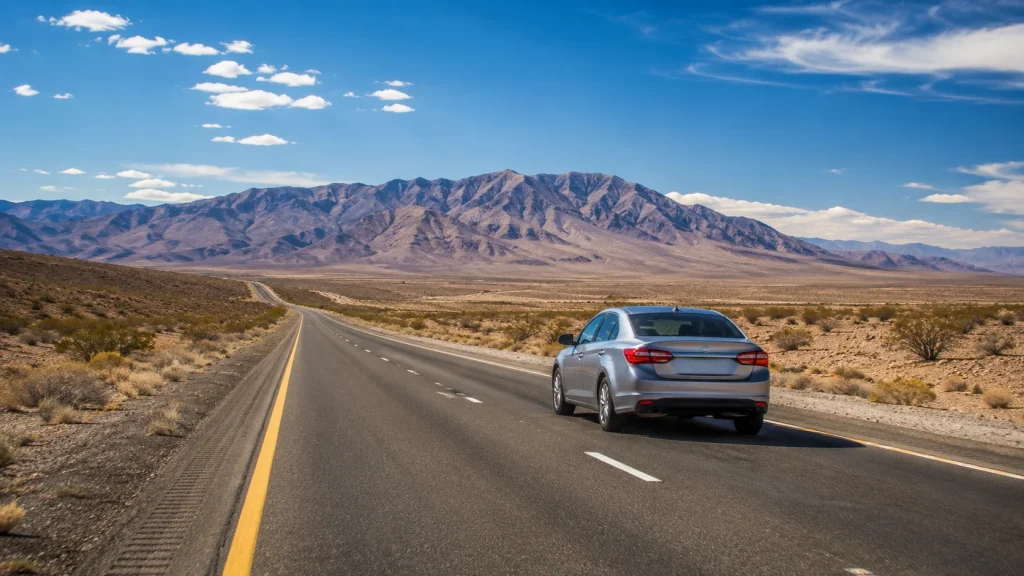
Henderson drivers know the drill by late May. Dashboard thermometers push past 110, steering wheels get too hot to touch bare-handed, and asphalt on the 215 Beltway radiates heat you can feel through the floorboard. The desert doesn’t just make commutes uncomfortable. It changes how a car behaves and how much margin for error a driver actually has. A vehicle that runs fine in March can develop problems in July that most people never see coming until they’re sitting on the shoulder waiting for a tow.
Why Desert Heat Is Harder on a Car Than People Realize
It’s tempting to assume heat mainly affects comfort: the AC working overtime, seats too hot to sit on right away. The mechanical stress runs deeper than that. Direct sun can push asphalt temperatures 40 to 60 degrees above the air temperature, so a 112-degree afternoon in Henderson can mean pavement close to 160 degrees. That kind of sustained heat speeds up the breakdown of rubber in tires, hoses, and belts, weakens battery fluid faster, and puts extra strain on a cooling system already fighting triple-digit air.
None of this shows up right away. It shows up as a blowout on I-15 near Boulder City, a battery that won’t turn over after a Costco run, or a check-engine light on the drive to work. The damage builds quietly all summer, then fails at the worst possible moment.
Tires: The Most Overlooked Desert Hazard
Tires take the brunt of it. Heat makes the air inside them expand, and pavement in the 150-plus range accelerates wear on rubber that’s already aging fast under Nevada’s intense sun. A tire that would last five or six years in a cooler climate often needs replacing sooner here, regardless of tread depth, simply because the compound has hardened and started to crack.
A few habits make a real difference:
- Check pressure when tires are cold, ideally first thing in the morning before the car has been driven. A hot tire reads several PSI higher than its true baseline.
- Match the pressure on the door-jamb sticker, not the number molded into the tire’s sidewall. Those are different specs, and mixing them up is a common mistake.
- Inspect sidewalls for cracking or bulging every month or two. UV and heat damage often shows up there before tread wear becomes obvious.
- Replace tires by age, not just mileage. In the Las Vegas Valley, tires frequently need replacement well before hitting their mileage rating because of heat exposure.
The National Highway Traffic Safety Administration has detailed guidance on reading tire ratings and catching wear before it turns dangerous, worth a look before the next tire purchase. See NHTSA’s tire safety resources.
Batteries Don’t Get a Break Either
Cold weather usually gets blamed for killing car batteries, but in the desert Southwest, heat does the real damage. High temperatures speed up the chemical reactions inside a battery, which shortens its usable life and can cause internal fluid to evaporate faster than it would in a milder climate. A battery that would easily last four or five years elsewhere might need replacing in three here. Getting it tested at the start of summer, something many auto parts stores will do for free, beats finding out it’s dead in a parking lot at 4 p.m. in August.
Cooling Systems Under Constant Load
Stop-and-go traffic on Eastern Avenue or Green Valley Parkway, combined with the AC running full blast, is close to a worst-case scenario for a car’s cooling system. Engines generate more heat at low speeds with the AC on, and if coolant levels are low or a hose has started to degrade, that’s exactly when overheating shows up. Checking coolant monthly during summer, and getting any dashboard warning light looked at right away instead of waiting to see, prevents most roadside breakdowns before they start.
Glare, Dust, and Sudden Monsoon Storms
Heat isn’t the only desert hazard specific to this part of Nevada. Low-angle sun during the long, cloudless mornings and evenings creates glare severe enough to blind a driver for a second or two, especially heading east on Horizon Ridge Parkway at sunrise or west on Sunset Road in the evening. Keeping a clean windshield (dust film makes glare noticeably worse) and a spare pair of sunglasses in the glovebox is a small habit that heads off a real hazard.
Dust storms are the other wildcard. Nevada’s open terrain can produce sudden, low-visibility dust events, especially during windy spring and early summer conditions, cutting visibility to near zero within seconds. If one hits while driving, the standard advice holds up: pull as far off the roadway as possible, turn off the lights, take a foot off the brake, and wait it out. A driver who leaves taillights on can actually get rear-ended by someone using those lights to navigate toward the shoulder.
Monsoon season, roughly July through September, brings a different problem. Ground baked hard by months of heat doesn’t absorb sudden downpours well, so a normally dry wash near Henderson can flood within minutes of a storm starting. Flash flooding has caught plenty of drivers off guard who assumed a dip in the road was passable because it looked shallow. Turning around rather than driving through moving water isn’t overly cautious. It’s the only response that reliably keeps a car on the road.
Building a Real Desert Emergency Kit
Nevada’s open stretches of highway, I-15 toward the California line, US-93 south toward Boulder City, have long gaps between services. A mechanical failure out there isn’t just inconvenient in July or August heat; it can turn dangerous quickly. A basic kit worth keeping in the trunk year-round includes more water than seems necessary, a flashlight, a first-aid kit, jumper cables, and a phone charger that doesn’t depend on the engine running. If a breakdown happens in open desert, staying with the vehicle and out of direct sun is almost always safer than trying to walk for help.
Insurance Considerations for Desert Driving
Nevada requires drivers to carry at least 25/50/20 in liability coverage: $25,000 per person and $50,000 per accident for bodily injury, plus $20,000 for property damage. Those are the legal minimums, and they’re worth treating as a floor rather than a target. Heat-related mechanical failures, like a blowout that leads to a collision, still get handled as ordinary at-fault accidents, and Nevada’s relatively high rate of uninsured drivers makes uninsured/underinsured motorist coverage worth a serious look even though it isn’t required.
Comprehensive coverage is also worth understanding in a desert market, since it typically covers non-collision damage like windshield cracks from heat-stressed glass or flooding from a sudden monsoon storm, both fairly common in the Las Vegas Valley between July and September. When shopping for coverage, comparing a few quotes rather than letting a policy renew automatically tends to pay off, since rates for otherwise identical coverage can vary a surprising amount between insurers in the Henderson area. Shoppers comparing options should look at Nevada car insurance providers that actually price for regional risk, extreme heat and monsoon-season claims included, rather than assuming a national average rate applies locally.
The Practical Takeaway
Desert driving in Henderson isn’t inherently dangerous, but it asks for more attention to maintenance than driving in a milder climate does. Tires, batteries, and cooling systems all age faster here, and the margin for error on a remote highway in August is smaller than it looks. A little proactive checking, pressure gauges, battery tests, coolant levels, costs far less than a tow truck or an ER visit. It’s the difference between a summer road trip and a summer breakdown.
