

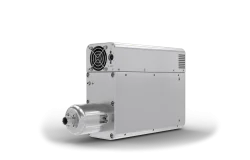
Modern X-ray equipment must balance image quality, operational reliability, physical size, and application-specific performance. At the centre of this balance is the power system, which determines how consistently an X-ray tube receives the energy required to produce radiation. Selecting a high voltage power supply for X ray tube is therefore an important design decision for original equipment manufacturers (OEMs). A custom generator can be configured around the equipment’s intended use instead of forcing the entire system to adapt to a standard component.
Matching Electrical Output to Application Requirements
Different X-ray applications demand different voltage, current, and power levels. Security inspection systems may need penetration through dense objects, while medical imaging equipment can prioritise image detail, scan speed, and controlled exposure. Industrial non-destructive testing also varies according to material thickness and inspection method. A custom generator allows engineers to define output parameters that correspond to the tube and the task.
Choosing suitable operating ranges helps avoid oversizing or underpowering the system. The required configuration should be established through engineering evaluation of the tube rating, duty cycle, imaging method, and system architecture. Matching these factors early can reduce redesign work later.
Improving Image Consistency and Control
Stable high voltage is essential because fluctuations can affect X-ray output and image consistency. A generator designed for the intended tube and operating cycle can help maintain controlled voltage and emission current. This supports repeatable imaging, dependable inspection results, and more predictable system behaviour.
Filament regulation, feedback mechanisms, and suitable interfaces allow the generator to respond to operating commands while maintaining the required output. In applications where scans must be repeated, or production lines operate continuously, consistent control can support dependable results. Engineers should assess voltage stability, current regulation, rise time, and control response against the needs of the complete imaging system.
Making Equipment More Compact
Space is a major consideration in modern equipment design. Portable inspection units, robotic systems, medical devices, and compact analytical instruments all have physical limits. A generator designed with the installation in mind can make better use of available space and help reduce unnecessary system volume.
Designers should consider ventilation, access to connectors, cable routing, and the location of other components during early development. A carefully selected generator can simplify the mechanical layout and give OEM teams more flexibility when developing a new product or updating an existing design.
Simplifying Integration with OEM Systems
A generator must work as part of a wider system that includes the X-ray tube, detector, motion controls, safety circuits, and operating software. Customisation can address mounting requirements, electrical connections, communication protocols, and control logic before equipment enters production.
Standard digital interfaces, such as RS-232 on applicable models, can help equipment controllers exchange commands and operating information with the generator. Multiple mounting options can also accommodate different chassis designs. When these details are considered early, integration testing can become more organised and potential compatibility issues may be identified sooner.
Supporting Thermal Management and Reliability
High-voltage components generate heat during operation. If heat is not managed appropriately, it can affect component life, output stability, and equipment availability. Generator design should therefore account for the expected duty cycle, ambient temperature, cooling method, and installation environment.
Oil-based thermal dissipation, heat exchangers, and other cooling arrangements may be appropriate depending on the product configuration. Engineers should review the manufacturer’s thermal limits and ensure that the surrounding equipment provides the required operating conditions.
Reliability also depends on robust construction, suitable component selection, and protection against operating conditions outside the intended range. A generator matched to the application can help avoid unnecessary electrical and thermal stress. Maintenance access and clear diagnostic information should remain part of the overall design process.
Allowing Flexibility Through Customisation
OEM products often serve different markets, even when they share a common equipment platform. A configurable generator can accommodate variations in voltage, power, polarity, filament requirements, cooling, and physical layout. This flexibility is useful when a manufacturer develops several equipment models or adapts a design for a particular inspection task.
Customisation should not mean adding complexity without purpose. Each requested feature needs to support a defined engineering requirement, comply with the tube’s operating limits, and fit the system’s safety strategy. Close communication between the equipment designer and generator manufacturer helps establish realistic specifications and avoid late changes.
Considering Safety and System-Level Design
High voltage and ionising radiation require careful engineering controls. Generator selection must be considered alongside shielding, interlocks, grounding, enclosure design, emergency stops, and applicable regulatory requirements. The generator alone cannot make an X-ray system safe; protection depends on the complete equipment design, correct installation, validation, and operating procedures.
OEM teams should confirm relevant specifications and compliance responsibilities for the target market. They should also evaluate how faults are detected, how output is disabled, and how service personnel can work safely. Integrating these considerations from the beginning is more effective than treating safety as a final-stage addition.
Choosing a Generator for Long-Term Product Development
The right generator is not simply the unit with the highest output. Engineers need to compare operating range, stability, dimensions, weight, interface options, cooling, tube compatibility, and customisation support. They should also consider product availability, technical communication, documentation, and support throughout development.
A structured selection process begins with a clear requirements document. This should identify the X-ray tube, intended application, duty cycle, required output, mechanical constraints, control interface, and environmental conditions. Reviewing these details with a specialist manufacturer can help narrow the options and establish a practical integration plan.
Conclusion
Custom generator design gives OEMs greater freedom to build X-ray equipment around real application needs. By aligning electrical output, control, thermal management, size, and interfaces, manufacturers can create systems that are easier to integrate and better suited to their intended tasks. Careful selection of a high voltage power supply for X ray tube supports consistent operation, efficient engineering, and a dependable foundation for future equipment development.
Designed to support advanced imaging, inspection, and equipment development across diverse industries, VJ X-Ray designs and manufactures integrated X-ray sources and high-voltage generators for OEM equipment manufacturers. Their IXS and HVL/HVG ranges offer configurable output, compact construction, integration options, and application-focused engineering for security, medical, industrial, food, electronics, and analytical systems. Discuss your equipment requirements with VJ X-Ray to identify a suitable high frequency generator X ray solution for your application.
