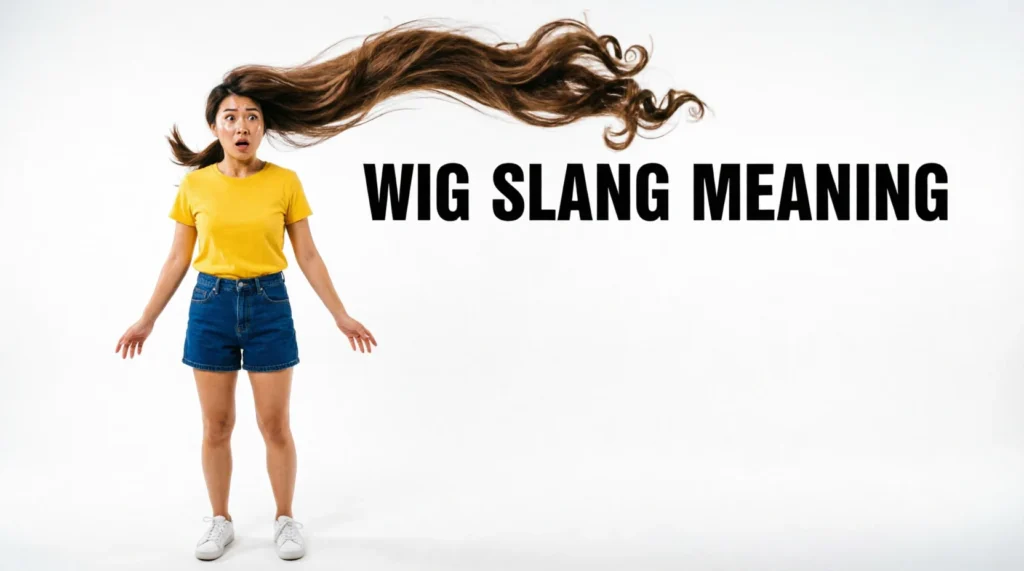

Wig (slang) means a strong emotional reaction, usually excitement or shock. It is often used in phrases like “wig snatched,” which describes being amazed, impressed, or overwhelmed.
The internet is full of expressive slang that captures emotions instantly.
“Wig” is one of those terms you’ve probably seen in comments, captions, or reaction posts.
People often say things like “my wig is gone” or “wig snatched.”
At first glance, it might sound confusing.
After all, a wig is just something you wear on your head.
So why are people using it in conversations online?
Let’s break down the slang meaning of wig in a clear and practical way.
What Does Wig Mean in Slang? (Simple Explanation)
At its core, wig is about reaction.
It expresses a strong emotional response.
Main Meaning of Wig
- Shock or amazement
- Being impressed by something
- Feeling surprised or overwhelmed
- Reacting to something unexpected
The slang usually appears in phrases rather than alone.
This makes context important for understanding it.
Origin of Wig Slang
The slang use of wig comes from internet culture.
It is strongly connected to specific communities.
Where It Started
- Black and LGBTQ+ communities
- Drag culture and performance spaces
- Early viral memes and reaction content
How It Spread
Social media helped the term grow quickly.
Platforms like Twitter, TikTok, and YouTube made it popular.
Memes and reaction videos played a big role.
Over time, wig became a common way to express excitement online.
Why Wig Is So Popular Online
There are clear reasons behind its popularity.
The word is expressive and easy to use.
Key Reasons
- Strong emotional impact
- Popular in memes and reaction posts
- Short and catchy
- Works well with dramatic expressions
Because of this, wig became a go-to reaction slang.
How Wig Is Used in Real Life (Online & Chat)
You will mostly see wig in informal conversations.
It appears often in social media and chats.
Common Situations
- Reacting to impressive performances
- Responding to surprising news
- Commenting on viral videos
- Showing excitement or disbelief
Tone and Context: What Does Wig Feel Like?
The tone of wig is usually expressive.
It often carries excitement or shock.
1. Excited / Impressed Tone
Used when something is amazing.
“That performance was incredible, wig snatched.”
2. Shocked / Surprised Tone
Used for unexpected moments.
“I did not see that coming, my wig is gone.”
3. Dramatic / Reaction Tone
Used for emphasis in online reactions.
“Wig flew off after that plot twist.”
4. Playful / Casual Tone
Used in light conversations.
“Your outfit today, wig.”
Labeled Examples of Wig Usage
| Context | Example Sentence | Meaning |
|---|---|---|
| Reaction post | “Wig snatched after that scene.” | Shock or amazement |
| Social media | “My wig is gone.” | Strong reaction |
| Compliment | “That look, wig.” | Impressed |
| Chat message | “Wig flew.” | Dramatic surprise |
| Meme caption | “Wig snatched moment.” | Emotional reaction |
Wig in Different Online Communities
1. Social Media Platforms
On social media, wig is used as a reaction term.
It appears often in comments and captions.
- TikTok videos
- Twitter replies
- Instagram posts
2. Pop Culture and Entertainment
In entertainment spaces, wig is used for dramatic reactions.
It often responds to performances or reveals.
- Music performances
- TV shows and movies
- Celebrity moments
3. Friend Groups and Chat
Among friends, it is used casually.
The tone is usually playful or expressive.
- Quick reactions
- Joking responses
Comparison: Wig vs Similar Internet Slang
Understanding similar terms helps clarify usage.
Wig vs Shocked
| Wig | Shocked |
|---|---|
| Informal slang | Formal expression |
| More dramatic | More neutral |
Mind Blown vs Wig
| Wig | Mind Blown |
|---|---|
| Short and trendy | More descriptive |
| Often humorous | More straightforward |
Wig vs OMG
| Wig | OMG |
|---|---|
| Stylish reaction slang | Common expression |
| Used in specific communities | Universal usage |
Alternate Meanings of Wig (Outside Slang)
The word wig has its original meaning.
It can also have other uses.
- A hairpiece worn on the head
- Used in fashion and beauty contexts
- Literal meaning in everyday language
So, context helps you understand whether it is slang or not.
Polite or Professional Alternatives to Wig
Slang like wig is not suitable in formal settings.
Clear expressions work better in professional communication.
Instead, Use:
- Impressive
- Surprising
- Remarkable
- Unexpected
- Outstanding
Example:
Instead of: “Wig snatched.”
Say: “That was very impressive.”
Do’s and Don’ts of Using Wig
Do
- Use it in casual conversations
- Use it for reactions
- Keep it natural
Don’t
- Use it in professional writing
- Overuse it
- Use it without context
Frequently Asked Questions (FAQ)
1. What does wig mean in slang?
Wig means a strong emotional reaction.
It usually expresses shock or excitement.
2. What does “wig snatched” mean?
It means something impressed or amazed you greatly.
It shows a dramatic reaction.
3. Is wig a compliment?
Sometimes, yes.
It can show admiration or excitement.
4. Why do people say “my wig is gone”?
It means they are shocked or overwhelmed.
It emphasizes a strong reaction.
5. Where did wig slang come from?
It comes from drag culture and online communities.
It spread through social media.
6. Can I use wig in texting?
Yes, it is common in casual chats.
It works best in informal conversations.
7. Is wig the same as OMG?
Not exactly.
Wig is more dramatic and expressive.
8. Should I use wig in professional settings?
No, it is better to avoid it.
Use formal words instead.
Why Wig Matters in Today’s Digital World
Online communication relies on quick reactions.
Slang like wig helps express emotions instantly.
It also reflects creativity in language.
People use it to make conversations more engaging.
Conclusion: Key Takeaways About Wig Meaning in Slang
- Wig expresses shock, excitement, or amazement
- Often used in phrases like “wig snatched”
- Common in social media and pop culture
- Tone is usually dramatic or playful
- Not suitable for formal communication
In simple terms, wig is a fun way to show a strong reaction.
Using it correctly helps you sound natural in online conversations.