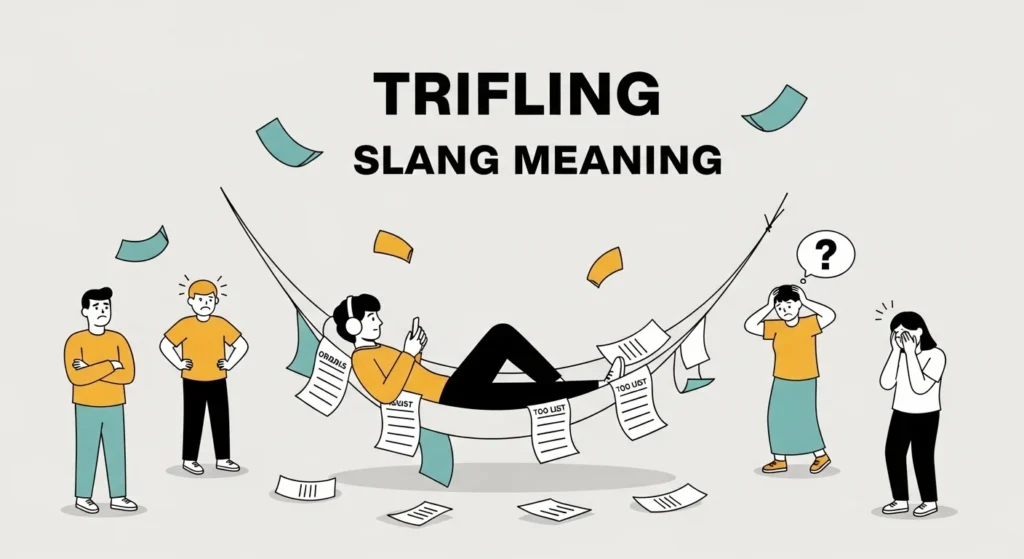

Trifling (slang) means petty, unimportant, or behaving in a careless and disrespectful way. It is often used to describe someone who lacks seriousness, reliability, or basic respect.
The internet is full of expressive slang, and “trifling” is one of those words that carries strong attitude.
You might see someone say “that’s trifling behavior” or “he’s being trifling,” especially in social media conversations.
At first glance, it may sound harmless.
In reality, the word often carries a negative tone and judgment.
So what exactly does trifling slang mean, and how do you use it correctly?
Let’s break it down in a clear and relatable way.
What Does Trifling Mean in Slang? (Simple Explanation)
At its core, trifling refers to behavior that is petty or careless.
It usually points out actions that feel disrespectful or not worth taking seriously.
Main Meaning of Trifling
- Petty or insignificant behavior
- Acting careless or irresponsible
- Showing lack of respect or effort
- Doing something that feels low-effort or annoying
Unlike neutral slang, trifling is almost always negative.
It is often used to call out behavior rather than describe a situation.
Origin of Trifling Slang
The word trifling is not new.
It has existed in English for a long time.
Where It Started
- Derived from the word “trifle,” meaning something of little value
- Used historically to describe unimportant matters
- Later adopted into everyday speech with a stronger tone
How It Evolved
Over time, the meaning shifted slightly.
In modern slang, it became more about behavior and attitude.
It gained popularity through everyday speech and online culture.
Now, trifling is widely used to describe people’s actions, especially when they seem petty or disrespectful.
Why Trifling Is So Popular Online
There are clear reasons why this word is commonly used today.
It captures a strong opinion in just one word.
Key Reasons
- Expresses frustration quickly
- Easy to understand in context
- Works well in conversations and posts
- Fits situations involving petty behavior
Because of this, trifling has become a go-to word for calling out low-effort or disrespectful actions.
How Trifling Is Used in Real Life (Online & Chat)
You will usually see trifling in casual conversations.
It appears in comments, captions, and everyday chats.
Common Situations
- Calling out rude behavior
- Describing someone unreliable
- Reacting to petty actions
- Expressing disappointment
Tone and Context: What Does Trifling Feel Like?
The tone of trifling is mostly negative.
However, it can vary slightly depending on how it is used.
1. Critical Tone
Used to point out bad behavior.
“That was trifling of you.”
2. Frustrated Tone
Used when someone feels annoyed.
“He’s always acting trifling.”
3. Casual Judgment
Used in everyday conversation.
“That’s some trifling behavior.”
4. Light Humor (Less Common)
Sometimes used jokingly.
“You didn’t share your food, that’s trifling.”
Labeled Examples of Trifling Usage
| Context | Example Sentence | Meaning |
|---|---|---|
| Argument | “That was trifling.” | Petty or disrespectful |
| Friends chat | “You’re trifling for that.” | Playful criticism |
| Social media | “Stop the trifling behavior.” | Calling out actions |
| Relationship | “He’s too trifling.” | Unreliable or careless |
| Reaction | “That’s trifling.” | Disapproval |
Trifling in Different Situations
1. Relationships
In relationships, trifling often describes lack of effort.
It can point to disrespect or inconsistency.
- Not keeping promises
- Ignoring responsibilities
- Acting immature
2. Social Media
Online, the word is used to react quickly.
It often appears in comments or captions.
- Calling out behavior
- Reacting to viral content
- Expressing opinions
3. Everyday Conversations
Among friends, it can be direct or playful.
Tone depends on the situation.
- Light teasing
- Honest criticism
Comparison: Trifling vs Similar Slang
Understanding similar terms helps you use trifling correctly.
Trifling vs Petty
| Trifling | Petty |
|---|---|
| Careless or disrespectful | Focused on small issues |
| Broader meaning | More specific |
Lazy vs Trifling
| Trifling | Lazy |
|---|---|
| Includes attitude and behavior | Only about lack of effort |
| Can imply disrespect | Neutral description |
Trifling vs Disrespectful
| Trifling | Disrespectful |
|---|---|
| Informal slang | More formal |
| Slightly indirect | Direct meaning |
Alternate Meanings of Trifling
Outside of slang, trifling has a simpler meaning.
It refers to something small or unimportant.
- A trifling matter
- A minor issue
In slang, however, the focus shifts to behavior rather than size or importance.
Polite or Professional Alternatives to Trifling
In formal settings, using slang like trifling is not appropriate.
More neutral language is preferred.
Instead, Use:
- Unprofessional
- Careless
- Inconsiderate
- Irresponsible
- Disrespectful
Example:
Instead of: “That’s trifling behavior”
Say: “That behavior is unprofessional.”
Do’s and Don’ts of Using Trifling
Do
- Use it in casual conversations
- Understand the tone
- Use it when describing behavior
Don’t
- Use it in formal writing
- Overuse it
- Use it without understanding context
Frequently Asked Questions (FAQ)
1. What does trifling mean in slang?
It means petty, careless, or disrespectful behavior.
It is usually used negatively.
2. Is trifling an insult?
Yes, it can be.
It often criticizes someone’s actions.
3. Can trifling be used jokingly?
Sometimes, yes.
However, it still carries a critical tone.
4. What does “you’re trifling” mean?
It means you are acting in a petty or careless way.
It can sound judgmental.
5. Is trifling the same as petty?
They are similar.
Trifling has a broader meaning.
6. Where is trifling commonly used?
It is used in everyday speech and online conversations.
It is common in social media and casual chats.
7. Can I use trifling in professional settings?
No, it is better to avoid slang.
Use more formal alternatives instead.
8. Is trifling always negative?
Mostly yes.
It is rarely used in a positive way.
Why Trifling Matters in Today’s Digital World
Online communication often involves quick reactions.
Words like trifling help express strong opinions instantly.
It also reflects how people judge behavior today.
Language continues to evolve with social interaction.
Conclusion: Key Takeaways About Trifling Meaning in Slang
- Trifling means petty or careless behavior
- It is mostly used in a negative sense
- Often describes disrespect or low effort
- Common in social media and casual conversations
- Not suitable for formal communication
In simple terms, trifling describes behavior that feels careless, petty, or not worth respect.
Using it correctly helps you express criticism clearly in everyday language.