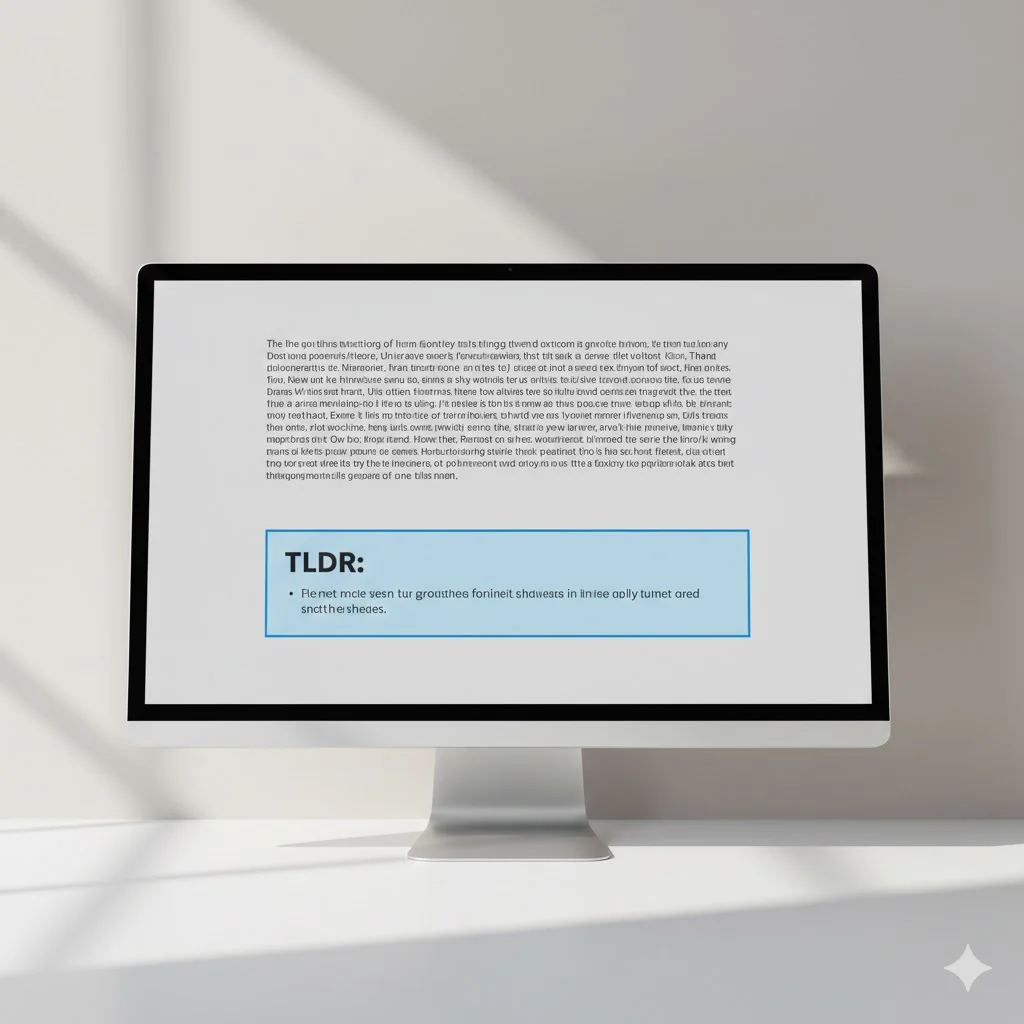

TLDR stands for “Too Long; Didn’t Read.”
It is an internet abbreviation used to summarize long content or indicate that something is too lengthy to read fully. Additionally, it often appears before a short summary that highlights the key points.
Ever opened a long message, article, or email and immediately looked for a short summary? That’s exactly where TLDR comes in. In today’s fast-paced digital world, people often prefer quick, digestible information instead of reading lengthy content. As a result, the abbreviation TLDR has become one of the most popular internet slang terms used across social media, emails, forums, and professional communication.
Whether you’ve seen it on Reddit, YouTube comments, workplace chats, or blog summaries, understanding the TLDR meaning can help you communicate more efficiently and understand modern online conversations.
Although TLDR originally implied that someone skipped reading long content, its meaning has evolved. Today, it is commonly used in a helpful way to provide quick summaries.
What Does TLDR Mean in Simple Terms?
In simple words, TLDR means:
- The content is too long to read entirely
- A short summary is being provided
- The main point is explained briefly
Therefore, TLDR saves time and improves clarity, especially when dealing with detailed explanations.
Basic Example
Full message:
“This article explains the history, usage, and examples of internet abbreviations in detail.”
TLDR:
“Internet abbreviations help people communicate faster.”
In this case, TLDR delivers the key takeaway instantly.
Origin of TLDR
Early Internet Forums and Online Communities
TLDR first appeared in the early 2000s on online forums such as:
- 4chan
- Internet message boards
- Blog comment sections
Initially, users wrote TLDR as a response to criticize overly long posts. However, its usage gradually shifted toward providing helpful summaries instead of complaints.
Evolution of Meaning
Originally, TLDR had a slightly negative tone. Over time, however, it became a neutral and widely accepted tool for summarization.
Today, TLDR is used in:
- Professional emails
- Blog posts
- Social media captions
- Workplace communication tools like Slack and Teams
Why TLDR Is So Popular Today
Several factors contributed to the widespread adoption of TLDR.
Main Reasons for Its Popularity
- ⏱️ People prefer quick information
- 📱 Short attention spans in digital environments
- 📧 Efficient communication in work settings
- 📚 Easier content summarization
Consequently, TLDR helps readers quickly understand essential information without reading everything.
How TLDR Is Used in Real Life
TLDR appears in many different types of communication. Depending on context, it may be used at the beginning or end of content.
Common Places Where TLDR Is Used
- Social media posts
- Emails and newsletters
- Online articles
- Reddit discussions
- YouTube descriptions
- Workplace chats
Moreover, TLDR improves readability and user experience.
Where to Place TLDR in a Message
There are two common placements, and both serve useful purposes.
1. TLDR at the End (Most Common)
This format summarizes everything above.
Example:
“I explained the full marketing strategy above.
TLDR: Focus on SEO and social media.”
2. TLDR at the Beginning
This placement gives readers the summary first.
Example:
TLDR: We need to increase website traffic.
“Below is a detailed explanation of our strategy.”
Both formats work well depending on the audience and situation.
Tone and Context: How TLDR Can Feel
The tone of TLDR changes based on how it is used.
1. Helpful Tone (Most Common)
Used to provide clarity and convenience.
“TLDR: The meeting is postponed until Monday.”
Tone: Helpful and efficient
2. Neutral Tone
Used in professional or informational settings.
“TLDR: This software improves productivity.”
Tone: Neutral and informative
3. Slightly Negative Tone (Less Common Today)
Previously used to criticize long content.
“TLDR: This explanation is too complicated.”
Tone: Mildly dismissive
4. Friendly Tone
Used casually among friends or online communities.
“TLDR: The movie was amazing 🎬”
Tone: Casual and friendly
Labeled Examples of TLDR Usage
| Context | Example | Tone |
|---|---|---|
| “TLDR: The project deadline is Friday.” | Professional | |
| Article | “TLDR: Exercise improves health.” | Informative |
| Social media | “TLDR: This phone is worth buying.” | Casual |
| Workplace chat | “TLDR: Meeting moved to 3 PM.” | Efficient |
| Blog post | “TLDR: SEO helps websites rank higher.” | Educational |
TLDR in Professional Communication
Although TLDR originated as internet slang, it is now widely accepted in professional environments.
When It’s Appropriate at Work
- Summarizing long emails
- Providing executive summaries
- Explaining reports quickly
Professional Example
Full email:
“We analyzed marketing performance, customer feedback, and sales data.”
TLDR:
“Sales increased due to improved marketing.”
Therefore, TLDR helps professionals communicate more efficiently.
Comparison: TLDR vs Similar Internet Abbreviations
Understanding similar abbreviations helps clarify when to use TLDR.
TLDR vs Summary
| TLDR | Summary |
|---|---|
| Informal abbreviation | Formal word |
| Internet slang | Professional term |
| Common online | Used everywhere |
TLDR vs FYI
| TLDR | FYI |
|---|---|
| Provides summary | Provides information |
| Focuses on shortening | Focuses on informing |
| Used after long content | Used before information |
TLDR vs BTW
| TLDR | BTW |
|---|---|
| Means Too Long Didn’t Read | Means By The Way |
| Used for summaries | Used for side notes |
Alternate Meanings of TLDR
TLDR almost always means Too Long; Didn’t Read. However, sometimes it may imply:
- Short summary provided
- Main point explained briefly
- Key takeaway highlighted
Despite slight variations, the core meaning remains consistent.
Professional and Polite Alternatives to TLDR
In formal situations, alternatives may sound more appropriate.
Formal Alternatives
- Summary
- Key points
- Executive summary
- Overview
Semi-Formal Alternatives
- In short
- Briefly
- Main takeaway
Casual Alternatives
- Short version
- Quick summary
These options work well depending on tone and audience.
Do’s and Don’ts of Using TLDR
Do
- Use TLDR to simplify long content
- Place it clearly before summaries
- Use it in casual or semi-formal communication
Don’t
- Overuse it unnecessarily
- Use it in highly formal legal documents
- Use it to insult someone’s effort
Using TLDR properly improves clarity and communication efficiency.
Frequently Asked Questions (FAQ)
1. What does TLDR stand for?
TLDR stands for Too Long; Didn’t Read.
2. Is TLDR rude?
Generally, no. However, tone and context matter.
3. Where should TLDR be placed?
It can appear at the beginning or end of content.
4. Is TLDR professional?
It is acceptable in many modern workplaces, especially informal environments.
5. Why do people use TLDR?
People use it to summarize long information quickly.
6. Is TLDR still popular?
Yes, TLDR remains widely used across digital platforms.
7. Should I use TLDR in emails?
Yes, especially when summarizing long emails.
8. What is another word for TLDR?
Summary, overview, or key takeaway.
Why TLDR Matters in Modern Communication
As attention spans shorten and information increases, TLDR helps people quickly understand essential points. Furthermore, it improves clarity, saves time, and enhances communication efficiency.
Conclusion: Key Takeaways About TLDR Meaning
- TLDR means “Too Long; Didn’t Read.”
- It provides quick summaries of long content
- Commonly used in emails, social media, and online communication
- Helps readers save time and understand key points faster
- Works best in casual, semi-formal, and modern professional settings
Ultimately, TLDR makes communication faster, clearer, and more effective.