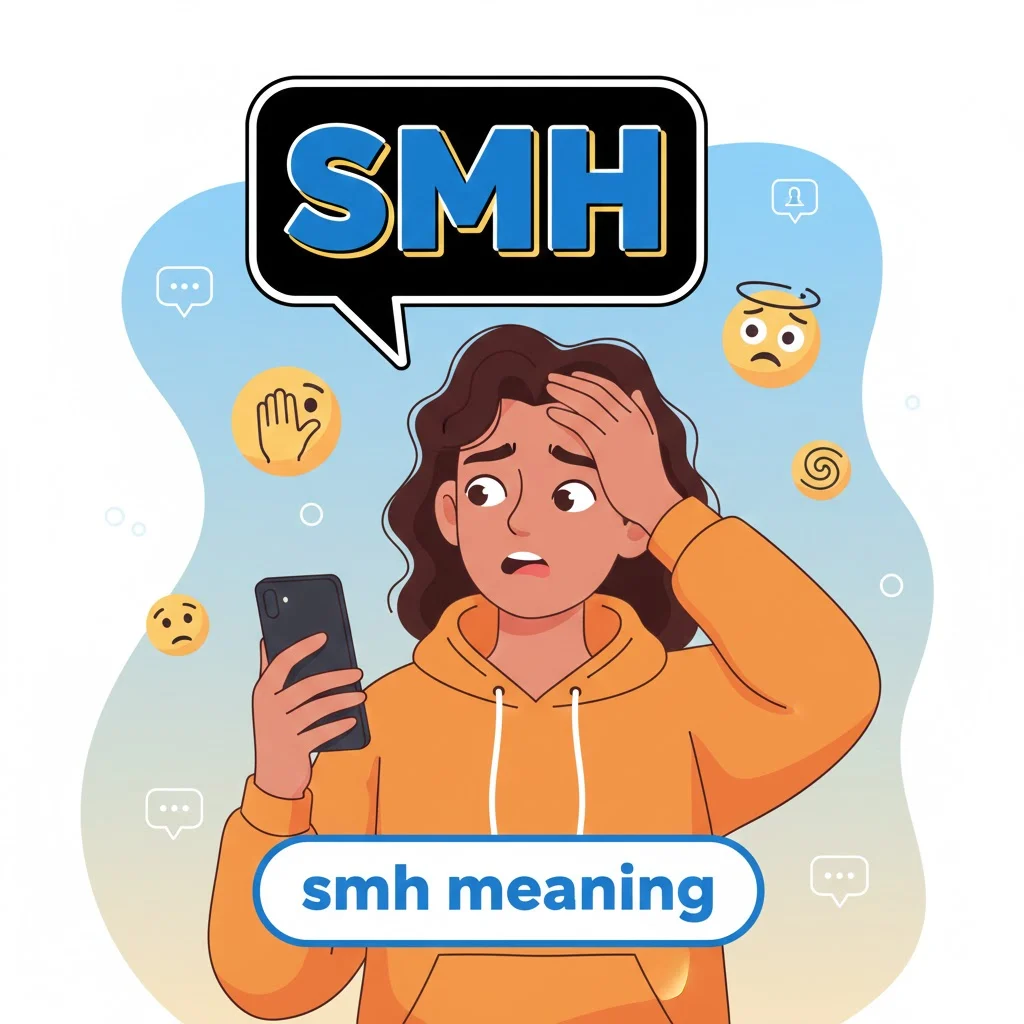

SMH stands for “shaking my head.”
It is used to express disappointment, disbelief, frustration, or embarrassment—usually in response to something foolish, obvious, or disappointing.
SMH is one of the most commonly used internet abbreviations today. You’ll see it everywhere—from text messages and memes to social media comments and online chats. Although it’s short and simple, SMH carries strong emotional meaning, often expressing disappointment, disbelief, or mild frustration in just three letters.
As online communication becomes faster and more expressive, abbreviations like SMH help people convey tone without writing full sentences. However, many users still wonder: What does SMH really mean, and how should it be used?
This complete guide breaks down the meaning of SMH, its origin, emotional tone, correct usage, examples, comparisons, alternatives, and common questions—making it easy to understand and use naturally.
Although SMH is often informal, it plays a powerful role in digital communication. Throughout this article, you’ll learn how context, tone, and punctuation shape its meaning.
What Does SMH Mean in Text and Online Conversations?
At its core, SMH represents a nonverbal reaction—the physical act of shaking one’s head. Instead of describing that reaction, the abbreviation lets readers instantly feel it.
What SMH Conveys Emotionally
Depending on context, SMH can suggest:
- Disappointment
- Disbelief
- Frustration
- Second-hand embarrassment
- Mild judgment
As a result, it often replaces longer emotional responses.
Origin of SMH
Where Did SMH Come From?
SMH originated in early internet chat rooms and forums during the late 1990s and early 2000s. As texting and instant messaging grew, abbreviations became essential for fast communication.
Over time, SMH spread to:
- SMS texting
- Twitter (now X)
- Instagram comments
- TikTok captions
- Reddit and online forums
Consequently, it became a staple of internet slang.
Why Is SMH So Popular?
SMH remains popular because it communicates emotion quickly and clearly.
Key Reasons for Its Widespread Use
- 💬 Saves time while texting
- 😒 Expresses emotion without explanation
- 📱 Fits casual, digital conversation styles
- 😂 Works well with memes and reaction posts
Moreover, SMH allows users to react without escalating a conversation.
How SMH Is Used in Real Life
Although SMH is primarily written, its emotional impact is immediate.
Common Situations Where SMH Is Used
- Reacting to bad decisions
- Responding to obvious mistakes
- Commenting on frustrating news
- Expressing disbelief online
Because of its tone, it’s best used casually rather than professionally.
Tone and Context: What Does SMH Feel Like?
SMH can shift meaning depending on delivery, punctuation, and context.
1. Mild Disappointment
“He forgot his wallet again, smh.”
Tone: Light frustration, not aggressive.
2. Strong Disapproval
“They ignored all the warnings… SMH.”
Tone: Judgmental or critical.
3. Disbelief or Confusion
“You really thought that was a good idea? smh 😐”
Tone: Disbelief with subtle sarcasm.
4. Playful or Humorous
“You put salt instead of sugar? SMH 😂”
Tone: Teasing rather than harsh.
Labeled Examples of SMH Usage
| Context | Example Sentence | Tone |
|---|---|---|
| Texting a friend | “You skipped breakfast again? smh” | Mild concern |
| Social media | “People still believe this… SMH.” | Disapproval |
| Meme caption | “When he lies but forgets the story. SMH 😂” | Humorous |
| Group chat | “Late again. smh.” | Frustrated |
| Online comment | “This could’ve been avoided. SMH.” | Critical |
SMH Capitalized vs Lowercase
While meaning stays the same, formatting affects tone.
- smh → casual, softer tone
- SMH → stronger emphasis or frustration
Additionally, combining SMH with emojis can either soften or intensify the reaction.
Comparison: SMH vs Similar Internet Slang
SMH vs OMG
| SMH | OMG |
|---|---|
| Disappointment | Surprise |
| Judgmental | Emotional reaction |
| Often negative | Can be positive or negative |
SMH vs WTF
| SMH | WTF |
|---|---|
| Mild to moderate reaction | Strong shock |
| Less aggressive | More intense |
| Socially safer | Can sound rude |
SMH vs Facepalm
| SMH | Facepalm |
|---|---|
| Shaking head | Covering face |
| Disapproval | Embarrassment |
| Widely used | Slightly humorous |
Alternate Meanings of SMH (Rare Cases)
Although uncommon, SMH may occasionally mean:
- So Much Hate (rare and context-specific)
- Shaking My Head (almost always the intended meaning)
In most cases, shaking my head is the correct interpretation.
Professional and Polite Alternatives to SMH
Because SMH is informal, alternatives work better in professional settings.
Professional Alternatives
- That’s unfortunate
- I’m disappointed to hear that
- This is concerning
Neutral or Polite Casual Alternatives
- That’s surprising
- I didn’t expect that
- That’s disappointing
Do’s and Don’ts of Using SMH
Do
- Use SMH in casual conversations
- Pair it with context for clarity
- Use emojis to soften tone if needed
Don’t
- Use it in professional emails
- Direct it at sensitive topics
- Overuse it in serious discussions
SMH in Memes and Social Media Culture
SMH thrives in meme culture because it instantly conveys judgment or disbelief. Often, it appears as:
- A caption under a funny image
- A reaction to viral videos
- A response to bad takes or opinions
As internet humor evolves, SMH remains a reliable reaction tool.
Frequently Asked Questions (FAQ)
1. What does SMH stand for?
SMH stands for “shaking my head.”
2. Is SMH rude?
It can be, depending on tone and context. Used lightly, it’s harmless; used harshly, it can feel judgmental.
3. Can SMH be used jokingly?
Yes. Emojis or playful context often make it humorous.
4. Is SMH acceptable in professional messages?
No. It’s best avoided in formal or workplace communication.
5. What’s the difference between SMH and LOL?
SMH expresses disappointment, while LOL shows amusement.
6. Does SMH always mean something negative?
Mostly yes, but playful usage can soften the negativity.
7. Can SMH be used alone as a message?
Yes. On its own, it often acts as a reaction.
8. Is SMH still popular today?
Absolutely. It remains widely used across platforms.
Why SMH Still Matters in Digital Communication
In fast-paced online spaces, SMH communicates emotion instantly. Instead of long explanations, it offers a quick, relatable reaction that most readers immediately understand.
As digital language continues to evolve, SMH remains relevant because it mirrors real human behavior.
Conclusion: Key Takeaways About SMH Meaning
- SMH means “shaking my head”
- It expresses disappointment, disbelief, or frustration
- Widely used in texts, memes, and social media
- Tone changes based on context, capitalization, and emojis
- Best suited for casual, not professional, communication
When used thoughtfully, SMH adds emotion and personality to online conversations.