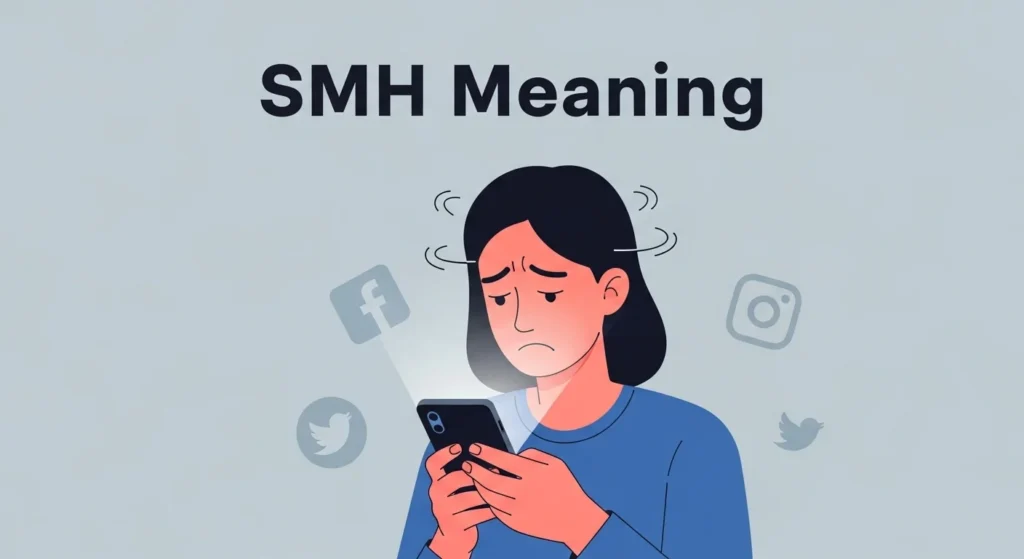

SMH (slang) stands for “shaking my head.” It is used to express disappointment, disbelief, or frustration, usually in response to something foolish, annoying, or hard to believe.
The internet is full of quick reactions and short expressions.
“SMH” is one of those abbreviations you’ve probably seen in comments, texts, or social media posts.
People use it when words alone don’t fully capture their reaction.
You might come across phrases like “He really did that? SMH” or “SMH, I can’t believe this.”
It looks simple, but it carries a strong emotional tone.
This guide explains what SMH means, how to use it, and when it fits naturally.
What Does SMH Mean in Slang? (Simple Explanation)
At its core, SMH is a reaction.
It reflects how someone feels about a situation.
Main Meaning of SMH
- Shaking My Head
- Shows disappointment
- Expresses disbelief
- Indicates frustration or annoyance
Unlike some slang terms, SMH has a very specific meaning.
However, the intensity can vary based on context.
Origin of SMH Slang
The term SMH developed alongside early internet culture.
It became popular as texting and online chatting grew.
Where It Started
- Early messaging platforms
- Online forums and chat rooms
- SMS texting culture
How It Spread
Social media platforms helped it reach a wider audience.
Twitter, Facebook, and later TikTok increased its visibility.
Over time, it became a standard reaction online.
Today, SMH is widely understood across different age groups and platforms.
Why SMH Is So Popular Online
There are clear reasons behind its popularity.
It is short, expressive, and easy to use.
Key Reasons
- Saves time compared to typing full reactions
- Clearly shows emotion
- Fits perfectly in comments and captions
- Works in many situations
Because of this, SMH became a universal reaction to frustrating or surprising moments.
How SMH Is Used in Real Life (Online & Chat)
You will mostly see SMH in informal communication.
It appears frequently in texts, comments, and replies.
Common Situations
- Reacting to something foolish
- Responding to bad decisions
- Showing disappointment
- Commenting on surprising behavior
Tone and Context: What Does SMH Feel Like?
The tone of SMH depends on the situation.
It usually carries a negative or critical feeling.
1. Disappointed Tone
Used when something does not meet expectations.
“I trusted him, and he still lied. SMH.”
2. Disbelief Tone
Used when something is hard to believe.
“She quit her job without a plan. SMH.”
3. Frustrated Tone
Used when something is annoying.
“The internet stopped working again. SMH.”
4. Light / Casual Tone
Sometimes used jokingly.
“You ate my snacks again, SMH.”
Labeled Examples of SMH Usage
| Context | Example Sentence | Meaning |
|---|---|---|
| Text message | “You forgot again? SMH.” | Frustration |
| Social media | “People still believe this? SMH.” | Disbelief |
| Friends joking | “You lost your keys again, SMH.” | Light teasing |
| Serious talk | “He ruined everything, SMH.” | Disappointment |
| Comment reply | “SMH at this decision.” | Criticism |
SMH in Different Online Situations
1. Social Media Platforms
On social media, SMH is used as a quick reaction.
It appears often in comments and captions.
- Twitter posts
- Instagram comments
- TikTok replies
2. Texting and Chat
In texting, SMH replaces longer emotional responses.
It helps keep messages short.
- Casual chats
- Group conversations
- Quick replies
3. Online Discussions
In discussions, SMH shows disagreement or criticism.
It can sometimes sound dismissive.
- Forums
- Comment sections
- Debate threads
Comparison: SMH vs Similar Internet Slang
Understanding related terms helps you use SMH correctly.
SMH vs OMG
| SMH | OMG |
|---|---|
| Shows disappointment or frustration | Shows surprise or excitement |
| Usually negative tone | Can be positive or negative |
Facepalm vs SMH
| SMH | Facepalm |
|---|---|
| Text-based reaction | Visual or descriptive reaction |
| Implies disappointment | Implies embarrassment |
SMH vs LOL
| SMH | LOL |
|---|---|
| Negative or critical tone | Positive or humorous tone |
| Used for frustration | Used for laughter |
Alternate Meanings of SMH (Rare Cases)
The abbreviation SMH is very consistent.
However, it can have rare alternate uses.
- “So Much Hate” (less common)
- Misinterpreted in unfamiliar contexts
In most cases, it still means shaking my head.
Polite or Professional Alternatives to SMH
Slang like SMH is not suitable in formal communication.
Clear wording is a better option.
Instead, Use:
- “That is disappointing.”
- “I disagree with this.”
- “This is concerning.”
- “I find this frustrating.”
Example:
Instead of: “SMH at this decision”
Say: “I find this decision disappointing.”
Do’s and Don’ts of Using SMH
Do
- Use it in casual conversations
- Use it to express reactions quickly
- Keep tone appropriate
Don’t
- Use it in professional writing
- Overuse it in every message
- Use it in serious situations without care
Frequently Asked Questions (FAQ)
1. What does SMH mean in slang?
SMH means “shaking my head.”
It shows disappointment or disbelief.
2. What does SMH mean in texting?
It is used to react to something frustrating or surprising.
It replaces longer emotional responses.
3. Is SMH rude?
It can sound rude depending on tone.
It may come across as dismissive.
4. Can SMH be used jokingly?
Yes, it can be used lightly.
Friends often use it for teasing.
5. Is SMH positive or negative?
It is usually negative.
It expresses frustration or disappointment.
6. Where did SMH come from?
It started in early internet and texting culture.
It spread through social media platforms.
7. Can I use SMH in professional settings?
No, it is better to avoid it.
Use clear and formal language instead.
8. What is similar to SMH?
Terms like facepalm or expressions of disappointment are similar.
They convey a comparable reaction.
Why SMH Matters in Today’s Digital World
Online communication is fast and expressive.
Short forms like SMH help people react quickly.
It also reflects modern communication habits.
People prefer quick and clear emotional responses.
Conclusion: Key Takeaways About SMH Meaning in Slang
- SMH stands for shaking my head
- It expresses disappointment, disbelief, or frustration
- Common in texts, social media, and chats
- Usually carries a negative tone
- Not suitable for formal communication
In simple terms, SMH is a quick way to show that something is frustrating or hard to believe.
Using it correctly helps you communicate reactions clearly and naturally.