
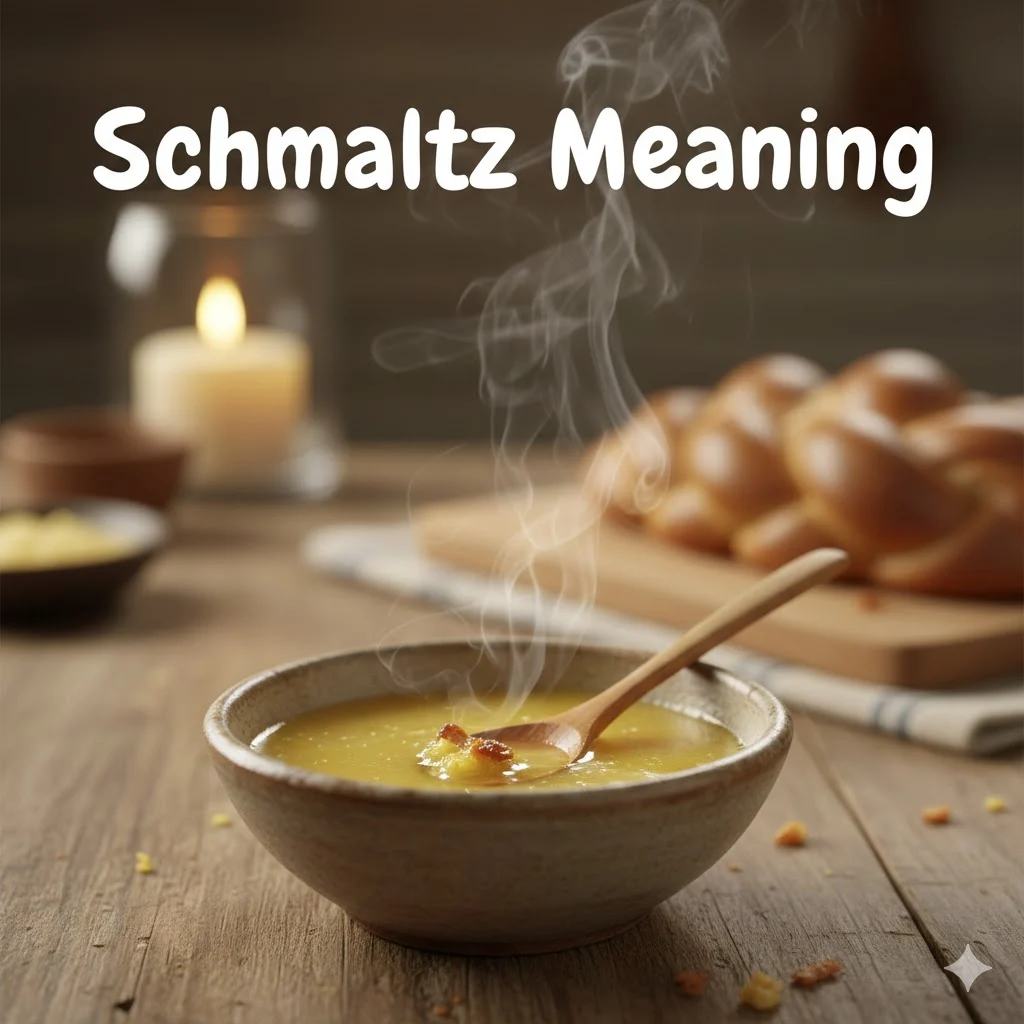

Schmaltz is a Yiddish term that originally refers to rendered chicken or goose fat used in cooking, but it is also used metaphorically to describe excessive sentimentality or emotional over-the-top expressions.
Schmaltz may sound humorous or quirky, yet it carries rich cultural and culinary significance. While many people encounter it in cooking or music reviews, its deeper meaning goes beyond mere literal translation. Understanding schmaltz opens a window into language, food, and even emotional expression.
Although often associated with Jewish cuisine, schmaltz has traveled far from its culinary roots. In this guide, you’ll learn its definition, origins, real-life usage, tone, comparisons, alternatives, and even some fun examples to make the term memorable.
What Does Schmaltz Really Mean? (Literal and Figurative)
The meaning of schmaltz can shift depending on context—culinary or figurative.
Literal Meaning
- Traditionally, schmaltz is rendered poultry fat, usually from chicken or goose.
- It has been used for centuries in Jewish cooking for frying, sautéing, or spreading on bread.
For example, chopped onions fried in chicken schmaltz are a staple in traditional recipes.
Figurative Meaning
- Figuratively, schmaltz refers to excessive sentimentality or emotional exaggeration.
- This usage often appears in music, films, literature, or speech, describing something overly sappy or melodramatic.
“The movie was full of schmaltz, with tear-jerking moments every five minutes.”
Origin of Schmaltz
Yiddish Roots
The word comes from Yiddish, derived from Middle High German smelzen, which means “to melt.”
- Originally, it referred to melted fat, especially used in Ashkenazi Jewish cuisine.
- Over time, the metaphorical meaning of emotional richness or excess emerged.
Cultural Background
Schmaltz has been part of:
- Jewish kitchens in Eastern Europe
- Traditional recipes passed down in families and communities
- Figurative language in American pop culture, especially in music and film
This dual meaning makes schmaltz unique—it is both culinary and emotional.
Why Schmaltz Is Still Relevant Today
Schmaltz persists both as a food term and a cultural metaphor.
Culinary Popularity
- Used in modern Jewish cooking, including matzo balls, kugel, and chopped liver
- Appreciated for adding rich, savory flavor
Figurative Usage
- Common in describing romantic movies, pop ballads, or sappy speeches
- Appears in reviews, critiques, and casual conversation
Consequently, the term is versatile, playful, and evocative.
How Schmaltz Is Used in Real Life
Schmaltz adapts seamlessly to both literal and figurative contexts.
Culinary Usage
- Frying onions or vegetables in chicken fat
- Enhancing traditional dishes for flavor
- Using in spreads or baking
Figurative Usage
- Describing over-the-top emotion:
“The love story was pure schmaltz.”
- Critiquing overly sentimental art:
“The song’s lyrics were dripping with schmaltz.”
Tone and Context: What Does Schmaltz Feel Like?
The meaning and tone of schmaltz vary widely.
1. Friendly / Playful Tone
Used jokingly or in casual conversation.
“This rom-com is total schmaltz, but I love it anyway!” 😄
2. Critical / Negative Tone
Used to describe excessive sentimentality or corniness.
“The performance had a lot of schmaltz, making it hard to take seriously.”
3. Culinary / Neutral Tone
Used in cooking instructions or recipes.
“Render chicken fat to make authentic schmaltz for your dish.”
Labeled Examples of Schmaltz Usage
| Context | Example Sentence | Tone |
|---|---|---|
| Cooking | “Add a tablespoon of schmaltz to the onions.” | Neutral / Culinary |
| Movie review | “The ending was pure schmaltz, but it worked.” | Playful / Friendly |
| Music critique | “Some pop songs are just schmaltz with a catchy beat.” | Critical / Figurative |
| Casual conversation | “Oh, that love letter? Total schmaltz!” | Playful / Informal |
| Baking | “Schmaltz adds richness to traditional kugel.” | Neutral / Culinary |
Schmaltz in Culinary and Pop Culture
In cooking, schmaltz enhances flavor, making traditional Jewish dishes richer. Meanwhile, in culture:
- Describing movies, songs, or novels with over-the-top sentiment
- Critiquing something that feels corny or exaggerated emotionally
As a result, the word is both flavorful and figurative.
Comparison: Schmaltz vs Similar Terms
Schmaltz vs Fat
| Schmaltz | Fat |
|---|---|
| Specifically rendered poultry fat | Any animal or plant fat |
| Traditional Jewish cooking | General culinary use |
| May carry figurative meaning | Usually literal only |
Schmaltz vs Corny
| Schmaltz | Corny |
|---|---|
| Figurative meaning: emotional excess | Lacking originality, cheesy humor |
| Can be affectionate or critical | Mostly critical |
| Cultural nuance | General slang |
Schmaltz vs Sentimental
| Schmaltz | Sentimental |
|---|---|
| Slightly exaggerated emotion | Genuine emotion, often nostalgic |
| Often used playfully | Can be sincere or critical |
| Figurative & cultural | Mainly emotional |
Alternate Meanings of Schmaltz
Depending on context, schmaltz may refer to:
- Cooking fat: Literal, savory ingredient
- Excessive sentiment: Emotional or artistic exaggeration
- Affectionate silliness: Playful, tongue-in-cheek use
Its versatility makes it a unique word bridging food and feeling.
Professional and Polite Alternatives to Schmaltz
When schmaltz feels too informal or slangy, alternatives include:
Culinary Context
- Rendered fat
- Cooking fat
- Lard (though less culturally specific)
Figurative / Emotional Context
- Over-sentimental
- Corny
- Melodramatic
Polite / Neutral Alternatives
- Rich (in culinary terms)
- Emotional (in figurative terms)
Do’s and Don’ts of Using Schmaltz
Do
- Use it accurately based on context
- Keep tone in mind when describing emotional content
- Pair culinary use with proper cooking context
Don’t
- Confuse literal and figurative meanings
- Overuse in professional writing if tone is critical
- Use it sarcastically in unfamiliar settings
Frequently Asked Questions (FAQ)
1. What does schmaltz literally mean?
It refers to rendered chicken or goose fat, traditionally used in Jewish cooking.
2. What is the figurative meaning of schmaltz?
It describes excessive sentimentality, melodrama, or corniness in art, writing, or speech.
3. Is schmaltz a Yiddish word?
Yes, it originates from Yiddish, with roots in Middle High German.
4. Can I use schmaltz in modern cooking?
Absolutely. It is still used in recipes like kugel, chopped liver, and matzo balls.
5. How is schmaltz pronounced?
It’s pronounced /ʃmɑːlts/ (shmahlts).
6. Is it negative to call something schmaltz?
It depends. In figurative use, it can be playful, critical, or affectionate.
7. Can non-Jewish people use the word?
Yes, especially when describing food or cultural references, as long as context is clear.
8. What is the difference between schmaltz and lard?
Schmaltz is specifically poultry fat, while lard is typically pig fat used in cooking.
Why Schmaltz Still Matters Today
Schmaltz remains relevant for both cultural cooking and figurative language. Its culinary use preserves traditional recipes, while figurative use adds color and humor to language. Therefore, it continues to enrich both food and conversation.
Conclusion: Key Takeaways About Schmaltz Meaning
- Schmaltz is both a literal cooking fat and a figurative term for sentimentality
- It has Yiddish origins with cultural depth
- The word appears in food, music, movies, and casual speech
- Tone and context determine whether it’s playful, critical, or neutral
- Mindful usage ensures clarity and respect for cultural nuance
Whether in the kitchen or in conversation, schmaltz is flavorful—literally and figuratively.