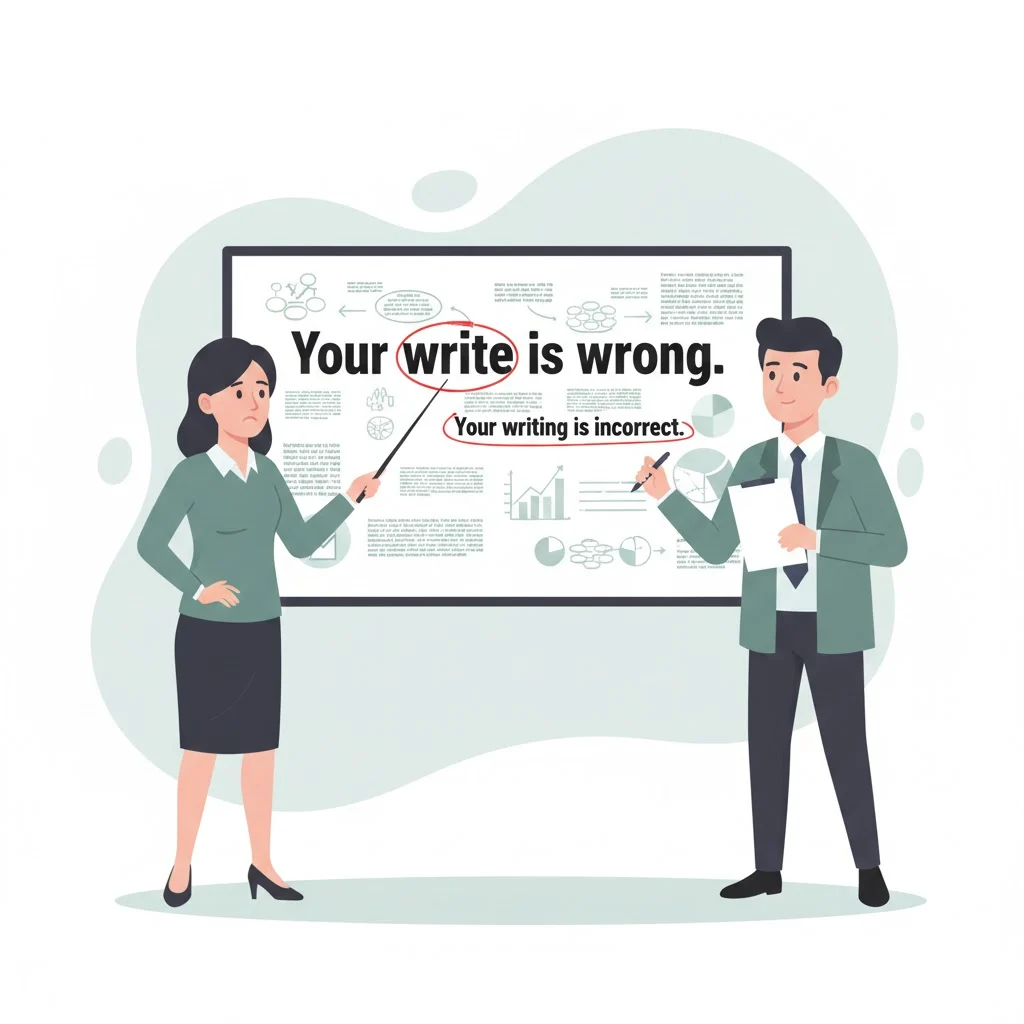

Pedantic means being overly concerned with small details, rules, or technical accuracy—often in a way that appears excessive, unnecessary, or annoying.
Typically, it describes someone who corrects minor errors or focuses on trivial points rather than the bigger picture.
Have you ever been corrected over a tiny detail that didn’t really matter? Maybe someone interrupted your story just to fix your grammar or point out a minor technicality. If so, you’ve likely encountered pedantic behavior. While accuracy is valuable, excessive focus on small or trivial details can sometimes feel annoying or unnecessary. That’s exactly where the word pedantic comes in.
Understanding the meaning of pedantic helps you recognize certain personality traits, communication styles, and tone differences in conversations, workplaces, and academic settings. Moreover, knowing how and when to use this word properly improves both your vocabulary and your ability to describe nuanced behavior.
Although pedantic behavior may come from a desire for correctness, it can sometimes create frustration or disrupt natural communication. Therefore, understanding its tone, usage, and context is essential.
What Does Pedantic Really Mean? (Simple Explanation)
At its core, pedantic refers to someone who pays too much attention to minor details, especially when those details are not important to the main point.
Simple Breakdown
A pedantic person often:
- Corrects small grammar mistakes unnecessarily
- Focuses on technical accuracy instead of meaning
- Emphasizes rules excessively
- Interrupts conversations to fix trivial errors
For example, imagine telling a story and someone interrupts just to correct your pronunciation. In that case, their behavior could be described as pedantic.
Origin of Pedantic
Understanding the origin of pedantic provides helpful insight into its modern meaning.
Historical Background
The word pedantic comes from the Italian word pedante, which referred to a schoolteacher. Later, the term evolved through French and Latin before entering English in the 16th century.
Initially, the word described teachers who focused heavily on rules and formal instruction. Over time, however, its meaning shifted slightly. Eventually, it began describing anyone who emphasizes minor details excessively.
As a result, pedantic now often carries a mildly negative tone.
Why Is the Word Pedantic So Common Today?
Pedantic behavior appears frequently in modern conversations, especially in educational, professional, and online environments.
Common Reasons for Its Popularity
- 📚 Academic discussions often involve precise language
- 💻 Online debates encourage correcting others
- 🧠 Some people naturally prefer accuracy and rules
- 🗣️ Communication styles vary widely across cultures
Consequently, the word pedantic helps describe behavior that prioritizes precision over practicality.
How Pedantic Is Used in Real Life
The word pedantic usually describes a person, tone, or communication style.
Common Situations Where Pedantic Is Used
- Academic discussions
- Workplace conversations
- Grammar corrections
- Technical explanations
- Debates or arguments
In many situations, pedantic behavior can seem unnecessary, even if the intention is helpful.
Tone and Context: Is Pedantic Positive or Negative?
The tone of pedantic is usually negative or critical. However, context can influence its interpretation.
1. Negative Tone (Most Common)
Often used to criticize someone’s excessive attention to trivial details.
“He’s so pedantic—he corrected my grammar during a casual conversation.”
2. Neutral Tone
Sometimes used objectively to describe behavior without strong criticism.
“Her teaching style is somewhat pedantic but very thorough.”
3. Slightly Positive Tone (Rare)
Occasionally, pedantic behavior may reflect carefulness or precision.
“His pedantic approach ensures accuracy.”
Nevertheless, most people use pedantic in a critical or slightly annoyed tone.
Labeled Examples of Pedantic Usage
| Context | Example Sentence | Tone |
|---|---|---|
| Workplace | “Stop being pedantic—it’s not that important.” | Negative |
| Academic | “The professor’s pedantic lectures focused on technical details.” | Neutral |
| Casual conversation | “She sounded pedantic correcting everyone’s grammar.” | Negative |
| Professional feedback | “His pedantic attention to detail improves quality.” | Slightly positive |
| Debate | “He became pedantic about the exact wording.” | Neutral |
Pedantic Behavior Examples (Easy to Understand)
To clarify further, here are real-life scenarios showing pedantic behavior:
Example 1: Grammar Correction
Person A: “I went there yesterday.”
Person B: “Actually, you should say ‘I had gone there yesterday.’”
This correction may be pedantic if the meaning was already clear.
Example 2: Technical Detail Obsession
Person A: “That car is fast.”
Person B: “Technically, it’s not fast—it has a top speed of 240 km/h, which is considered moderate.”
Here, focusing on technical classification instead of general meaning reflects pedantic behavior.
Example 3: Interrupting Over Minor Details
Someone interrupts your story just to correct a date or small fact that doesn’t change the main point.
That reaction may seem pedantic.
Pedantic vs Similar Words
Understanding similar words helps clarify pedantic’s exact meaning.
Pedantic vs Perfectionist
| Pedantic | Perfectionist |
|---|---|
| Focuses on trivial details | Focuses on overall excellence |
| Often corrects others | Often improves own work |
| May annoy others | Often respected |
Pedantic vs Detail-Oriented
| Pedantic | Detail-Oriented |
|---|---|
| Excessive focus on small details | Balanced attention to important details |
| Often unnecessary corrections | Helpful and productive |
| Usually negative tone | Usually positive tone |
Pedantic vs Pretentious
| Pedantic | Pretentious |
|---|---|
| Focuses on rules and details | Focuses on appearing important |
| May correct others | May try to impress others |
| Related to accuracy | Related to image |
Alternate Meanings of Pedantic
Although pedantic typically has a negative tone, its meaning can vary slightly depending on context.
Possible interpretations include:
- Excessively concerned with rules
- Overly academic or formal
- Focused on minor details
- Technically precise but socially awkward
Despite these variations, the central idea remains excessive attention to trivial correctness.
Professional and Polite Alternatives to Pedantic
Sometimes, using softer or more neutral words may be more appropriate.
Neutral Alternatives
- Detail-focused
- Precise
- Thorough
- Careful
Professional Alternatives
- Methodical
- Analytical
- Exact
- Technical
Polite Alternatives
- Particular
- Careful with details
- Accuracy-focused
These alternatives help avoid sounding overly critical.
Do’s and Don’ts of Using Pedantic
Do
- Use it to describe excessive attention to trivial details
- Use it in appropriate contexts
- Understand its slightly negative tone
Don’t
- Use it as a compliment
- Use it casually without understanding its meaning
- Use it in formal praise
Frequently Asked Questions (FAQ)
1. What is the exact meaning of pedantic?
Pedantic means focusing excessively on minor details, rules, or technical accuracy.
2. Is pedantic a negative word?
Yes, it usually has a negative or critical tone.
3. Is pedantic the same as smart?
No. Pedantic describes excessive focus on details, not intelligence.
4. Can pedantic ever be positive?
Rarely. In some contexts, it may imply carefulness or precision.
5. What is an example of pedantic behavior?
Correcting minor grammar mistakes during casual conversation is pedantic.
6. What is a pedantic person like?
A pedantic person focuses heavily on small details and technical accuracy.
7. Is pedantic the same as perfectionist?
No. Perfectionists focus on overall quality, while pedantic people focus on trivial details.
8. Why do people act pedantic?
Some people value accuracy strongly or enjoy correcting errors.
Conclusion: Key Takeaways About Pedantic Meaning
- Pedantic means excessive focus on minor details or rules
- It usually carries a negative or critical tone
- The word often describes communication style or behavior
- Pedantic behavior prioritizes technical correctness over practical meaning
- Understanding this term helps improve communication awareness
Ultimately, while accuracy is valuable, balance is essential. Excessive focus on trivial details can sometimes weaken communication rather than improve it.