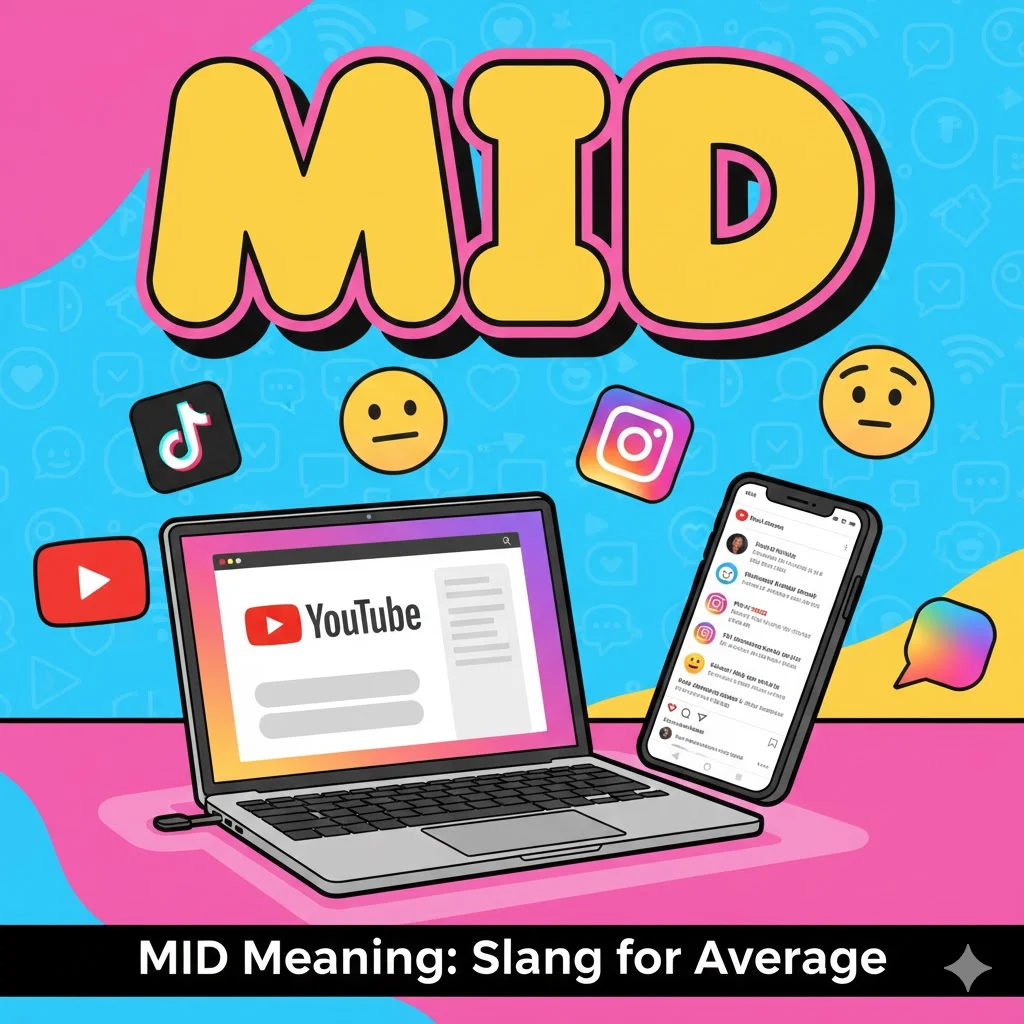

Mid (slang) refers to something that is mediocre, average, or unremarkable.
It is often used to describe experiences, music, movies, food, or any situation that is considered neither good nor bad, but simply “meh.”
In the fast-paced world of modern slang, the word “mid” has emerged as a popular way to express opinions, especially online. Whether you’ve seen it on TikTok, Instagram, or in text messages among friends, mid has a very specific connotation that differs from its everyday dictionary meaning. Understanding it fully helps you communicate more effectively in casual and social contexts.
Unlike traditional adjectives, slang terms like mid carry subtle social cues and cultural nuances. In this article, we’ll explore its origin, popularity, real-world usage, examples with tone, related slang comparisons, and FAQs to give you a complete understanding of mid in modern communication.
What Does Mid Really Mean in Slang?
While “mid” literally means “middle,” in slang it is a casual way to call something average or unimpressive.
Key Characteristics
- Indicates mediocrity
- Often used casually or humorously
- Frequently appears in online conversations, reviews, or memes
For example:
“That new movie was kind of mid, not as good as everyone said.”
“The pizza was mid—definitely not worth the hype.”
As a result, mid is often paired with other slang expressions to amplify tone, such as “lowkey mid” (subtly average) or “super mid” (very mediocre).
Origin of Mid as Slang
Early Usage
The slang usage of mid began appearing in urban communities and online forums in the early 2010s. It was used to describe music, trends, and entertainment that were not exceptional.
Cultural Background
- Primarily used in American youth culture
- Popularized through social media, memes, and TikTok videos
- Gained mainstream recognition as Gen Z adopted it for everyday commentary
In essence, calling something “mid” signals honest critique without being overly harsh.
Why Mid Became Popular
Several factors contributed to the rise of mid as a widely used slang term:
- 🌐 Social media amplification – TikTok, Twitter, and Instagram
- 🎵 Music and pop culture reviews – often used in album or movie ratings
- 😎 Youth communication – quick, easy, and casual
- 📝 Meme culture – perfect for short, humorous, relatable content
Consequently, mid became a concise, expressive way to communicate indifference or mild disappointment.
How Mid Is Used in Real Life
Mid is versatile in casual communication. Depending on context, it can express slight disapproval, humor, or neutral observation.
Common Situations
- Rating music, movies, or shows
- Discussing food, drinks, or restaurants
- Describing experiences, events, or products
- Reacting to hype or overblown recommendations
Because it’s short and casual, mid works perfectly in text messages, social media posts, and memes.
Tone and Context: How Mid Feels
The word mid can carry different vibes depending on tone, punctuation, and context.
1. Friendly / Casual Tone
Used when giving a mild opinion without offending.
“The party was mid, but at least the snacks were good 😅”
2. Neutral / Observational Tone
Simply noting mediocrity without judgment.
“The concert was mid. Nothing special.”
3. Negative / Dissatisfied Tone
Used to lightly critique or dismiss.
“That song is mid, honestly. Expected better.”
4. Humorous / Playful Tone
Often used sarcastically in memes.
“This movie? Mid. The hype was wild 😂”
Labeled Examples of Mid Usage
| Context | Example Sentence | Tone |
|---|---|---|
| Movie review | “The new superhero film was mid.” | Neutral |
| Food critique | “The burger was mid, nothing special.” | Mildly dissatisfied |
| Social media post | “TikTok trend is mid, not funny at all 😭” | Playful |
| Music review | “Album is mid, expected more from the artist.” | Critical |
| Event recap | “The concert was mid, but the friends made it fun.” | Friendly |
Mid in Pop Culture and Social Media
Why It Works Online
- Short and expressive for comments or posts
- Fits memes and viral formats easily
- Compatible with emojis and exaggerated reactions
For example:
“This TikTok trend is mid 🙄”
“The new Starbucks drink? Mid at best 😐”
Additionally, mid’s brevity makes it ideal for fast-scrolling digital conversations where long explanations are unnecessary.
Comparison: Mid vs Similar Slang
Mid vs Meh
| Mid | Meh |
|---|---|
| Slightly more dismissive | More neutral, indifferent |
| Often used for reviews | Often expresses boredom or lack of interest |
| Can be sarcastic | Can be literal or sarcastic |
Mid vs Basic
| Mid | Basic |
|---|---|
| Mediocre, average | Unoriginal or mainstream |
| Describes quality | Describes style or trendiness |
| Neutral to slightly negative | Often negative with social connotation |
Mid vs Trash
| Mid | Trash |
|---|---|
| Slightly unremarkable | Very bad or low-quality |
| Mild critique | Strong negative critique |
| Casual and humorous | Strong, often harsh |
Alternate Meanings of Mid (Briefly)
Besides its slang usage, mid can have other meanings in different contexts:
- Traditional: Middle or central
- Acronyms: In gaming, “MID” can mean Middle lane in MOBA games like League of Legends
- Informal: Short for “midday” in scheduling contexts
However, in youth slang, it almost always refers to mediocrity or “average.”
Professional and Polite Alternatives to Mid
When mid is too casual for work or formal settings, you can use alternatives such as:
Formal / Neutral Alternatives
- Average
- Mediocre
- So-so
Polite / Light Critique
- Not outstanding
- Could be better
- Less impressive
These alternatives convey the same meaning without sounding slangy or dismissive.
Do’s and Don’ts of Using Mid
Do
- Use it in casual, online, or friendly contexts
- Pair it with emojis for tone if needed
- Make sure your audience understands the slang
Don’t
- Use it in professional emails or formal writing
- Overuse it in serious critiques
- Confuse it with “meh” or other slang without nuance
Frequently Asked Questions (FAQ)
1. What does mid mean in slang?
Mid means something is average, mediocre, or unremarkable.
2. Is mid negative or neutral?
It is generally neutral to slightly negative, depending on tone.
3. Where did mid slang originate?
It emerged in American youth culture and gained popularity through social media and online communities.
4. Can mid describe anything?
Yes, it can describe music, movies, food, experiences, trends, or even people’s actions.
5. How is mid different from meh?
Mid implies mediocrity or slightly underwhelming quality, whereas meh expresses indifference or boredom.
6. Can mid be used humorously?
Absolutely. It’s often used sarcastically or in memes for playful critique.
7. Is mid appropriate for formal writing?
No. Use terms like “average” or “mediocre” instead.
8. Can non-English speakers use mid slang?
Yes, as long as the audience understands contemporary English slang culture.
Why Mid Still Matters Today
In online communication and meme culture, mid is a quick, relatable way to share opinions. It conveys subtle critique without being harsh, making it ideal for casual conversations, social media, and pop culture commentary.
Moreover, learning mid helps understand Gen Z and online humor more effectively.
Conclusion: Key Takeaways About Mid Slang
- Mid means mediocre, average, or unremarkable
- It is primarily used in casual, social, or online settings
- Tone and emojis can shift its meaning from neutral to playful or mildly critical
- Understanding mid helps navigate modern pop culture and internet slang
- Use it thoughtfully to match audience and context
Whether critiquing a TikTok trend or discussing the latest song, mid remains a concise, expressive, and relatable term.