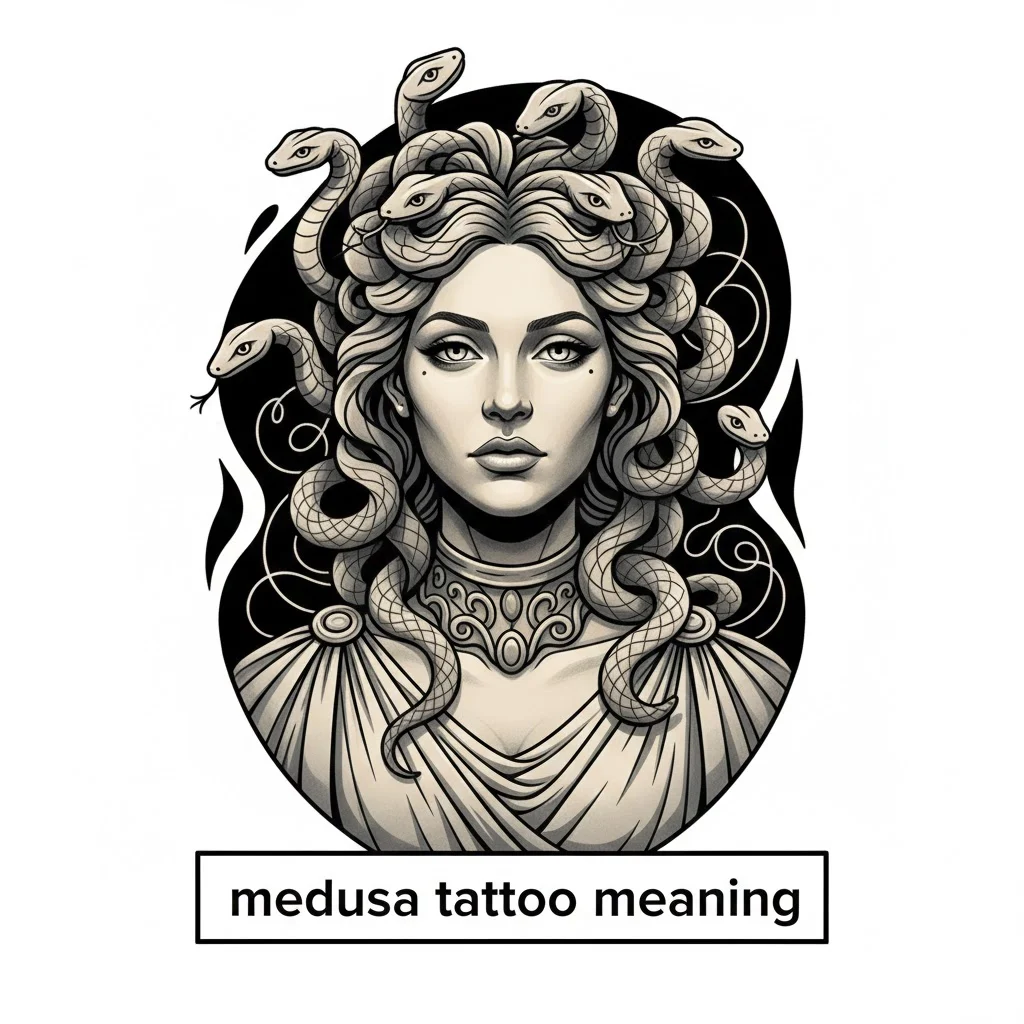

A Medusa tattoo typically symbolizes protection, power, transformation, and survival.
Rooted in Greek mythology, Medusa was a Gorgon whose gaze turned people to stone. Today, however, her image often represents resilience, feminine strength, protection against harm, and reclaiming power after trauma.
A Medusa tattoo is not just ink on skin. In fact, it is one of the most layered, powerful, and emotionally complex tattoo designs in modern body art. From ancient Greek mythology to feminist symbolism and trauma awareness movements, Medusa has transformed from a feared monster into a symbol of strength, survival, and protection.
So what does a Medusa tattoo really mean?
Let’s explore the mythology, symbolism, psychological depth, and modern interpretations behind one of the most talked-about tattoo designs today.
Although Medusa was once portrayed as a villain, modern interpretations have reshaped her story. Consequently, many people now see her as a misunderstood figure rather than a monster.
Who Was Medusa? (Mythological Background)
To understand the meaning behind a Medusa tattoo, it’s essential to revisit her origin story.
Medusa in Greek Mythology
Medusa was one of the three Gorgons in ancient Greek mythology. Unlike her immortal sisters, she was mortal. According to myth:
- She was originally a beautiful woman.
- Poseidon assaulted her in Athena’s temple.
- Athena punished Medusa by transforming her into a creature with snakes for hair.
- Her gaze turned anyone who looked at her into stone.
- Eventually, Perseus beheaded her.
However, interpretations of her story vary depending on the source. Therefore, modern audiences often question whether Medusa was truly a villain—or a victim.
What Does a Medusa Tattoo Mean Today?
Over time, Medusa’s symbolism has evolved dramatically. While ancient stories focused on fear and danger, contemporary meanings center around empowerment.
1. Protection and Warding Off Evil
Historically, Medusa’s head was used as a protective symbol known as the Gorgoneion. Warriors placed it on shields and armor.
Because her gaze turned enemies to stone, she became a symbol of:
- Protection
- Defense
- Guarding against negativity
- Warding off evil energy
As a result, many people choose a Medusa tattoo as a personal shield.
2. Feminine Power and Strength
In modern culture, Medusa often represents feminine rage, resilience, and autonomy.
Rather than viewing her as a monster, many reinterpret her story as one of injustice and survival. Consequently, she has become a symbol of:
- Reclaiming power
- Standing against oppression
- Embracing feminine strength
- Owning one’s identity unapologetically
3. Survival and Trauma Awareness
In recent years, Medusa tattoos have gained visibility in conversations around trauma, particularly among survivors of assault.
Because Medusa’s transformation followed violence in the myth, her image is sometimes used to symbolize:
- Survival
- Resilience
- Healing
- “Turning pain into power”
Importantly, this meaning is deeply personal and should always be respected.
4. Transformation and Change
Medusa’s transformation from a beautiful woman into a feared Gorgon also symbolizes profound change.
Therefore, a Medusa tattoo may represent:
- Reinvention
- Personal growth
- Radical transformation
- Strength born from adversity
Tone and Symbolism Variations in Medusa Tattoos
Interestingly, the meaning of a Medusa tattoo often depends on design style, facial expression, and artistic interpretation.
1. Calm or Serene Medusa
- Inner power
- Silent strength
- Controlled intensity
2. Angry or Fierce Medusa
- Rage
- Defiance
- Protection
- Refusal to be silenced
3. Crying Medusa
- Pain and healing
- Emotional depth
- Trauma acknowledgment
4. Blindfolded Medusa
- Justice themes
- Moral symbolism
- Power restrained
Labeled Example Table: Medusa Tattoo Meaning by Style
| Tattoo Style | Symbolic Meaning | Tone |
|---|---|---|
| Realistic portrait | Power and presence | Intense |
| Minimalist line art | Subtle strength | Calm |
| Medusa with broken stone | Overcoming fear | Transformative |
| Floral Medusa | Beauty and resilience | Balanced |
| Medusa head alone | Protection | Defensive |
Medusa Tattoo Meaning for Women
Although anyone can get a Medusa tattoo, it has become especially meaningful among women.
In many interpretations, Medusa symbolizes:
- Surviving injustice
- Reclaiming narrative
- Owning feminine rage
- Rejecting victim-blaming
Consequently, the tattoo can serve as both personal empowerment and silent protest.
Medusa Tattoo Meaning for Men
For men, Medusa tattoos often represent:
- Strength
- Fearlessness
- Protective energy
- Respect for mythology
Additionally, some men choose the design purely for its artistic intensity and mythological depth.
Medusa Tattoo Placement and Meaning
Placement can subtly influence symbolism.
Common Placements
- Forearm: Visibility, bold identity
- Back: Protection and strength
- Thigh: Personal empowerment
- Chest: Guarding the heart
- Neck: Fearlessness
For example, a chest placement may emphasize emotional protection, while a forearm tattoo signals confidence.
Medusa Tattoo vs Other Mythological Tattoos
Medusa vs Athena
| Medusa | Athena |
|---|---|
| Symbol of transformation | Symbol of wisdom |
| Survivor narrative | Strategic power |
| Emotional intensity | Calculated intelligence |
Medusa vs Phoenix
| Medusa | Phoenix |
|---|---|
| Protection and rage | Rebirth and renewal |
| Trauma symbolism | Rising from ashes |
| Defensive energy | Hope and revival |
Although both represent transformation, their emotional tones differ significantly.
Is a Medusa Tattoo Negative?
Some people wonder whether a Medusa tattoo carries dark energy. However, symbolism depends heavily on intention.
Historically, she was feared. Today, she is often respected.
Therefore, the meaning is not negative unless the wearer assigns it that way.
Do’s and Don’ts Before Getting a Medusa Tattoo
Do
- Research the mythology
- Understand modern interpretations
- Choose a style that aligns with your intention
- Respect trauma symbolism
Don’t
- Get it solely because it’s trending
- Ignore cultural and historical context
- Dismiss its deeper meanings
Frequently Asked Questions (FAQ)
1. What does a Medusa tattoo symbolize?
A Medusa tattoo commonly symbolizes protection, feminine power, resilience, and transformation.
2. Is a Medusa tattoo a feminist symbol?
In many modern interpretations, yes. It often represents reclaiming power and challenging injustice.
3. Does a Medusa tattoo mean someone survived trauma?
Sometimes, but not always. While some survivors choose it for that reason, others select it for mythological or artistic meaning.
4. Is Medusa a villain or a victim?
Ancient myths portray her as a monster. However, modern retellings often frame her as a victim of injustice.
5. Is a Medusa tattoo bad luck?
There is no evidence suggesting it brings bad luck. Historically, it was used as a protective emblem.
6. What does a crying Medusa tattoo mean?
It often symbolizes pain, healing, emotional release, or trauma acknowledgment.
7. Why is Medusa popular in tattoos right now?
Social awareness movements, feminist symbolism, and interest in mythology have contributed to its popularity.
8. Can men get a Medusa tattoo?
Absolutely. The design is not gender-specific and carries multiple meanings.
Why Medusa Tattoos Remain Powerful Today
Cultural narratives evolve over time. Likewise, symbols transform as society reinterprets them.
While ancient mythology painted Medusa as something to fear, modern symbolism often presents her as someone to understand. As a result, her image has shifted from monster to metaphor.
Conclusion: Key Takeaways About Medusa Tattoo Meaning
- A Medusa tattoo symbolizes protection, power, and transformation
- Modern interpretations often highlight resilience and survival
- Design style influences tone and meaning
- Placement can subtly enhance symbolism
- Ultimately, intention defines interpretation
Above all, a Medusa tattoo tells a story—sometimes loud, sometimes silent—but always meaningful.