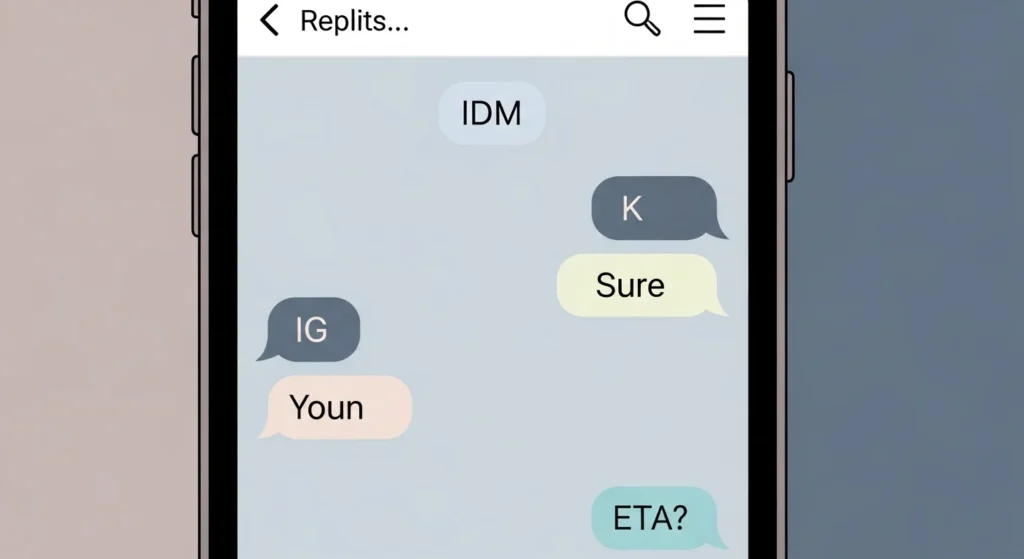

IDM (slang) means “I don’t mind.” It is commonly used in texting and online chats to show agreement, flexibility, or that you are okay with a suggestion.
The internet is packed with short forms and abbreviations.
“IDM” is one of those simple yet useful slang terms you’ll often see in chats and messages.
People use it when making plans, responding casually, or keeping conversations easygoing.
But what exactly does IDM mean in real conversations?
And how can you use it naturally without sounding robotic?
Let’s break down IDM meaning in slang in a clear and practical way.
What Does IDM Mean in Slang? (Simple Explanation)
At its core, IDM means “I don’t mind.”
It shows that you are okay with something or have no strong preference.
Main Meaning of IDM
- I Don’t Mind
- You are fine with a suggestion
- You are flexible or neutral
- You agree casually without strong feelings
Unlike some slang terms, IDM has a very clear and consistent meaning.
The tone depends on how and where you use it.
Origin of IDM Slang
The term IDM comes from basic internet shorthand.
It developed as people looked for faster ways to type common phrases.
Where It Started
- Early texting culture
- Chatrooms and messaging apps
- SMS and instant messaging platforms
How It Spread
As smartphones became popular, short forms became normal.
Apps like WhatsApp, Instagram, and Snapchat helped spread it widely.
Now, IDM is commonly used in casual digital conversations.
Why IDM Is So Popular Online
There are a few simple reasons behind its popularity.
It makes communication faster and easier.
Key Reasons
- Saves time while typing
- Sounds casual and relaxed
- Useful in everyday conversations
- Works in many situations
Because of this, IDM is often used when making plans or responding quickly.
How IDM Is Used in Real Life (Online & Chat)
You will mostly see IDM in informal chats.
It appears in texts, DMs, and quick replies.
Common Situations
- Making plans with friends
- Responding to suggestions
- Showing flexibility
- Keeping the conversation relaxed
Tone and Context: What Does IDM Feel Like?
The tone of IDM is usually neutral and polite.
It can also feel friendly or slightly passive.
1. Friendly / Easygoing Tone
Used when you are relaxed about a choice.
“We can go later, IDM.”
2. Neutral Tone
Used when you truly have no preference.
“Pick any place, IDM.”
3. Polite Tone
Used to avoid sounding demanding.
“You can decide, IDM.”
4. Slightly Passive Tone
Sometimes it may feel like a lack of interest.
“Do whatever, IDM.”
Labeled Examples of IDM Usage
| Context | Example Sentence | Meaning |
|---|---|---|
| Making plans | “We can meet at 6, IDM.” | Flexible agreement |
| Chat reply | “Pizza or burgers? IDM.” | No preference |
| Casual talk | “You choose, IDM.” | Letting others decide |
| Group chat | “Anywhere works, IDM.” | Open to options |
| Quick message | “IDM tbh.” | Relaxed response |
IDM in Different Online Situations
1. Texting and Messaging
This is the most common place for IDM.
It helps keep replies short and simple.
- WhatsApp chats
- Instagram DMs
- Snapchat messages
2. Group Conversations
Used when decisions are being made.
It shows flexibility without adding pressure.
- Planning hangouts
- Deciding locations
- Choosing activities
3. Social Media Replies
Sometimes used in comments or replies.
It keeps interactions casual.
Comparison: IDM vs Similar Slang
Understanding similar terms helps you use IDM more naturally.
IDM vs IDK
| IDM | IDK |
|---|---|
| I don’t mind | I don’t know |
| Shows agreement | Shows uncertainty |
IDC vs IDM
| IDM | IDC |
|---|---|
| Polite and flexible | Can sound rude |
| Neutral tone | More dismissive |
IDM vs Sure
| IDM | Sure |
|---|---|
| Passive agreement | Direct agreement |
| Less enthusiastic | More positive |
Alternate Meanings of IDM
While IDM usually means “I don’t mind,” it can have other meanings.
These are less common in casual slang.
- Intelligent Dance Music (music genre)
- Identity Management (technical term)
Context helps you understand the correct meaning.
Polite or Professional Alternatives to IDM
Slang like IDM is not suitable for formal communication.
Professional language is always better in work settings.
Instead, Use:
- I have no preference
- That works for me
- I am fine with that
- I am okay with any option
Example:
Instead of: “IDM”
Say: “I’m fine with any option.”
Do’s and Don’ts of Using IDM
Do
- Use it in casual conversations
- Keep it short and natural
- Use it when you are flexible
Don’t
- Use it in formal writing
- Overuse it in every reply
- Use it when a clear opinion is needed
Frequently Asked Questions (FAQ)
1. What does IDM mean in slang?
IDM means “I don’t mind.”
It shows agreement or flexibility.
2. What does IDM mean in texting?
It means you are okay with something.
You have no strong preference.
3. Is IDM rude?
No, it is usually polite.
However, it can sound passive in some situations.
4. What is the difference between IDM and IDC?
IDM is polite and flexible.
IDC can sound careless or rude.
5. Can IDM be used in formal settings?
No, it is better to avoid slang.
Use full phrases instead.
6. Is IDM commonly used?
Yes, especially in texting and chats.
It is popular among younger users.
7. Can IDM mean something else?
Yes, but rarely in casual chats.
It depends on context.
8. When should I use IDM?
Use it when you are okay with any option.
It works best in relaxed conversations.
Why IDM Matters in Today’s Digital World
Communication today is fast and simple.
Short forms like IDM help people respond quickly.
They also make conversations feel more natural.
This is especially true in informal chats.
Conclusion: Key Takeaways About IDM Meaning in Slang
- IDM means “I don’t mind”
- It shows flexibility and agreement
- Common in texting and online chats
- Tone is usually neutral or friendly
- Not suitable for formal communication
In simple terms, IDM means you are okay with something.
Using it correctly helps you sound natural in everyday conversations.