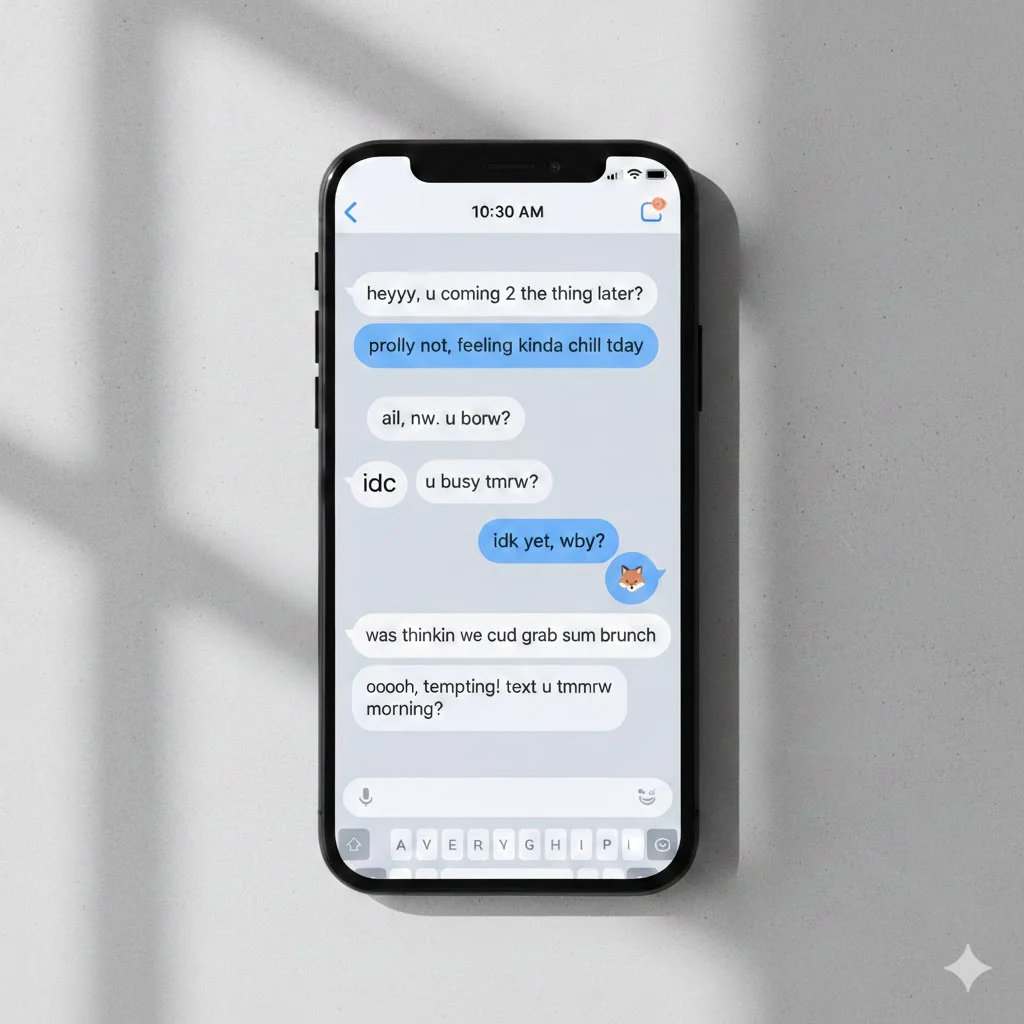

IDC stands for “I don’t care.”
It is a texting abbreviation used to express indifference, lack of concern, or neutrality about a situation, decision, or opinion. Depending on tone and context, IDC can sound casual, neutral, or dismissive.
Have you ever received a message that simply said “IDC” and wondered whether the sender was being chill, rude, or just uninterested? In today’s fast-paced digital conversations, abbreviations like IDC are everywhere. From texting and Snapchat to Instagram and WhatsApp, this short phrase can carry very different meanings depending on tone and context.
Understanding the IDC meaning in text, therefore, is essential if you want to avoid misunderstandings and communicate clearly online. While it may look harmless, IDC can sound relaxed, indifferent, or even dismissive depending on how and when it’s used.
Although IDC is extremely common in modern texting, its tone can shift dramatically. As a result, knowing how to interpret and use IDC properly helps prevent awkward or unintended reactions.
What Does IDC Mean in Text?
Simply put, IDC is a shortened version of the phrase “I don’t care.” People use it to show that something doesn’t matter to them or that they have no strong opinion.
However, the emotional meaning can vary widely.
Core Meanings of IDC
- Lack of preference
- Indifference to a decision
- Emotional detachment
- Casual agreement without strong feelings
For example:
“You can pick the restaurant, IDC.”
(Meaning: I’m okay with anything.)
In contrast, tone plays a major role in how IDC is perceived.
Origin of IDC in Texting and Internet Culture
IDC emerged alongside early internet chat platforms and SMS texting in the late 1990s and early 2000s. Because character limits existed, users naturally shortened longer phrases to save time and space.
Why IDC Became Popular
Several factors contributed to its widespread use:
- Faster typing in conversations
- Character limits in SMS and Twitter
- Growth of instant messaging apps
- Preference for casual digital communication
Over time, IDC became a standard abbreviation across platforms like:
- Snapchat
- TikTok
- Discord
Today, IDC remains one of the most widely used texting abbreviations.
How IDC Is Used in Text Conversations
People use IDC in different situations depending on emotion, relationship, and intent. Consequently, understanding context is crucial.
Common Usage Situations
- Responding to choices
- Showing emotional detachment
- Expressing frustration
- Indicating flexibility
Tone and Emotional Meaning of IDC
Tone determines whether IDC sounds polite, relaxed, or rude.
1. Casual and Relaxed Tone
This usage feels easygoing and flexible.
Example:
“Do you want pizza or burgers?”
“IDC, you choose 😊”
Meaning: No strong preference.
2. Neutral Tone
This version shows indifference without emotion.
Example:
“Should we watch that movie?”
“IDC.”
Meaning: No opinion either way.
3. Annoyed or Frustrated Tone
In some cases, IDC signals irritation.
Example:
“Why didn’t you reply?”
“IDC anymore.”
Meaning: Emotional withdrawal or frustration.
4. Dismissive or Rude Tone
Sometimes, IDC can feel cold or disrespectful.
Example:
“This is important to me.”
“IDC.”
Meaning: Lack of concern, possibly hurtful.
Examples of IDC in Text (With Tone Explanation)
| Text Message | Meaning | Tone |
|---|---|---|
| “IDC where we go.” | No preference | Casual |
| “IDC about that anymore.” | Emotional detachment | Sad / frustrated |
| “IDC lol.” | Playful indifference | Friendly |
| “IDC.” | Lack of concern | Neutral or cold |
| “IDC what they think.” | Confidence or defiance | Assertive |
When IDC Sounds Polite vs Rude
Because tone depends heavily on context, IDC can be interpreted differently.
Polite Usage
- When giving others freedom to choose
- When showing flexibility
- When used with emojis or soft wording
Example:
“IDC, whatever makes you happy 🙂”
Rude Usage
- When dismissing feelings
- When showing anger or frustration
- When used alone without explanation
Example:
“IDC.”
(Can sound cold or dismissive.)
IDC Meaning on Different Platforms
Although the meaning remains consistent, tone may vary depending on platform.
IDC on Snapchat
Usually casual and relaxed.
Example:
“IDC lol”
IDC on Instagram
Often used in comments to show indifference.
Example:
“IDC what people say.”
IDC on WhatsApp
Tone depends heavily on conversation context.
IDC on TikTok
Often used humorously or sarcastically.
Comparison: IDC vs Similar Text Abbreviations
IDC vs IDK
| IDC | IDK |
|---|---|
| I don’t care | I don’t know |
| Shows indifference | Shows uncertainty |
| Emotional detachment possible | Neutral information gap |
IDC vs IGAF
| IDC | IGAF |
|---|---|
| Mild indifference | Strong indifference |
| More socially acceptable | More aggressive tone |
IDC vs Whatever
| IDC | Whatever |
|---|---|
| Short abbreviation | Full word |
| Can sound neutral | Often sounds dismissive |
Polite Alternatives to IDC
If you want to sound more respectful, consider these alternatives.
Friendlier Alternatives
- “I’m okay with anything.”
- “You can choose.”
- “I don’t mind.”
- “Either option works for me.”
Professional Alternatives
- “I have no preference.”
- “I’m fine with your decision.”
- “I’m flexible.”
These alternatives sound more thoughtful and less dismissive.
When You Should Avoid Using IDC
Although IDC is common, it’s not always appropriate.
Avoid Using IDC When:
- Someone shares emotional news
- You’re in a professional conversation
- Someone needs your opinion
- You want to sound respectful
Instead, use softer responses.
Real-Life Conversation Examples
Example 1: Friendly Conversation
Person A: “Where should we eat?”
Person B: “IDC, you pick.”
Meaning: Relaxed and flexible.
Example 2: Emotional Conversation
Person A: “This really hurt me.”
Person B: “IDC.”
Meaning: Cold or dismissive.
Example 3: Playful Conversation
Person A: “You lost the game.”
Person B: “IDC lol.”
Meaning: Lighthearted response.
Alternate Meanings of IDC
In most texting situations, IDC means “I don’t care.” However, in rare cases, IDC may refer to:
- International Data Corporation (business context)
- Industrial Development Corporation (formal context)
Still, in casual texting, the meaning almost always refers to “I don’t care.”
Frequently Asked Questions (FAQ)
1. What does IDC mean in texting?
IDC means “I don’t care.” It expresses indifference or lack of concern.
2. Is IDC rude in text?
It can be rude depending on tone and context. Therefore, use it carefully.
3. Is IDC aggressive?
Not always. Sometimes it sounds casual, while other times it may sound dismissive.
4. What does IDC mean from a girl or guy?
The meaning stays the same. However, emotional tone depends on context.
5. What is the difference between IDC and IDK?
IDC means “I don’t care,” whereas IDK means “I don’t know.”
6. Is IDC passive-aggressive?
In certain contexts, yes. Especially when responding to emotional topics.
7. Should I use IDC in professional messages?
No. Instead, use polite alternatives like “I have no preference.”
8. How do you respond to IDC?
You can clarify by asking:
“Are you sure?”
or
“Do you have any preference?”
Conclusion: Key Takeaways About IDC Meaning in Text
- IDC stands for “I don’t care.”
- It expresses indifference, flexibility, or emotional detachment
- Tone can range from friendly to rude depending on context
- It’s widely used in texting, social media, and messaging apps
- Polite alternatives are better in professional or sensitive conversations
Ultimately, IDC is a simple abbreviation—but its impact depends entirely on how and when you use it.