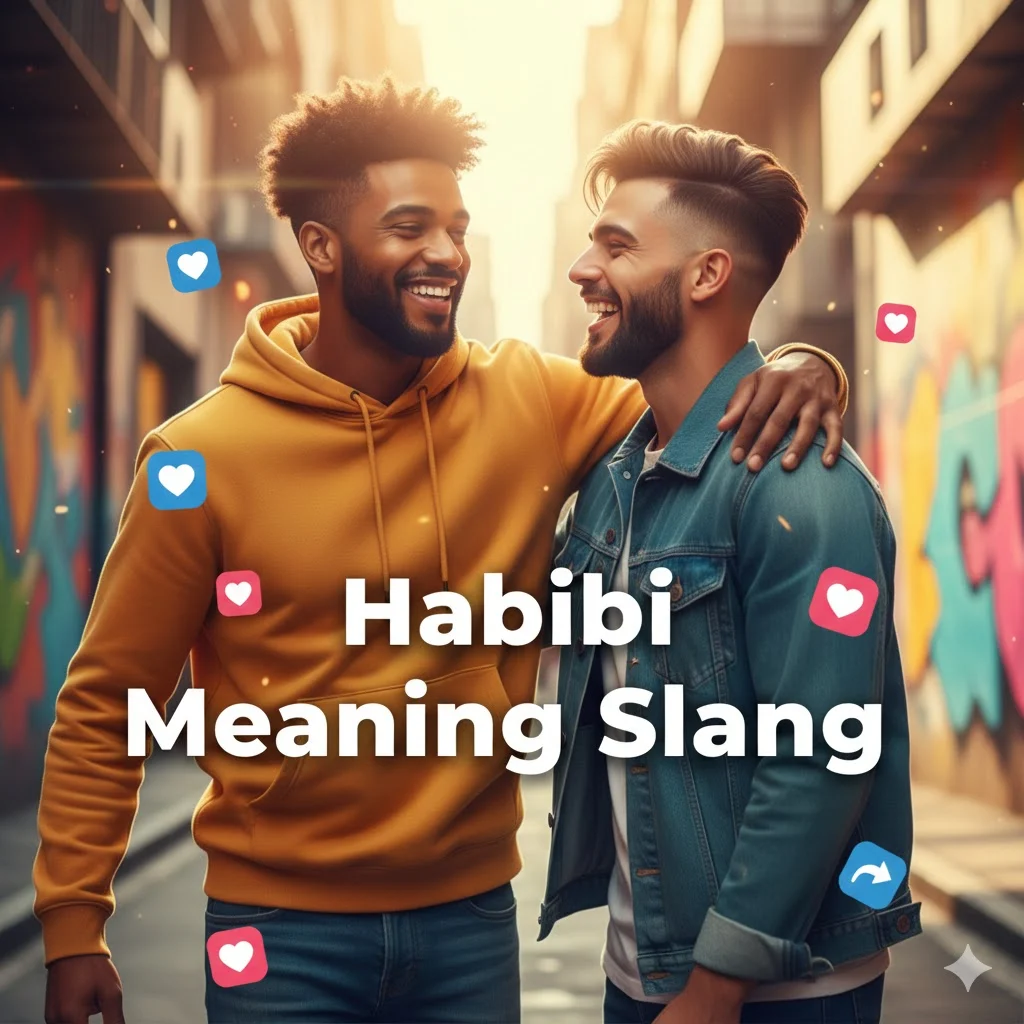

Habibi is an Arabic slang term that means “my love,” “my dear,” or “my friend.”
It is used to express affection, closeness, or friendliness toward someone. In modern slang, it can also mean “bro,” “bestie,” or “buddy,” depending on tone and context.
The word habibi has exploded across social media, music, and everyday conversations. You’ve probably heard it in viral TikTok videos, popular songs, or friendly chats online.
Today, however, the slang use of habibi has evolved beyond its original roots. Depending on context, tone, and relationship, it can mean “my love,” “bro,” “bestie,” or simply “friend.”
In this complete guide, you’ll discover the slang meaning of habibi, its origin, tone variations, examples, comparisons, and proper usage so you can confidently understand and use it in real life.
Although originally romantic, habibi is now widely used between friends, family members, and even casually online.
What Does Habibi Mean in Slang?
In slang, habibi has become a flexible term of endearment. While its literal meaning is “my beloved,” modern speakers use it in both romantic and non-romantic situations.
Common Slang Meanings
- My love ❤️
- My friend 🤝
- Bro 👊
- Bestie 🫶
- Buddy
- Dear
For example:
- “What’s up, habibi?” → Friendly tone
- “I missed you, habibi.” → Romantic or affectionate tone
- “Come here, habibi!” → Warm and caring tone
Therefore, the exact meaning depends heavily on tone and relationship.
Origin of Habibi
Arabic Language Roots
The word habibi comes from Arabic and is derived from the root word:
- Habib (حبيب) – meaning beloved or loved one
Adding “-i” at the end translates to “my,” making habibi mean:
“My beloved” or “my love.”
Masculine vs Feminine Forms
Arabic has gender-specific versions:
| Form | Meaning | Used For |
|---|---|---|
| Habibi (حبيبي) | My love (male) | Male person |
| Habibti (حبيبتي) | My love (female) | Female person |
However, in modern slang, especially online, habibi is often used universally regardless of gender.
Why Habibi Became Popular in Slang
Habibi gained global popularity due to cultural influence and media exposure.
Key Reasons for Its Popularity
- 🎵 Frequent use in music and rap songs
- 📱 Viral use on TikTok, Instagram, and memes
- 🌍 Spread of Middle Eastern culture globally
- 🎬 Use in movies, shows, and influencer content
As a result, habibi became part of internet slang and everyday speech.
How Habibi Is Used in Real Life
Habibi works in many different social situations. However, context always determines its tone.
Common Situations
- Talking to close friends
- Expressing romantic affection
- Greeting someone warmly
- Showing care or appreciation
- Playful or friendly conversations
Because of its warmth, habibi instantly creates emotional closeness.
Tone and Context: Understanding Habibi in Slang
Tone plays a major role in determining the meaning of habibi.
1. Friendly Tone
Used between friends or peers.
“Habibi, let’s go eat.” 👊
Meaning: Bro / friend
2. Romantic Tone
Used between partners or lovers.
“Good night, habibi ❤️”
Meaning: My love
3. Playful Tone
Used jokingly or casually.
“Relax, habibi, I got this.”
Meaning: Buddy / bro
4. Caring Tone
Used to show concern or affection.
“Are you okay, habibi?”
Meaning: Dear / someone cared about
Labeled Examples of Habibi Usage
| Context | Example Sentence | Meaning | Tone |
|---|---|---|---|
| Friendship | “Habibi, come sit here.” | Bro | Friendly |
| Romance | “I love you, habibi.” | My love | Romantic |
| Casual slang | “What are you doing, habibi?” | Buddy | Relaxed |
| Greeting | “Habibi! Long time no see.” | Friend | Warm |
| Caring | “Take care, habibi.” | Dear | Affectionate |
Habibi in Social Media and Internet Slang
Habibi has become extremely popular online.
Examples in Modern Slang
- “Calm down, habibi.”
- “You’re funny, habibi 😂”
- “Habibi, you’re the best.”
Additionally, influencers often use habibi to sound friendly, charming, or culturally expressive.
Comparison: Habibi vs Similar Slang Terms
Habibi vs Bro
| Habibi | Bro |
|---|---|
| Can be romantic or friendly | Mostly friendly |
| Emotional warmth | Casual tone |
| Cultural origin | Modern slang origin |
Habibi vs Babe
| Habibi | Babe |
|---|---|
| Arabic origin | English origin |
| Can be friendly or romantic | Mostly romantic |
| Cultural depth | Casual slang |
Habibi vs Bestie
| Habibi | Bestie |
|---|---|
| Emotional and cultural | Purely modern slang |
| Can be romantic | Only friendship |
| More versatile | Friendship only |
Alternate Meanings of Habibi
Although the main meaning remains consistent, context slightly changes interpretation:
- Romantic partner
- Close friend
- Trusted person
- Loved one
- Friendly nickname
Regardless of variation, the word always expresses affection.
Professional and Polite Alternatives to Habibi
In formal situations, habibi may not always be appropriate. Instead, consider these alternatives:
Formal Alternatives
- Dear
- Sir / Ma’am
- Friend
- Colleague
Casual Alternatives
- Bro
- Buddy
- Bestie
- Mate
Romantic Alternatives
- My love
- Babe
- Darling
Do’s and Don’ts of Using Habibi
Do
- Use it with people you are comfortable with
- Understand the tone and context
- Use it respectfully
Don’t
- Use it in highly formal professional settings
- Use it with strangers in sensitive contexts
- Misuse it sarcastically in serious situations
Frequently Asked Questions (FAQ)
1. What does habibi mean in slang?
Habibi means my love, bro, friend, or dear, depending on tone and context.
2. Is habibi romantic or friendly?
It can be both. The meaning depends on the relationship and situation.
3. Can you call a friend habibi?
Yes. Many people use habibi to refer to close friends.
4. What is the female version of habibi?
The female version is habibti, which means “my love” for a female.
5. Is habibi flirting?
Sometimes. When used romantically, it can express flirting or affection.
6. Is habibi respectful?
Yes. It expresses warmth, care, and affection.
7. Why do people say habibi online?
People use it online because it sounds friendly, cool, and expressive.
8. Can non-Arabic speakers use habibi?
Yes. It is widely used globally in slang and casual speech.
Why Habibi Is So Powerful in Modern Slang
Unlike many slang words, habibi carries emotional depth and warmth. At the same time, it remains flexible enough for modern conversations.
Because of its expressive nature, habibi strengthens connection, friendliness, and affection in both real-life and online interactions.
Conclusion: Key Takeaways About Habibi Meaning Slang
- Habibi means “my love,” “my friend,” or “bro”
- It comes from Arabic and means “my beloved”
- It can be used in romantic, friendly, or casual contexts
- Tone and relationship determine its exact meaning
- It is widely used in modern slang, social media, and everyday speech
Ultimately, habibi is more than slang—it’s a word that expresses connection, warmth, and affection.