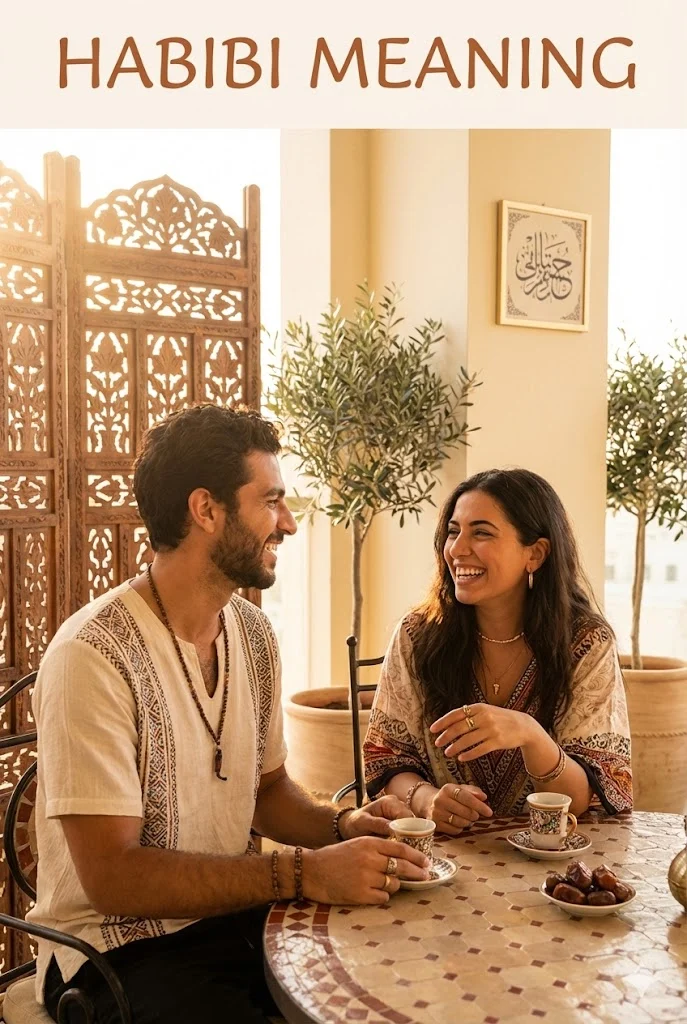

Habibi means “my love,” “my dear,” or “my beloved” in Arabic.
It is an affectionate term used to address someone with warmth, care, or closeness, and it can be used romantically, platonically, or familiarly depending on context.
Habibi is a small word with a big emotional impact. Heard in everyday conversations, songs, movies, and social media captions, habibi instantly conveys warmth, affection, and closeness. While it may sound trendy today, the word carries deep cultural roots and heartfelt meaning in Arabic-speaking communities.
As Arabic expressions continue to spread globally through music, travel, and pop culture, many people naturally wonder: What does habibi really mean, and how should it be used? This comprehensive guide breaks it all down clearly and respectfully.
What Does Habibi Really Mean? (Beyond the Simple Translation)
At first glance, habibi sounds like a romantic word. However, its meaning is much more flexible and context-driven.
Breaking Down the Word
The word habibi comes from Arabic and is formed as follows:
- Ḥabīb (حبيب) – beloved, dear, loved one
- -i (ي) – my (possessive suffix)
Literal meaning: “My beloved.”
Practical meaning:
Depending on tone and relationship, habibi can mean:
- My love
- My dear
- My friend
- My darling
As a result, the same word can feel romantic in one situation and purely friendly in another.
Origin of Habibi
Arabic Roots
Habibi originates from Classical Arabic, a Semitic language spoken for over 1,500 years. The root ḥ-b-b (حب) relates to love, affection, and liking, which appears in many Arabic words associated with emotional attachment.
Cultural Background
Traditionally, habibi is widely used across:
- The Middle East
- North Africa
- The Gulf region
- Arabic-speaking communities worldwide
Because Arabic culture places strong emphasis on warmth, hospitality, and expressive language, affectionate terms like habibi are common in daily speech.
Why Is Habibi So Popular Worldwide?
In recent years, habibi has gained international popularity. This rise can be traced to several cultural influences.
Key Reasons for Global Popularity
- 🎵 Widespread use in Arabic music and pop songs
- 📱 Frequent appearance in social media captions and memes
- 🎬 Exposure through movies, TV shows, and influencers
- 🌍 Increased cultural exchange and travel
Consequently, habibi is now recognized even by people who don’t speak Arabic.
How Habibi Is Used in Real Life
Habibi is extremely versatile. Depending on tone, setting, and relationship, it can feel intimate, friendly, or casual.
Common Situations Where Habibi Is Used
- Between romantic partners
- Among close friends
- Between family members
- As a warm form of address in conversation
- In playful or informal interactions
Because of this flexibility, understanding context is essential.
Tone and Context: What Does Habibi Feel Like?
The emotional tone of habibi changes significantly based on how and when it’s said.
1. Romantic Tone ❤️
Used between partners to express love and intimacy.
“I miss you, habibi.”
2. Friendly Tone 😊
Common among friends, especially in casual conversations.
“Habibi, let’s grab some coffee.”
3. Family Tone 🤍
Often used by parents, siblings, or elders.
“Come here, habibi. Are you hungry?”
4. Playful or Casual Tone 😄
Sometimes used humorously or lightheartedly.
“Relax, habibi. It’s not that serious.”
5. Dismissive or Sarcastic Tone (Rare)
In certain contexts, tone can flip the meaning.
“Okay, habibi… sure.” 😐
(Heavily dependent on tone and situation.)
Labeled Examples of Habibi Usage
| Context | Example Sentence | Tone |
|---|---|---|
| Romantic | “Good night, habibi.” | Loving |
| Friendship | “Habibi, you won’t believe this!” | Friendly |
| Family | “Eat more, habibi.” | Caring |
| Casual | “No worries, habibi.” | Relaxed |
| Playful | “You’re late again, habibi.” | Teasing |
Masculine and Feminine Forms of Habibi
Arabic words often change based on gender, and habibi is no exception.
Gender Variations
- Habibi (حبيبي) – Used when addressing a male
- Habibti (حبيبتي) – Used when addressing a female
Example
- “How are you, habibi?” (to a man)
- “Thank you, habibti.” (to a woman)
Using the correct form shows cultural awareness and respect.
Habibi in Music, Pop Culture, and Social Media
Habibi frequently appears in:
- Song lyrics
- Instagram captions
- TikTok videos
- Fashion branding
In these contexts, it often symbolizes:
- Alien charm
- Emotional warmth
- Cultural flair
However, it’s worth noting that pop culture sometimes simplifies or romanticizes the word, stripping it of nuance.
Comparison: Habibi vs Similar Terms
Habibi vs Love
| Habibi | Love |
|---|---|
| Arabic origin | English origin |
| Context-driven | Mostly romantic |
| Used broadly | Narrower usage |
Habibi vs Darling
| Habibi | Darling |
|---|---|
| Cultural & emotional depth | Primarily affectionate |
| Used among friends & family | Mostly romantic/familial |
Habibi vs Ya Habibi
| Habibi | Ya Habibi |
|---|---|
| “My love” | “Oh, my love” |
| Neutral affectionate term | More expressive/emotional |
Alternate Meanings of Habibi
While habibi generally expresses affection, its intent can shift slightly:
- Romantic affection
- Friendly closeness
- Familial warmth
- Casual friendliness
Regardless of usage, the word almost always carries a positive emotional tone.
Professional and Polite Alternatives to Habibi
In formal or professional settings, habibi may feel too personal.
More Neutral Alternatives
- My friend
- Dear (in writing)
- Buddy (casual)
Cultural Alternatives
- Akhi (my brother – male)
- Ukhti (my sister – female)
- Sadiqi (my friend)
Choosing the right alternative depends on setting and relationship.
Do’s and Don’ts of Using Habibi
Do
- Use it with people you’re comfortable with
- Pay attention to tone and context
- Learn gender-specific forms
Don’t
- Use it in formal business situations
- Assume it’s always romantic
- Overuse it with strangers
Frequently Asked Questions (FAQ)
1. What does habibi literally mean?
Habibi literally means “my beloved” or “my love” in Arabic.
2. Is habibi romantic or friendly?
It can be both. The meaning depends entirely on tone and relationship.
3. Can habibi be used for friends?
Yes. In many cultures, it’s commonly used among friends.
4. What is the female version of habibi?
The feminine form is habibti.
5. Is it okay for non-Arabs to say habibi?
Yes, as long as it’s used respectfully and appropriately.
6. Is habibi formal or informal?
Habibi is informal and affectionate.
7. Why do Arabic songs say habibi so often?
Because it’s emotionally expressive and culturally resonant.
8. Can habibi ever be offensive?
Rarely, but misuse or sarcastic tone can make it inappropriate.
Why Habibi Still Matters Today
In a world where digital communication often feels distant, habibi adds warmth and humanity. More importantly, it reflects a culture that values emotional expression and connection.
Conclusion: Key Takeaways About Habibi Meaning
- Habibi means “my love” or “my dear” in Arabic
- It originates from deep linguistic and cultural roots
- The word can be romantic, friendly, or familial
- Gender forms (habibi / habibti) matter
- Context and tone determine meaning
Ultimately, habibi is not just a word—it’s a feeling.