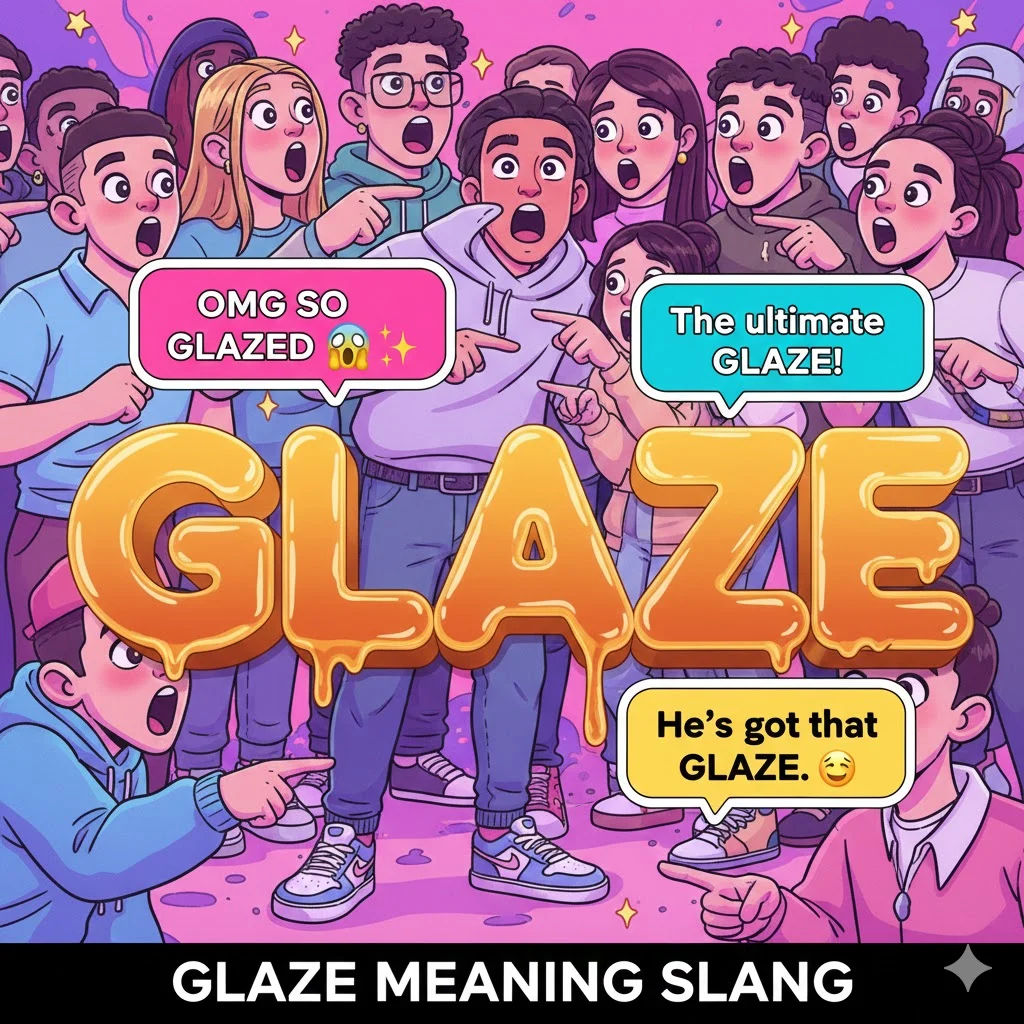

Glaze (slang) means to excessively praise, flatter, or “overhype” someone — often in an exaggerated or embarrassing way.
It is commonly used online to call out someone who is showing over-the-top admiration, usually without good reason.
If you’ve been scrolling TikTok, watching gaming streams, or lurking in comment sections lately, you’ve probably seen someone say, “Stop glazing,” or “Bro is glazing hard.” At first glance, it sounds harmless — maybe even bakery-related. However, in internet slang, glaze has taken on a completely different meaning.
So what does it actually mean? Let’s break it down clearly.
Although the traditional meaning of glaze refers to a shiny coating (like on donuts or pottery), the slang version is rooted in internet culture and playful exaggeration. As a result, the word now carries strong social and comedic implications — especially among Gen Z.
In this complete guide, we’ll explore the origin of “glaze” in slang, how it’s used online, tone variations, examples, comparisons with similar slang terms, and when to avoid using it.
What Does Glaze Mean in Slang? (Beyond the Basic Definition)
At its core, calling someone out for “glazing” implies that they are praising another person way too much.
However, context matters.
Core Slang Meaning
- Over-complimenting someone
- Hyping someone up excessively
- Showing exaggerated admiration
- Acting overly impressed
For example:
“Bro said that was the best song ever made… stop glazing 😭”
In this case, glazing suggests unnecessary hype.
Origin of Glaze as Slang
Unlike many slang terms that come from music or gaming alone, “glaze” evolved through layered internet humor.
Where It Started
- Popularized in TikTok and Twitter (X) comment culture
- Spread through gaming communities and livestream chats
- Became common in sports debates and celebrity fanbases
The slang likely connects metaphorically to the idea of “coating” something heavily — just like glaze coats a donut. In other words, the person is “coating” someone else with excessive praise.
Additionally, meme culture amplified the word, turning it into a quick and funny way to call out over-the-top admiration.
Why Is “Glaze” So Popular Online?
Several factors contributed to its viral rise.
Reasons for Its Popularity
- 🔥 Short, punchy, and meme-friendly
- 📱 Perfect for TikTok comment sections
- 🎮 Common in competitive gaming banter
- 🏀 Frequently used in sports and celebrity debates
- 😂 Carries comedic exaggeration
Moreover, internet culture thrives on playful call-outs. Therefore, “glaze” fits perfectly into fast-paced digital conversations.
How Glaze Is Used in Real Conversations
Although mainly seen online, the slang version of glaze has started creeping into real-life conversations — especially among younger audiences.
Common Situations Where It Appears
- Defending a favorite celebrity
- Debating athletes or musicians
- Reacting to overexcited fans
- Teasing a friend who is hyping someone too much
Because of its casual tone, glaze is rarely used in formal settings.
Tone and Context: What Does “Glazing” Feel Like?
Depending on delivery, calling someone out for glazing can feel playful or slightly insulting.
1. Playful / Friendly Tone
Often used jokingly among friends.
“You called him a genius for opening a jar? Stop glazing 😭”
Tone: Teasing, humorous.
2. Competitive / Debate Tone
Common in sports or music arguments.
“Every time he scores one goal you start glazing.”
Tone: Challenging, sarcastic.
3. Mocking / Critical Tone
Sometimes used to criticize excessive fan behavior.
“The whole comment section is just glazing at this point.”
Tone: Dismissive.
4. Self-Aware / Ironic Tone
Occasionally used jokingly about oneself.
“Okay maybe I’m glazing a little… but that movie was elite.”
Tone: Humorous and self-aware.
Labeled Examples of Glaze in Slang
| Context | Example Sentence | Tone |
|---|---|---|
| Sports debate | “You’re glazing him after one good game.” | Competitive |
| Music fandom | “Swifties glazing again in the comments.” | Playful/mock |
| Gaming chat | “Bro glazing the top player like Interesting.” | Teasing |
| Friend group | “You’re glazing your crush so hard.” | Friendly |
| Self-joke | “I might be glazing, but that burger was life-changing.” | Humorous |
Glaze vs Similar Slang Terms
To understand it better, let’s compare glaze with related slang.
Glaze vs Meat Riding
| Glaze | Meat Riding |
|---|---|
| Over-praising someone | Extreme, obsessive praise |
| Slightly humorous | More aggressive slang |
| Common on TikTok | Often harsher tone |
| Mild insult | Stronger insult |
While both imply excessive admiration, meat riding is considered more vulgar and confrontational.
Glaze vs Simping
| Glaze | Simping |
|---|---|
| Overhyping someone | Excessive romantic admiration |
| Not always romantic | Usually tied to attraction |
| Can be about celebrities or athletes | Often about crushes |
| Used broadly | More relationship-focused |
Therefore, glazing doesn’t necessarily involve romantic interest.
Glaze vs Hyping
| Glaze | Hyping |
|---|---|
| Implies too much praise | Can be positive encouragement |
| Slightly negative undertone | Often supportive |
| Used critically | Used constructively |
In contrast, hyping someone can be healthy encouragement, while glazing suggests exaggeration.
Alternate Meanings of Glaze
Outside of slang, glaze has several traditional meanings:
- A glossy coating on food (e.g., donut glaze)
- A glassy finish on ceramics
- A shiny layer on surfaces
- A fixed or dull facial expression (“a glazed look”)
However, in internet slang, the meaning shifts entirely toward exaggerated praise.
Professional and Polite Alternatives to “Glazing”
Because glaze is informal slang, it’s not suitable for professional settings. Instead, consider these alternatives:
Neutral Alternatives
- Overpraising
- Excessive admiration
- Overenthusiastic support
- Uncritical praise
Professional Alternatives
- Showing bias
- Demonstrating favoritism
- Offering exaggerated compliments
For example, instead of saying,
“The media is glazing him,”
you could say,
“The media coverage appears overly favorable.”
Do’s and Don’ts of Using “Glaze” in Slang
✅ Do:
- Use it in casual settings
- Keep tone playful when teasing
- Understand your audience
❌ Don’t:
- Use it in professional emails
- Direct it at someone sensitive
- Overuse it to the point of annoyance
Because slang evolves quickly, using it appropriately matters.
Frequently Asked Questions (FAQ)
1. What does glaze mean in slang?
In slang, glaze means excessively praising or overhyping someone in an exaggerated way.
2. Is glaze an insult?
Not always. It can be playful; however, depending on tone, it may feel mocking.
3. Where did glaze slang originate?
It gained popularity on TikTok, Twitter (X), gaming streams, and sports debates.
4. Is glazing the same as simping?
Not exactly. Simping usually involves romantic admiration, while glazing can apply to anyone.
5. Can glaze be used in real life conversations?
Yes, but mainly in casual conversations among younger audiences.
6. What does “stop glazing” mean?
It means “stop overhyping or praising someone excessively.”
7. Is glaze Gen Z slang?
Yes, it is primarily used by Gen Z and younger millennials online.
8. Is glazing positive or negative?
It depends on tone. Often, it carries a slightly negative or teasing undertone.
Why “Glaze” Reflects Internet Culture
Internet slang thrives on exaggeration, humor, and quick call-outs. Consequently, words like glaze spread rapidly because they capture a shared social behavior — over-the-top admiration.
Moreover, social media encourages strong opinions and fan loyalty. Therefore, having a short word to describe exaggerated praise makes online interactions faster and funnier.
Conclusion: Key Takeaways About Glaze Meaning in Slang
- Glaze (slang) means overhyping or excessively praising someone
- It became popular through TikTok, gaming culture, and sports debates
- The tone is usually playful, teasing, or sarcastic
- It differs from simping or meat riding in intensity and context
- It should be used casually, not professionally
Ultimately, when someone says, “Stop glazing,” they’re telling you to tone down the hype.