
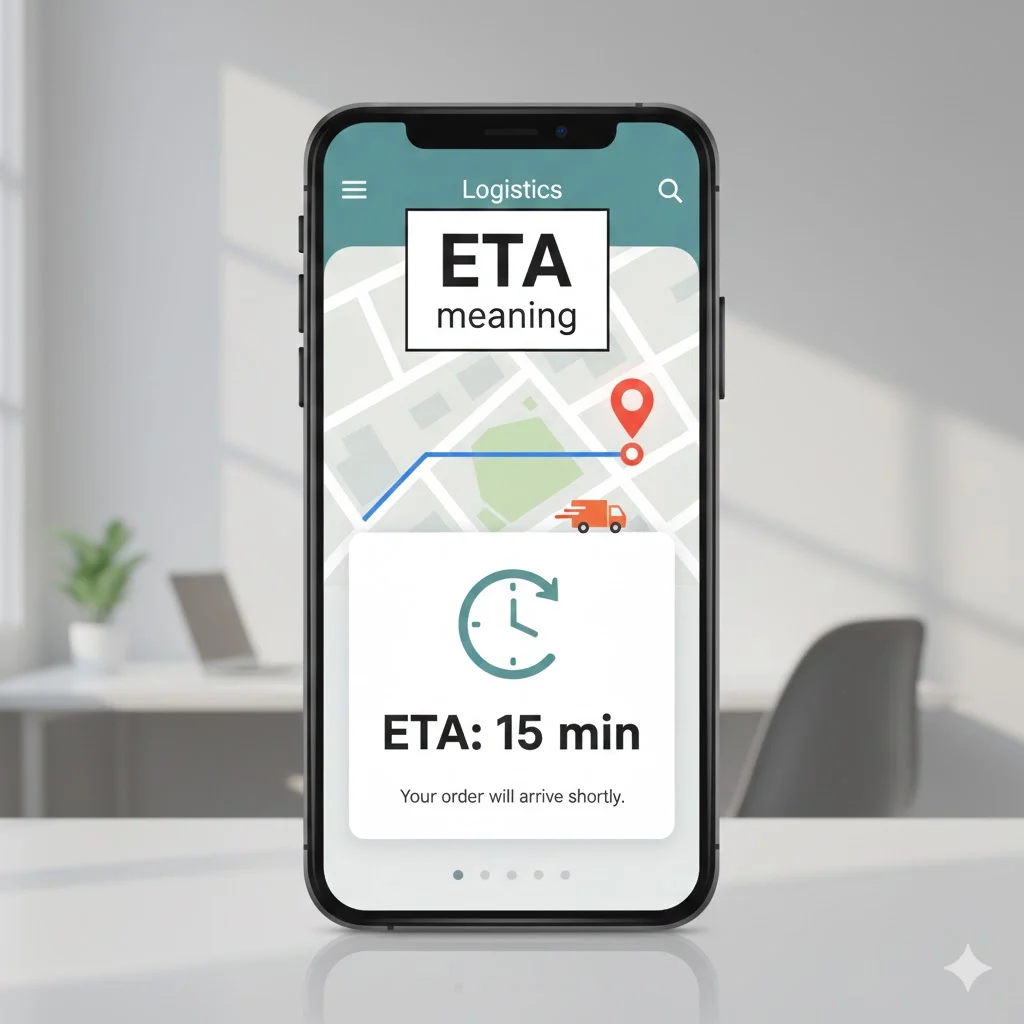

ETA stands for “Estimated Time of Arrival.”
It is used to indicate the anticipated time at which a person, vehicle, shipment, or service is expected to reach a destination.
ETA is a term you’ve likely encountered in travel updates, work emails, delivery notifications, or even casual conversations. Despite its frequent use, many people wonder: What does ETA actually mean?
Understanding ETA is more than decoding an abbreviation; it’s about grasping its practical and professional importance in everyday life.
While ETA might seem like a simple logistical term, its usage spans across aviation, shipping, project management, and even informal communication. In this guide, we’ll explore its origins, different contexts, examples, comparisons with similar abbreviations, alternatives, and frequently asked questions.
What Does ETA Really Mean? (Beyond the Acronym)
At its core, ETA tells someone when to expect something or someone.
Breaking Down ETA
- E – Estimated
- T – Time
- A – Arrival
Literal meaning: “The predicted time when someone or something will arrive.”
Practical interpretation:
ETA is a tool to help people plan, coordinate, and manage expectations effectively.
For example, knowing a flight’s ETA allows airport staff and passengers to prepare accordingly.
Origin of ETA
Historical Background
The term ETA emerged in the early aviation and maritime industries, where precise scheduling became crucial for safety and efficiency. Over time, its use expanded to logistics, transportation, and even digital platforms.
Why ETA Became Popular
- 🌍 Aviation and shipping industries needed accurate scheduling
- 📦 Delivery services adopted ETA to inform customers
- ⏱ Digital apps, like ride-sharing and package tracking, rely heavily on ETAs
- 🏢 Professional environments use it to communicate deadlines and timelines
Consequently, ETA has become a universally understood term, bridging formal and casual contexts.
How ETA Is Used in Real Life
ETA can apply in a wide range of scenarios, from professional communication to everyday conversations.
Common Situations
- Tracking flights, trains, and buses
- Predicting delivery or shipment times
- Estimating project completion in work emails
- Informal texting about arrival times with friends
For instance, someone might say:
“What’s your ETA? Traffic is bad today.”
This simple question helps manage expectations and reduce uncertainty.
Tone and Context: How ETA Feels
The meaning of ETA can shift subtly depending on context and tone.
1. Professional / Neutral Tone
Used in work or logistical communications.
“Please provide your ETA for the report submission.”
2. Casual / Friendly Tone
Used in informal texting or verbal communication.
“Hey, what’s your ETA at the party? 😄”
3. Urgent / Time-Sensitive Tone
Applied in emergency services, aviation, or transport notifications.
“ETA for the ambulance: 5 minutes.”
4. Sarcastic or Frustrated Tone (Rare)
Sometimes ETA is used in a frustrated or ironic way.
“ETA? You said 10 minutes 30 minutes ago!” 😐
Labeled Examples of ETA Usage
| Context | Example Sentence | Tone |
|---|---|---|
| Flight | “The flight’s ETA is 3:45 PM.” | Neutral/Professional |
| Delivery | “Your package ETA is 2 days from now.” | Informative |
| Workplace | “What’s your ETA for finishing the presentation?” | Professional |
| Casual Text | “ETA at your place?” | Friendly |
| Emergency | “ETA for the rescue team: 10 minutes.” | Urgent |
ETA in Travel, Logistics, and Technology
In modern times, ETA plays a crucial role in multiple industries:
- Travel & Aviation: Predicts arrival of planes, trains, buses
- Delivery & Shipping: Tracks packages in real-time
- Ride-Sharing & Navigation Apps: Communicates arrival times dynamically
- Project Management: Helps set deadlines and coordinate teams
Therefore, ETA is no longer just a technical term; it is a practical tool for efficiency.
Comparison: ETA vs Similar Terms
ETA vs ETD (Estimated Time of Departure)
| ETA | ETD |
|---|---|
| Expected time of arrival | Expected time of departure |
| Focuses on the destination | Focuses on the starting point |
| Helps plan when to receive or meet | Helps schedule departures |
ETA vs ATD / ATA (Actual Time of Departure / Arrival)
| ETA | ATA/ATD |
|---|---|
| Predicted arrival | Actual recorded arrival/departure |
| Can change due to delays | Confirmed timing |
| Used for planning | Used for documentation |
ETA vs ETR (Estimated Time of Repair)
| ETA | ETR |
|---|---|
| Arrival or completion of item/person | Time estimated for repair or restoration |
| Common in transport/logistics | Common in IT and maintenance |
Alternate Meanings of ETA
While “Estimated Time of Arrival” is the most common meaning, ETA can sometimes represent:
- ETA (Spain) – Euskadi Ta Askatasuna, a historical Basque organization
- Electronic Travel Authorization – in immigration and visa contexts
- Educational Testing Assessment – in academic settings
However, in most professional and casual contexts, ETA almost always refers to arrival time.
Professional and Polite Alternatives to ETA
If ETA feels too informal or technical, these alternatives can be used:
Formal / Professional Alternatives
- Estimated arrival
- Expected time
- Anticipated arrival
Casual / Friendly Alternatives
- When you’ll get here
- How soon you’ll arrive
- Approximate time
Do’s and Don’ts of Using ETA
Do
- Use ETA clearly with date/time
- Update ETA if it changes
- Contextualize ETA for clarity (flight, package, project)
Don’t
- Give vague or misleading ETAs
- Ignore delays or updates
- Overuse abbreviations in formal writing without explanation
Frequently Asked Questions (FAQ)
1. What does ETA stand for?
ETA stands for Estimated Time of Arrival and indicates when someone or something is expected to reach a destination.
2. Is ETA formal or informal?
It can be both. ETA is widely used in professional, casual, and technical contexts.
3. Can ETA change?
Yes. ETA is an estimate and can change due to traffic, weather, or unforeseen circumstances.
4. How do you calculate ETA?
ETA is usually calculated based on distance, speed, and expected delays.
5. Is ETA only used for travel?
No. ETA applies to shipments, projects, appointments, and even casual meetings.
6. What’s the difference between ETA and ETD?
ETA is the expected arrival time, while ETD is the expected departure time.
7. Is it polite to ask for someone’s ETA?
Yes, but consider tone and context—professional or casual phrasing works best.
8. Are there alternatives to ETA?
Yes. You can use estimated arrival, expected time, or approximate arrival time.
Why ETA Still Matters Today
In our fast-paced, time-sensitive world, ETA ensures coordination and planning. Whether it’s tracking flights, managing deliveries, or communicating with friends, ETA reduces uncertainty and enhances efficiency.
Additionally, technology has made ETA even more accurate, integrating real-time data for smoother scheduling.
Conclusion: Key Takeaways About ETA Meaning
- ETA means Estimated Time of Arrival, predicting when something or someone will reach a destination
- It has roots in aviation, shipping, and logistics but is now widely used in everyday communication
- Usage spans professional, casual, and urgent contexts
- Tone and clarity are important to ensure effective communication
- Mindful use of ETA helps manage expectations and reduce misunderstandings
By understanding ETA, you can communicate arrival times confidently and professionally in any context.