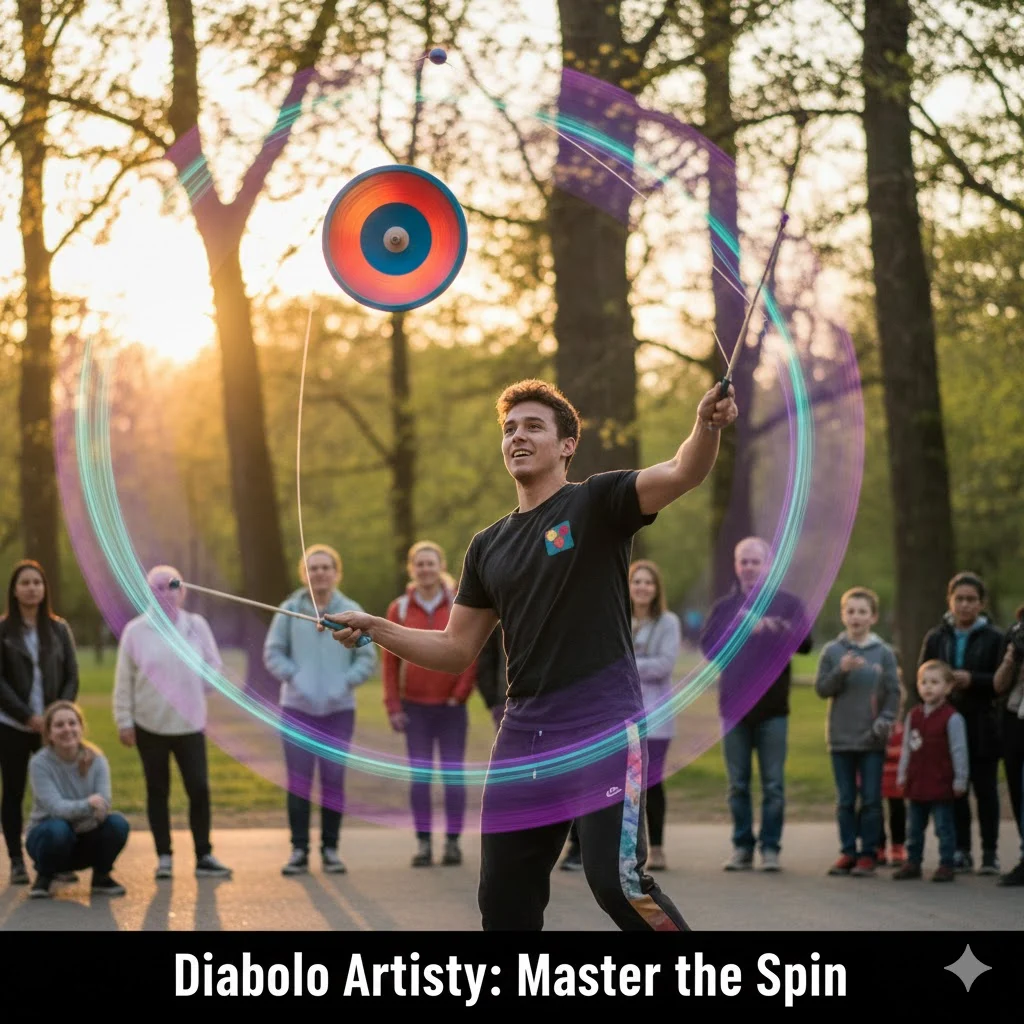

Diabolo refers to a juggling toy consisting of a spool spun on a string stretched between two sticks.
It is manipulated by rolling, tossing, and catching the spool in various tricks, often requiring skill, rhythm, and coordination.
Diabolo is not just a fun toy—it’s a cultural icon, a skill-based performance tool, and a fascinating part of juggling history. From street performers to professional circus artists, diabolo has captured the imagination of people worldwide.
Whether you’re watching it spin gracefully in a performance, learning it as a hobby, or exploring its historical roots, understanding diabolo meaning gives you insight into both the art and the science behind this captivating object.
In addition to being a popular toy, diabolo also represents cultural history, performance artistry, and personal dexterity. In this guide, we’ll explore its meaning, origin, variations, and practical tips for beginners and enthusiasts alike.
What Does Diabolo Really Mean? (Beyond the Literal Translation)
At its core, diabolo is a physical object—a spool—but its meaning extends beyond a simple toy.
Breaking Down the Word
The word diabolo comes from the Greek prefix “dia-” meaning “across” and the Greek word “ballo” meaning “to throw.”
Literal meaning: “Throw across”
Practical interpretation:
The diabolo is designed to be thrown, spun, and manipulated across the string, showcasing dexterity, timing, and creativity.
Consequently, diabolo is not just a toy—it’s a medium for performance, expression, and skill mastery.
Origin of Diabolo
Historical Roots
Diabolo is believed to have originated in China, where it was initially called the “Chinese yo-yo.” Records suggest that versions of the toy existed as early as the 12th century, often made from bamboo and played as part of folk festivals.
Western Adoption
The toy reached Europe in the 19th century, where it was renamed diabolo, inspired by the Latin/Greek roots meaning “across throw.” It quickly became popular as both a children’s toy and a performance prop for circus acts.
Cultural Significance
In addition to entertainment, diabolo was often used in traditional Chinese festivals, street performances, and skill competitions. Over time, it evolved into a global performance art form.
Why Diabolo Is Popular Worldwide
Diabolo has transcended cultures due to its visual appeal, versatility, and challenge.
Key Reasons for Popularity
- 🎪 Integral part of circus and street performances
- 🏆 Popular in skill competitions and juggling festivals
- 🧠 Encourages hand-eye coordination and focus
- 🌍 Easy to learn yet endlessly expandable with tricks
As a result, diabolo attracts hobbyists, professional performers, and even online content creators looking to impress audiences.
How Diabolo Is Used in Real Life
Diabolo serves multiple purposes, from entertainment to skill development.
Common Uses
- Recreational toy for children and adults
- Professional circus performance prop
- Competition equipment in juggling and diabolo festivals
- Fitness tool to enhance hand-eye coordination and reflexes
Moreover, diabolo can be used for solo performances or synchronized group shows, demonstrating creativity and collaboration.
The Diabolo Technique and Equipment
Understanding diabolo means learning its equipment and basic techniques.
Basic Equipment
- Spool (diabolo) – can be plastic, rubber, or metal
- String – usually nylon, stretched between two sticks
- Sticks – used to spin, toss, and control the diabolo
Basic Techniques
- Spinning: Keeping the diabolo rotating smoothly
- Throwing and catching: Tossing the diabolo into the air and catching it on the string
- Tricks: Includes loops, wraps, tosses, and multiple diabolos
Skill develops gradually, requiring coordination, timing, and patience.
Tone and Context: Diabolo in Conversations
The word diabolo can appear in different contexts:
1. Friendly / Fun Tone
“I just learned a new diabolo trick today! 😄”
2. Neutral / Informational Tone
“The diabolo is a traditional juggling toy popular in both China and Europe.”
3. Competitive / Professional Tone
“He won the international diabolo championship with a triple toss combo.”
4. Rare / Dismissive Tone
“It’s just a diabolo… nothing impressive.”
(This usage is informal and often dismissive.)
Labeled Examples of Diabolo Usage
| Context | Example Sentence | Tone |
|---|---|---|
| Casual play | “I bought a diabolo for my niece.” | Friendly |
| Performance | “She performed a diabolo act at the circus.” | Professional |
| Informational | “The diabolo originated in China centuries ago.” | Neutral |
| Competition | “His diabolo tricks won first place in the festival.” | Competitive |
| Hobby | “Learning diabolo improves coordination and focus.” | Positive |
Diabolo in Performance Arts and Competitions
Diabolo is often featured in circus acts, juggling performances, and talent shows.
Why Performers Choose Diabolo
- Visually impressive tricks
- Combines rhythm, timing, and creativity
- Versatile for solo or group acts
Furthermore, diabolo competitions evaluate precision, creativity, and technical difficulty, making it both challenging and rewarding for performers.
Comparison: Diabolo vs Similar Toys
Diabolo vs Yo-Yo
| Diabolo | Yo-Yo |
|---|---|
| Uses string stretched between sticks | String attached to a single stick |
| Can perform larger tricks and tosses | Best for looping tricks |
| Often used in performance art | Primarily a toy or casual skill |
Vs Kendama
| Diabolo | Kendama |
|---|---|
| Spinning toy on a string | Ball and cup toy |
| Emphasizes aerial tricks | Emphasizes balance and catching |
| Requires two sticks | Single stick with cup |
Diabolo vs Juggling Balls
| Diabolo | Juggling Balls |
|---|---|
| Single spinning object on a string | Multiple balls tossed in patterns |
| Focus on rotation and tricks | Focus on rhythm and timing |
| Often visual and theatrical | Often skill-focused practice |
Alternate Meanings of Diabolo
While most commonly referring to the juggling toy, diabolo can also refer to:
- Cocktail: A French drink combining lemonade and syrup
- Weapon variant: Rarely, a historical term for a small throwing projectile
Nevertheless, the context usually clarifies the intended meaning.
Professional and Polite Alternatives to Diabolo
If you need to describe it formally or in writing:
Formal Alternatives
- Juggling spool
- Performance toy
- Circus prop
Descriptive Alternatives
- Spinning skill toy
- Throw-and-catch apparatus
- Trick-playing equipment
These alternatives can help avoid confusion in professional or academic writing.
Do’s and Don’ts of Using Diabolo
Do
- Practice slowly and safely
- Start with beginner tricks and progress gradually
- Use appropriate equipment for your skill level
Don’t
- Attempt advanced tricks without supervision
- Ignore safety precautions
- Overlook cultural history if presenting as part of a performance
Frequently Asked Questions (FAQ)
1. What exactly is a diabolo?
A diabolo is a juggling toy consisting of a spool spun on a string stretched between two sticks.
2. Where did diabolo originate?
Diabolo originated in China as the “Chinese yo-yo” and later spread to Europe in the 19th century.
3. Is diabolo only for children?
No, it’s popular among children, hobbyists, and professional performers.
4. How do you start learning diabolo?
Begin with basic spinning and tossing, gradually moving to simple tricks.
5. What are common diabolo tricks?
Common tricks include tosses, wraps, loops, stalls, and multi-diablo juggling.
6. Can diabolo improve coordination?
Yes, it enhances hand-eye coordination, focus, and timing.
7. Is diabolo used in competitions?
Absolutely. Many juggling festivals and skill competitions feature diabolo events.
8. Are there different types of diabolo?
Yes. Diabolos vary in size, material (plastic, rubber, metal), and weight for different skill levels.
Why Diabolo Still Matters Today
In addition to entertainment, diabolo fosters physical skill, patience, and creativity. It encourages mindfulness, performance artistry, and can even serve as a social or educational tool.
Conclusion: Key Takeaways About Diabolo Meaning
- Diabolo is a juggling toy that emphasizes spinning, throwing, and catching
- Its roots trace back to ancient China, later spreading to Europe
- Diabolo serves as both a hobby and professional performance tool
- Understanding diabolo includes learning its techniques, tricks, and historical context
- Proper practice ensures safety, skill development, and enjoyment
In essence, diabolo is not only fun—it’s a way to connect skill, art, and tradition.