
ASMR stands for Autonomous Sensory Meridian Response.
It refers to a calming, tingling sensation that typically begins on the scalp and moves down the neck and spine, often triggered by soft sounds, whispering, tapping, or gentle movements.
Have you ever felt a pleasant tingling sensation on your scalp while listening to whispering, tapping, or soft sounds? If so, you’ve probably experienced ASMR—even if you didn’t know the term for it.
Over the past decade, ASMR has exploded across YouTube, TikTok, and wellness communities. However, many people still ask: What does ASMR actually mean? More importantly, why does it make millions of people feel calm, sleepy, or deeply relaxed?
Let’s break it down clearly and completely.
Although ASMR is commonly associated with relaxing videos, its meaning goes far beyond internet trends. In fact, it connects psychology, neuroscience, and sensory experience in fascinating ways.
What Does ASMR Really Mean? (Breaking Down the Term)
To fully understand ASMR meaning, it helps to analyze each word in the phrase.
Word-by-Word Breakdown
- Autonomous – Happens automatically, without conscious control
- Sensory – Related to the senses (hearing, touch, sight)
- Meridian – Peak or high point
- Response – A reaction to something
Simple Definition in Everyday Language
ASMR is a pleasant, automatic tingling feeling triggered by specific sounds or visual stimuli.
In other words, your brain reacts to certain gentle cues by producing a relaxing, almost euphoric sensation.
Where Did ASMR Come From? (Origin and History)
Interestingly, ASMR is not a new experience—only the name is new.
How the Term Was Created
In 2010, a woman named Jennifer Allen coined the term “Autonomous Sensory Meridian Response” in an online forum. Before that, people described the sensation using phrases like:
- “Brain tingles”
- “Head orgasm” (informal term)
- “Weird relaxing feeling”
However, none of those sounded scientific or neutral. Therefore, the term ASMR was introduced to sound clinical and descriptive.
Why Is ASMR So Popular Online?
Over time, ASMR grew into a global digital phenomenon.
Reasons for Its Massive Popularity
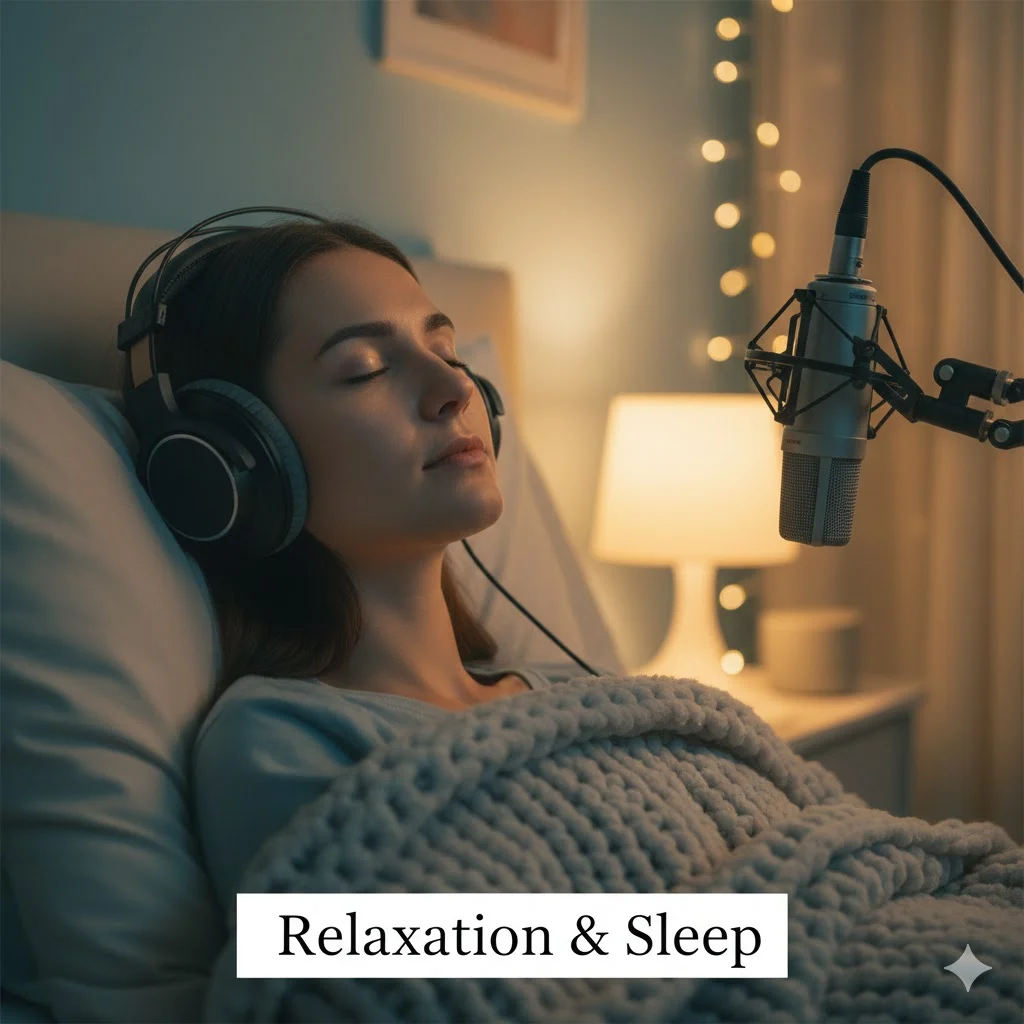
- 🎧 Helps people relax and sleep
- 😌 Reduces stress and anxiety
- 📱 Short-form platforms like TikTok amplified trends
- 🌙 Used as nighttime background audio
- 🧠 Increasing awareness of mental wellness
As a result, ASMR creators—often called ASMRtists—have built entire careers producing calming content.
How ASMR Feels (And Why People Love It)
The ASMR sensation is often described as:
- Tingling on the scalp
- A wave down the neck and shoulders
- Warm, fuzzy relaxation
- Deep calm or sleepiness
For some individuals, the effect is immediate. Meanwhile, others may not experience it at all. In fact, not everyone is sensitive to ASMR triggers.
Common ASMR Triggers
Different people respond to different stimuli. Nevertheless, some triggers are consistently popular.
Audio Triggers
- Whispering
- Tapping (wood, glass, nails)
- Page turning
- Crinkling paper
- Soft speaking
Visual Triggers
- Slow hand movements
- Personal attention roleplays
- Hair brushing
- Light touching motions
Situational Triggers
- Medical checkup simulations
- Makeup application roleplay
- Teaching scenarios
- Gentle affirmations
Because triggers vary widely, ASMR content spans countless styles and formats.
Tone and Context: How Is ASMR Used in Conversation?
Unlike traditional greetings or phrases, ASMR is usually descriptive rather than expressive. Still, tone can vary.
1. Informative Tone
Used when explaining the concept.
“ASMR stands for Autonomous Sensory Meridian Response.”
2. Casual Internet Tone
Often seen on social media.
“This video gives me instant ASMR 😴✨”
3. Skeptical or Neutral Tone
Some people remain unsure about it.
“I don’t get ASMR. It just sounds like whispering to me.”
Labeled Examples of ASMR Usage
| Context | Example Sentence | Tone |
|---|---|---|
| YouTube title | “ASMR Whispered Bedtime Stories” | Relaxing |
| TikTok caption | “POV: You need sleep ASAP #ASMR” | Casual |
| Informative article | “ASMR may reduce stress levels.” | Neutral |
| Personal reaction | “That tapping sound gives me ASMR.” | Experiential |
| Skeptical comment | “Is ASMR even real?” | Questioning |
The Science Behind ASMR
Although research is still developing, early studies suggest ASMR may:
- Lower heart rate
- Promote relaxation
- Reduce anxiety
- Improve sleep quality
Some researchers compare ASMR’s calming effect to meditation or mindfulness practices. However, scientific consensus is still evolving.
ASMR vs Similar Concepts
ASMR vs Frisson
| ASMR | Frisson |
|---|---|
| Calm tingling | Intense chills |
| Triggered by soft stimuli | Triggered by music or emotional peaks |
| Relaxing | Exciting or thrilling |
| Slow and soothing | Sudden and powerful |
Frisson often happens when listening to powerful music, whereas ASMR is typically gentle and quiet.
ASMR vs White Noise
| ASMR | White Noise |
|---|---|
| Trigger-based | Continuous sound |
| Personal and sensory | Neutral background noise |
| Can cause tingles | Usually no tingles |
| Interactive content | Passive audio |
White noise helps block distractions, while ASMR aims to create sensory engagement.
Alternate Meanings of ASMR
While ASMR primarily refers to the tingling sensation, it can also mean:
- The community built around ASMR content
- ASMR-style videos
- A genre of relaxation content
For example:
“I watch ASMR every night.”
(This may refer to videos, not just the sensation.)
Professional and Polite Alternatives to the Term ASMR
In clinical or academic settings, you might say:
- Sensory relaxation response
- Tactile-auditory relaxation effect
- Neurological relaxation trigger
However, in everyday conversation, ASMR remains the widely accepted term.
Do’s and Don’ts of ASMR Usage
Do
- Use headphones for full effect
- Explore different triggers
- Use it for stress relief or sleep
Don’t
- Assume everyone experiences it
- Confuse it with inappropriate content
- Use it in serious medical claims without evidence
Frequently Asked Questions (FAQ)
1. What does ASMR stand for?
ASMR stands for Autonomous Sensory Meridian Response.
2. What does ASMR feel like?
It feels like a gentle tingling sensation on the scalp that moves down the neck and spine.
3. Is ASMR scientifically proven?
Some research supports its calming effects, although studies are still ongoing.
4. Why doesn’t everyone experience ASMR?
Sensitivity varies from person to person, likely due to neurological differences.
5. Is ASMR good for anxiety?
Many people report reduced anxiety, but it should not replace medical treatment.
6. Is ASMR inappropriate?
No. While some misunderstand it, ASMR content is typically calming and relaxation-focused.
7. Can ASMR help you sleep?
Yes, many people use ASMR videos to fall asleep faster.
8. What are the most popular ASMR triggers?
Whispering, tapping, personal attention roleplays, and soft speaking are among the most popular.
Why ASMR Matters Today
In a world filled with constant noise, stress, and overstimulation, ASMR offers something rare—gentleness. Moreover, as mental health awareness increases, tools that promote calmness and rest have become more valuable than ever.
Whether you personally experience tingles or simply enjoy the soothing sounds, ASMR has undeniably carved out a meaningful space in digital culture.
Conclusion: Key Takeaways About ASMR Meaning
- ASMR stands for Autonomous Sensory Meridian Response
- It describes a calming tingling sensation triggered by soft stimuli
- Not everyone experiences ASMR
- It is widely used for relaxation and sleep
- Its popularity continues to grow through YouTube and TikTok
Ultimately, ASMR represents more than a trend—it reflects our natural desire for comfort, calm, and sensory peace.