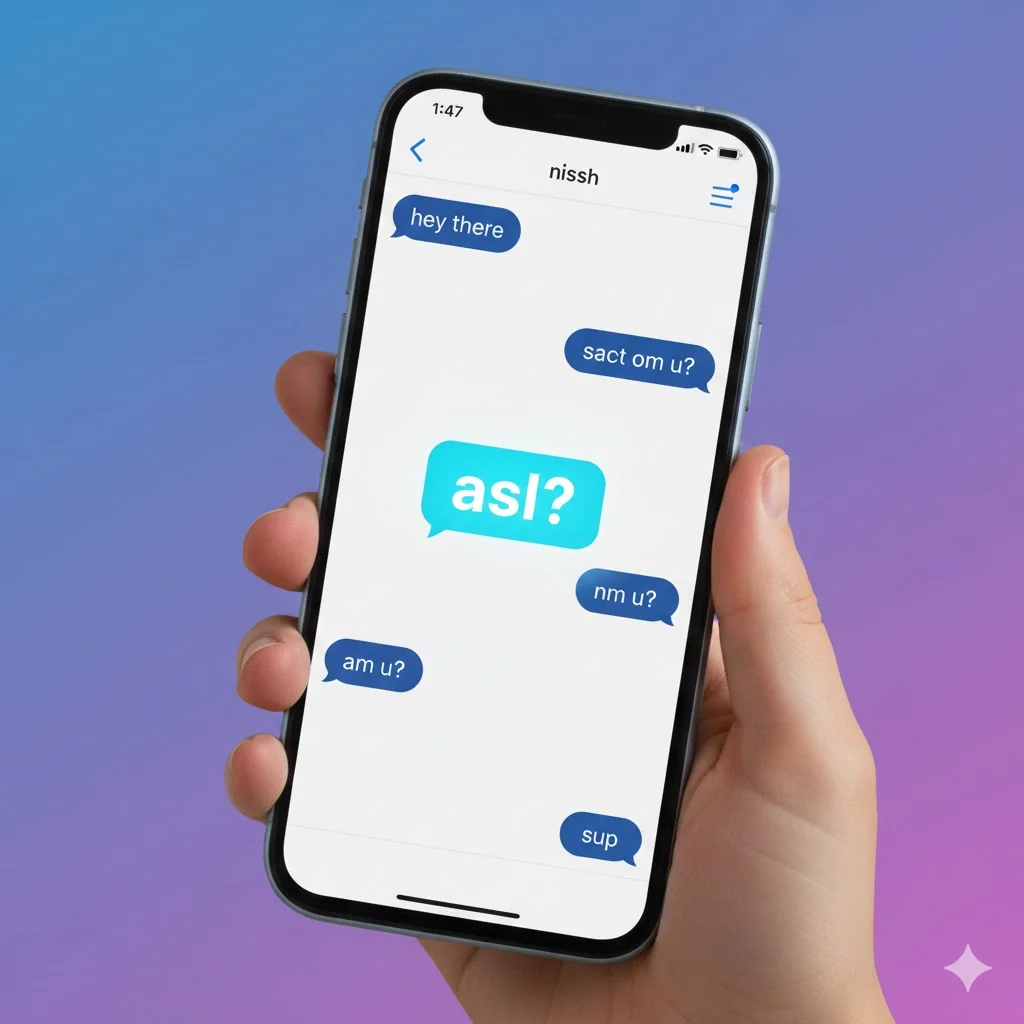

ASL stands for “Age, Sex, Location.”
It is an internet abbreviation used to quickly ask someone their age, gender, and where they live, usually at the start of an online conversation.
The internet has its own language, and if you’ve ever chatted online, you’ve probably seen someone type “asl?” out of nowhere. At first glance, it can feel confusing or even random. However, this short abbreviation has been around for decades and still pops up in chats, social media, and messaging apps today.
Although its popularity peaked in early chatroom culture, ASL meaning remains relevant—especially for anyone navigating online conversations, texting slang, or internet culture.
Originally, people used ASL to get basic information about someone they were chatting with. Today, however, its meaning and tone can vary depending on context, platform, and audience.
What Does ASL Mean in Text and Online Chat?
In most online conversations, ASL functions as a quick introduction shortcut. Instead of asking three separate questions, users combine them into one simple abbreviation.
Breaking Down ASL
- A – Age: How old are you?
- S – Sex: What is your gender?
- L – Location: Where are you from?
For example:
“asl?”
means
“What is your age, gender, and location?”
Because of its simplicity, ASL became one of the earliest and most recognizable internet slang terms.
Origin of ASL
Early Internet Chatrooms (1990s and 2000s)
ASL first appeared in early online chat platforms such as:
- AOL Instant Messenger (AIM)
- Yahoo Messenger
- ICQ
- Internet Relay Chat (IRC)
During that era, people often chatted with strangers. Therefore, ASL provided a fast way to understand who they were talking to.
Why It Became Popular
Several factors contributed to its widespread use:
- Faster communication in slow typing environments
- Limited user profiles on early chat platforms
- Curiosity when meeting new people online
- Desire to find people of similar age or location
As a result, ASL became a universal chatroom icebreaker.
ASL Meaning in Modern Internet Culture
Although ASL is less common today than it was in early chatrooms, it still appears in certain contexts.
Where You Might Still See ASL
- Online chat forums
- Gaming chats
- Anonymous chat apps
- Meme culture
- Social media comments
However, its tone and intent can differ depending on the situation.
Tone and Context: How ASL Can Feel in Conversation
The tone of ASL depends heavily on context, platform, and delivery.
1. Neutral Tone (Basic Information Request)
Used to learn about someone in a straightforward way.
“Hey, asl?”
Tone: Neutral, informational
2. Friendly Tone (Casual Conversation Starter)
Sometimes used casually among new online friends.
“Hi! asl? I’m 21, F, Canada 😊”
Tone: Friendly and conversational
3. Suspicious or Awkward Tone (Modern Context)
Today, ASL can feel outdated or uncomfortable, especially if used abruptly.
“asl?”
(without greeting)
Tone: Potentially awkward or intrusive
4. Humorous or Meme Tone
Modern internet users sometimes use ASL jokingly.
“asl? 90, alien, Mars 👽”
Tone: Playful and humorous
Labeled Examples of ASL Usage
| Context | Example Message | Tone |
|---|---|---|
| Chatroom introduction | “Hi, asl?” | Neutral |
| Friendly chat | “Hey! asl? I’m 19, M, UK.” | Friendly |
| Gaming chat | “asl? looking for teammates” | Casual |
| Meme usage | “asl? 500, robot, future” | Humorous |
| Suspicious context | “asl?” (no greeting) | Awkward |
Alternate Meaning: ASL as American Sign Language
Importantly, ASL can also mean American Sign Language, which is completely different from chat slang.
American Sign Language Meaning
ASL (American Sign Language) refers to a visual language used by deaf and hard of hearing individuals. It uses:
- Hand movements
- Facial expressions
- Body language
Example
“She is learning ASL to communicate with deaf students.”
Because both meanings exist, context is essential to understanding which one applies.
Comparison: ASL vs Similar Internet Slang
ASL vs WYD
| ASL | WYD |
|---|---|
| Asks age, sex, location | Asks what someone is doing |
| Introductory question | Conversation continuation |
| Older slang | More modern slang |
ASL vs A/S/L (with slashes)
| ASL | A/S/L |
|---|---|
| Same meaning | Same meaning |
| Modern typing style | Older typing style |
| Faster to write | Slightly more formal |
ASL vs Introductions
| ASL | Full Introduction |
|---|---|
| Short and quick | More polite |
| Less personal | More conversational |
| Can feel abrupt | Feels friendly |
Is ASL Still Used Today?
Although ASL is not as common as it once was, it still appears occasionally.
Reasons It’s Less Popular Now
- Social media profiles already show user information
- Privacy awareness has increased
- Modern slang has replaced older chat terms
- Direct introductions feel more natural
Nevertheless, ASL still exists in niche communities and meme culture.
Polite and Modern Alternatives to ASL
Instead of using ASL, many people prefer more natural questions.
Friendly Alternatives
- “Where are you from?”
- “How old are you?”
- “Tell me about yourself.”
Casual Alternatives
- “What’s your name?”
- “Where do you live?”
Safer Alternatives
- “What got you into this group?”
- “How long have you been here?”
These options feel more respectful and conversational.
Do’s and Don’ts of Using ASL
Do
- Use it in casual or nostalgic contexts
- Understand the audience
- Use it jokingly if appropriate
Don’t
- Use it abruptly with strangers
- Ask minors personal information
- Use it in professional settings
Frequently Asked Questions (FAQ)
1. What does ASL mean in texting?
ASL stands for Age, Sex, Location and asks basic personal information.
2. What does ASL mean on Snapchat?
On Snapchat, ASL usually still means Age, Sex, Location.
3. Does ASL mean American Sign Language or Age, Sex, Location?
It can mean both. Context determines the correct meaning.
4. Is ASL outdated slang?
Yes, ASL is considered older internet slang, but it still appears occasionally.
5. Is it safe to answer ASL questions online?
Be cautious and avoid sharing personal details with strangers.
6. Why do people ask ASL?
They want basic information about the person they’re chatting with.
7. Is ASL rude?
It can feel abrupt or intrusive, depending on tone and context.
8. Do people still use ASL today?
Yes, although it’s less common, some users still use it in chats and memes.
Why Understanding ASL Meaning Still Matters
Even though internet slang constantly evolves, older abbreviations like ASL remain part of digital culture. Understanding its meaning helps you navigate conversations, recognize tone, and respond appropriately.
Conclusion: Key Takeaways About ASL Meaning
- ASL stands for Age, Sex, Location
- It originated in early internet chatrooms
- The abbreviation helps users quickly introduce themselves
- Modern usage is less common but still exists
- Context determines whether ASL means chat slang or American Sign Language
Ultimately, knowing ASL meaning helps you understand both internet culture and online communication history.