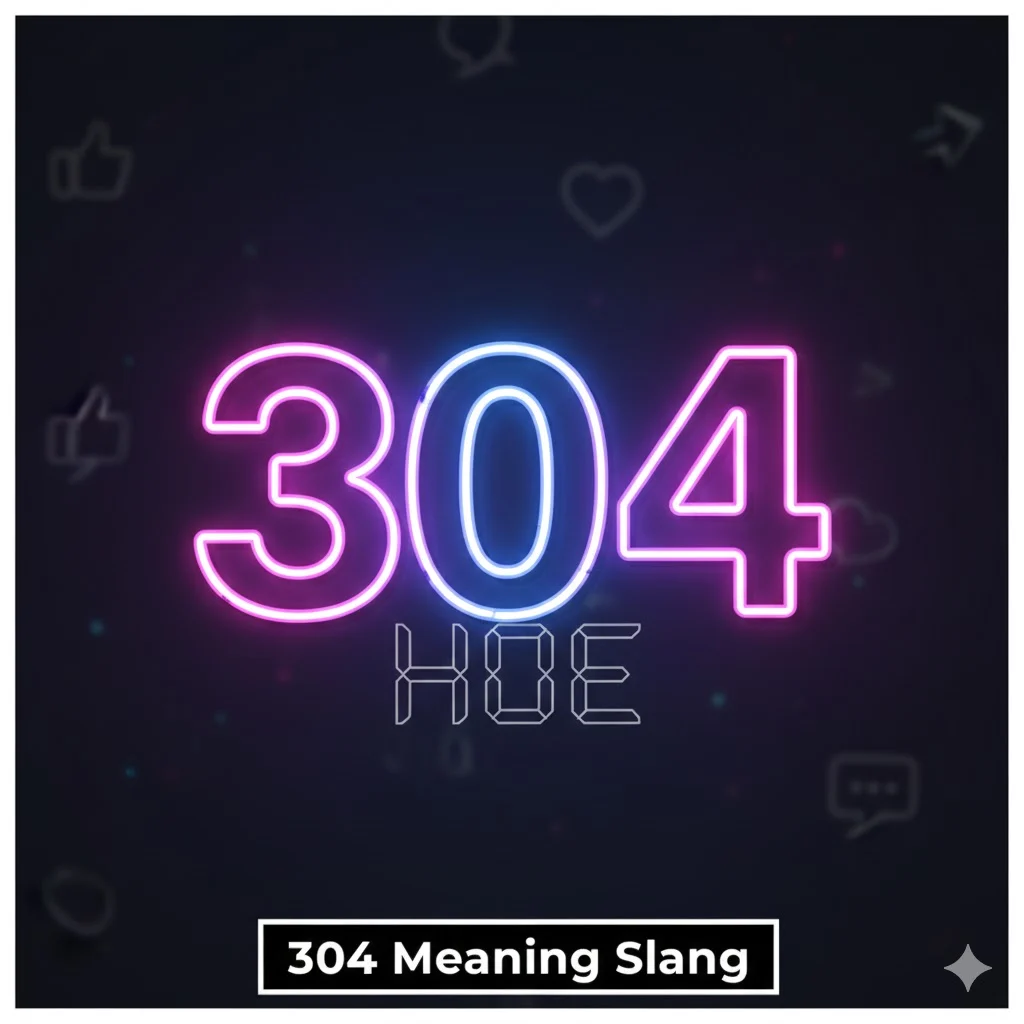

304 in slang is often used as a code for “hoe” or promiscuous woman, mainly in texting and online contexts. It comes from a visual reference: when the number 304 is flipped upside down on a calculator, it resembles the word “hoe”.
The internet is full of codes, numbers, and abbreviations that often leave people scratching their heads. One such term is 304, a slang that you may have encountered in text messages, social media, or online forums. While it appears as a simple number, 304 carries a much deeper—and sometimes controversial—meaning in modern slang culture.
Understanding 304 slang meaning not only helps decode digital conversations but also ensures you navigate chats respectfully and knowledgeably.
Origin of 304 Slang
The number 304 originates from the era of calculator spelling games, which became popular in the 1980s and 1990s. Back then, people discovered they could type numbers that, when flipped upside down, resembled words.
- Example: 58008 → “BOOBS”
- Example: 07734 → “HELLO”
- Similarly, 304 → HOE
Over time, the term migrated to text messages, forums, and social media, especially among teens and young adults. As a result, it became part of modern online slang.
Why 304 Slang Is Popular
Several factors contribute to the continued use of 304 in digital communication:
- Brevity: Using numbers saves time while texting.
- Humor and code: People enjoy playful or hidden meanings.
- Anonymity: Numbers mask direct offensive words.
- Internet culture: Memes, forums, and chat apps spread slang quickly.
As a result, 304 has survived multiple generations of online communication.
How 304 Is Used in Real Life
Although 304 is slang, context heavily determines how it’s perceived. The term can be playful, joking, or highly offensive depending on the situation.
Common Situations
- Texting or messaging: Teens may send 304 as shorthand.
- Social media comments: Occasionally used in tweets or memes.
- Online forums or chat rooms: Serves as a coded way to insult someone.
- Song lyrics or pop culture references: Some rap or online songs reference 304.
💡 Tip: Because 304 is derogatory, it’s best to avoid using it in real-life or professional contexts.
Tone and Context: How 304 Can Feel
Depending on how it’s delivered, 304 can carry multiple tones:
1. Playful / Joking Tone
Some use it humorously among close friends.
“She’s such a 304 lol 😅”
2. Negative / Insulting Tone
Often used to shame or criticize someone’s behavior.
“Don’t act like a 304.”
3. Neutral / Observational Tone
Rarely, it’s used without strong emotion, purely descriptive.
“304 is a slang term you might see online.”
Labeled Examples of 304 Usage
| Context | Example Sentence | Tone |
|---|---|---|
| Texting among friends | “Don’t be a 304 😂” | Playful |
| Social media post | “Why is she acting like a 304?” | Critical |
| Meme / joke | “304 vibes only 😎” | Humorous |
| Educational / informative | “304 is an internet slang for ‘hoe’” | Neutral |
| Song lyric | “They called her 304 in the track” | Cultural / Popular |
Comparison: 304 vs Similar Slang Terms
304 vs Hoe
| 304 | Hoe |
|---|---|
| Numeric code, less obvious | Direct word, offensive |
| Often used in texts or memes | Spoken or written openly |
| Requires understanding context | Instantly clear to most readers |
304 vs 420
| 304 | 420 |
|---|---|
| Refers to “hoe” | Refers to cannabis culture |
| Generally derogatory | Generally playful or cultural |
| Sensitive and potentially offensive | Neutral or humorous in most contexts |
Alternate Meanings of 304
While 304 is most commonly associated with its slang meaning, in other contexts it may simply refer to:
- Area code 304 – West Virginia, USA
- Steel grade 304 – a type of stainless steel
- HTTP 304 – “Not Modified” status in web technology
However, when used in texting or memes, the slang meaning usually dominates.
Professional and Polite Alternatives to 304
If you’re tempted to use 304 but want a less offensive option, consider these:
Polite or Neutral Alternatives
- Promiscuous (academic context)
- Flirty (lighthearted context)
- Socially active (neutral description)
Avoid
- Using 304 in professional emails, classroom discussions, or public posts
- Applying it to someone without consent
Do’s and Don’ts of Using 304
Do
- Understand the slang before using it
- Use only in playful or private contexts if at all
- Respect boundaries and context
Don’t
- Use it to harass or shame anyone
- Send it in professional or public communications
- Assume everyone knows the meaning
Frequently Asked Questions (FAQ)
1. What does 304 mean in slang?
304 is internet slang for “hoe” and is considered derogatory.
2. Where did 304 slang originate?
It comes from calculator spelling games, where flipping 304 upside down resembles “HOE.”
3. Is 304 offensive?
Yes, it can be offensive and is generally used as an insult.
4. Can I use 304 casually with friends?
It depends on context and relationship. Humor may be acceptable among close friends.
5. What are safe alternatives to 304?
Words like flirty, socially active, or promiscuous can be used in neutral contexts.
6. Does 304 have other meanings?
Yes, it can refer to an area code, a steel grade, or a web status code.
7. Is 304 only used online?
Primarily yes, but it may appear in text messages, memes, or song lyrics.
8. How can I respond if someone calls me 304?
You can ignore it or respond calmly, depending on the situation. Do not escalate.
Why Knowing 304 Slang Matters
Understanding 304 is part of navigating modern digital culture. It allows you to decode online conversations, recognize offensive language, and communicate responsibly. Misunderstanding or misusing it can lead to awkward or offensive interactions.
Conclusion: Key Takeaways About 304 Meaning Slang
- 304 means “hoe” in modern slang
- Its origins trace back to calculator spelling games
- The term is derogatory and context-sensitive
- Professional or public usage should be avoided
- Awareness of 304 helps navigate online and social media conversations safely
Remember: Just because slang exists doesn’t mean it should always be used—knowledge is the key.